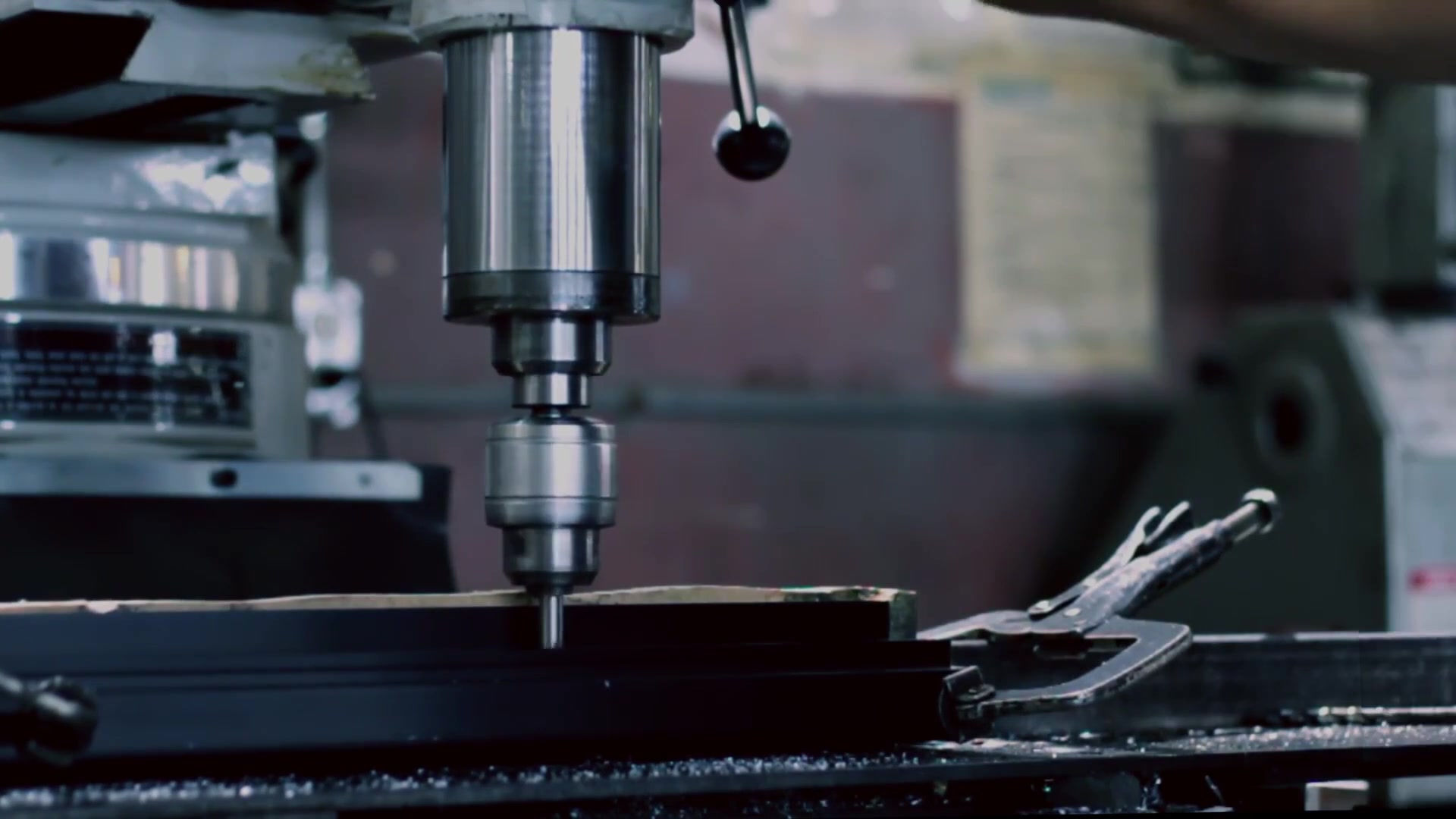


Hilberînerê Xwerû ya Gloverî, Integrator, Hevkar, Hevkarê Derveyî Ji bo Cûreyek Berfireh a Hilber û Karûbaran.
Em ji bo çêkirin, çêkirin, endezyarî, yekbûn, yekbûn, derxistina hilber û karûbarên xwerû yên çêkirî û yên li derveyî refê çavkaniya weya yek-rawest in. Ger hûn bixwazin, em di heman demê de etîketa taybet / spî hilberên we bi navê marqeya we nîşan didin.
Zimanê xwe hilbijêre
Hilberîna Xweser a Parçe, Pêkhatî, Meclîs, Berhemên Qediyayî, Makîne û Amûrên Pîşesaziyê
Hilberîna Peymana Navxweyî û Gerdûnî
Manufacturing Outsourcing
Kirîna Navxweyî, Gerdûnî ya Berhemên Pîşesazî
Etîketkirina taybet / Spî Hilberên xwe bi navê marqeya xwe nîşankirin
Karûbarên Dîtina Hilber & Cihgirtin
Sêwirana gerdûnî û Hevkariya Kanal
Endezyariya Entegrasyonê
Xizmetên Endezyariyê
Hevgirtina Gerdûnî, Warehousing, Logistics


Encamên Lêgerînê
Search this site
164 results found with an empty search
- Soft Lithography - Microcontact Printing - Microtransfer Molding
Soft Lithography - Microcontact Printing - Microtransfer Molding - Micromolding in Capillaries - AGS-TECH Inc. - NM - USA Lîtografya nerm SOFT LITHOGRAPHY is a term used for a number of processes for pattern transfer. A master mold is needed in all cases and is microfabricated using standard lithography methods. Using the master mold, we produce an elastomeric pattern / stamp to be used in soft lithography. Elastomers used for this purpose need to be chemically inert, have good thermal stability, strength, durability, surface properties and be hygroscopic. Silicone rubber and PDMS (Polydimethylsiloxane) are two good candidate materials. These stamps can be used many times in soft lithography. One variation of soft lithography is MICROCONTACT PRINTING. The elastomer stamp is coated with an ink and pressed against a surface. The pattern peaks contact the surface and a thin layer of about 1 monolayer of the ink is transferred. This thin film monolayer acts as the mask for selective wet etching. A second variation is MICROTRANSFER MOLDING, in which the recesses of the elastomer mold are filled with liquid polymer precursor and pushed against a surface. Once the polymer cures after microtransfer molding, we peel off the mold, leaving behind the desired pattern. Lastly a third variation is MICROMOLDING IN CAPILLARIES, where the elastomer stamp pattern consists of channels that use capillary forces to wick a liquid polymer into the stamp from its side. Basically, a small amount of the liquid polymer is placed adjacent to the capillary channels and the capillary forces pull the liquid into the channels. Excess liquid polymer is removed and polymer inside the channels is allowed to cure. The stamp mold is peeled off and the product is ready. If the channel aspect ratio is moderate and the channel dimensions allowed depend on the liquid used, good pattern replication can be assured. The liquid used in micromolding in capillaries can be thermosetting polymers, ceramic sol-gel or suspensions of solids within liquid solvents. The micromolding in capillaries technique has been used in sensor manufacturing. Soft lithography is used to construct features measured on the micrometer to nanometer scale. Soft lithography has advantages over other forms of lithography like photolithography and electron beam lithography. The advantages include the following: • Lower cost in mass production than traditional photolithography • Suitability for applications in biotechnology and plastic electronics • Suitability for applications involving large or nonplanar (nonflat) surfaces • Soft lithography offers more pattern-transferring methods than traditional lithography techniques (more ''ink'' options) • Soft lithography does not need a photo-reactive surface to create nanostructures • With soft lithography we can achieve smaller details than photolithography in laboratory settings (~30 nm vs ~100 nm). The resolution depends on the mask used and can reach values down to 6 nm. MULTILAYER SOFT LITHOGRAPHY is a fabrication process in which microscopic chambers, channels, valves and vias are molded within bonded layers of elastomers. Using multilayer soft lithography devices consisting of multiple layers may be fabricated from soft materials. The softness of these materials allows the device areas to be reduced by more than two orders of magnitude compared with silicon-based devices. The other advantages of soft lithography, such as rapid prototyping, ease of fabrication, and biocompatibility, are also valid in multilayer soft lithography. We use this technique to build active microfluidic systems with on-off valves, switching valves, and pumps entirely out of elastomers. CLICK Product Finder-Locator Service RÛPERA BERÊ
- Brazing, Soldering, Welding, Joining Processes, Assembly Services
Brazing - Soldering - Welding - Joining Processes - Assembly Services - Subassemblies - Assemblies - Custom Manufacturing - AGS-TECH Inc. - NM - USA Brazing & Soldering & Welding Among the many JOINING techniques we deploy in manufacturing, special emphasis is given to WELDING, BRAZING, SOLDERING, ADHESIVE BONDING and CUSTOM MECHANICAL ASSEMBLY because these techniques are widely used in applications like manufacturing of hermetic assemblies, high-tech product manufacturing and specialized sealing. Here we will concentrate on the more specialized aspects of these joining techniques as they are related to manufacturing of advanced products and assemblies. FUSION WELDING: We use heat to melt and coalesce materials. Heat is supplied by electricity or high-energy beams. The types of fusion welding we deploy are OXYFUEL GAS WELDING, ARC WELDING, HIGH-ENERGY-BEAM WELDING. SOLID-STATE WELDING: We join parts without melting and fusion. Our solid-state welding methods are COLD, ULTRASONIC, RESISTANCE, FRICTION, EXPLOSION WELDING and DIFFUSION BONDING. BRAZING & SOLDERING: They use filler metals and give us the advantage of working at lower temperatures than in welding, thus less structural damage to products. Information on our brazing facility producing ceramic to metal fittings, hermetic sealing, vacuum feedthroughs, high and ultrahigh vacuum and fluid control components can be found here: Brazing Factory Brochure Brazing Machines (We private label these with your brand name and logo if you wish. This way you can promote your brand name when you resell these machines to your customers) ADHESIVE BONDING: Because of the diversity of adhesives used in industry and also diversity of applications, we have a dedicated page for this. To go to our page about adhesive bonding, please click here. CUSTOM MECHANICAL ASSEMBLY: We use a variety of fasteners such as bolts, screws, nuts, rivets. Our fasteners are not limited to standard off-shelf fasteners. We design, develop and manufacture specialty fasteners that are made from nonstandard materials so they can meet requirements for special applications. Sometimes electrical or heat non-conductivity is desired whereas sometimes conductivity. For some special applications, a customer may want special fasteners that cannot be removed without destroying the product. There are endless ideas and applications. We have it all for you, if not off-shelf we can quickly develop it. To go to our page on mechanical assembly, please click here . Let us examine our various joining techniques in more details. OXYFUEL GAS WELDING (OFW): We use a fuel gas mixed with oxygen to produce the welding flame. When we use acetylene as the fuel and oxygen, we call it oxyacetylene gas welding. Two chemical reactions occur in the oxyfuel gas combustion process: C2H2 + O2 ------» 2CO + H2 + Heat 2CO + H2 + 1.5 O2--------» 2 CO2 + H2O + Heat The first reaction dissociates the acetylene into carbon monoxide and hydrogen while producing about 33% of the total heat generated. The second process above represents further combustion of the hydrogen and carbon monoxide while producing about 67% of the total heat. Temperatures in the flame are between 1533 to 3573 Kelvin. The oxygen percentage in the gas mixture is important. If the oxygen content is more than half, the flame becomes an oxidizing agent. This is undesirable for some metals but desirable for others. An example when oxidizing flame is desirable is copper-based alloys because it forms a passivation layer over the metal. On the other hand, when the oxygen content is reduced, full combustion is not possible and the flame becomes a reducing (carburizing) flame. The temperatures in a reducing flame are lower and therefore it is suitable for processes like soldering and brazing. Other gases are also potential fuels, but they have some disadvantages over acetylene. Occasionally we supply filler metals to the weld zone in the form of filler rods or wire. Some of them are coated with flux to retard oxidation of surfaces and thus protecting the molten metal. An additional benefit the flux gives us is the removal of oxides and other substances from the weld zone. This leads to stronger bonding. A variation of the oxyfuel gas welding is the PRESSURE GAS WELDING, where the two components are heated at their interface using oxyacetylene gas torch and once the interface starts to melt, the torch is withdrawn and an axial force is applied to press the two parts together until the interface is solidified. ARC WELDING: We use electrical energy to produce an arc between the electrode tip and parts to be welded. The power supply can be AC or DC while the electrodes are either consumable or nonconsumable. Heat transfer in arc welding can be expressed by the following equation: H / l = e x V I / v Here H is the heat input, l is the weld length, V and I are the voltage and current applied, v is the welding speed and e is the process efficiency. The higher the efficiency “e” the more beneficially the available energy is used to melt the material. The heat input can also be expressed as : H = u x (Volume) = u x A x l Here u is the specific energy for melting, A the cross section of the weld and l the weld length. From the two equations above we can obtain: v = e x V I / u A A variation of arc welding is the SHIELDED METAL ARC WELDING (SMAW) which constitutes about 50% of all industrial and maintenance welding processes. ELECTRIC ARC WELDING (STICK WELDING) is performed by touching the tip of a coated electrode to the workpiece and quickly withdrawing it to a distance sufficient to maintain the arc. We call this process also stick-welding because the electrodes are thin and long sticks. During the welding process, the tip of the electrode melts along with its coating and the base metal in the vicinity of the arc. A mixture of the base metal, electrode metal and substances from the electrode coating solidify in the weld area. The coating of the electrode deoxidizes and provides a shielding gas in the weld region, thus protecting it from the oxygen in the environment. Therefore the process is referred to as shielded metal arc welding. We use currents between 50 and 300 Amperes and power levels generally less than 10 kW for optimum weld performance. Also of importance is the polarity of the DC current (direction of current flow). Straight polarity where the workpiece is positive and the electrode is negative is preferred in welding of sheet metals because of its shallow penetration and also for joints with very wide gaps. When we have reverse polarity, i.e. the electrode is positive and workpiece negative we can achieve deeper weld penetrations. With AC current, since we have pulsating arcs, we can weld thick sections using large diameter electrodes and maximum currents. The SMAW welding method is suitable for workpiece thicknesses of 3 to 19 mm and even more using multiple-pass techniques. The slag formed on top of the weld needs to be removed using a wire brush, so that there is no corrosion and failure at the weld area. This of course adds to the cost of shielded metal arc welding. Nevertheless the SMAW is the most popular welding technique in industry and repair work. SUBMERGED ARC WELDING (SAW): In this process we shield the weld arc using granular flux materials like lime, silica, calcium floride, manganese oxide….etc. The granular flux is fed into the weld zone by gravity flow through a nozzle. The flux covering the molten weld zone significantly protects from sparks, fumes, UV radiation….etc and acts as a thermal insulator, thus letting heat penetrate deep into workpiece. The unfused flux is recovered, treated and reused. A coil of bare is used as electrode and fed through a tube to the area of weld. We use currents between 300 and 2000 Amperes. The submerged arc welding (SAW) process is limited to horizontal and flat positions and circular welds if rotation of the circular structure (such as pipes) is possible during welding. Speeds can reach 5 m/min. The SAW process is suitable for thick plates and results in high-quality, tough, ductile and uniform welds. The productivity, that is the amount of weld material deposited per hour is 4 to 10 times the amount as compared to the SMAW process. Another arc welding process, namely the GAS METAL ARC WELDING (GMAW) or alternatively referred to as METAL INERT GAS WELDING (MIG) is based on the weld area being shielded by external sources of gases like helium, argon, carbon dioxide….etc. There may be additional deoxidizers present in the electrode metal. Consumable wire is fed through a nozzle into the weld zone. Fabrication involving bot ferrous as well as nonferrous metals is carried out using gas metal arc welding (GMAW). Welding productivity is about 2 times that of the SMAW process. Automated welding equipment is being used. Metal is transferred in one of three ways in this process: “Spray Transfer” involves transfer of several hundred small metal droplets per second from electrode to the weld area. In “Globular Transfer” on the other hand, carbon dioxide rich gases are used and globules of molten metal are propelled by the electric arc. Welding currents are high and weld penetration deeper, welding speed greater than in spray transfer. Thus the globular transfer is better for welding heavier sections. Finally, in the “Short Circuiting” method, the electrode tip touches the molten weld pool, short circuiting it as metal at rates over 50 droplets/second is transferred in individual droplets. Low currents and voltages are used along with thinner wire. Powers used are about 2 kW and temperatures relatively low, making this method suitable for thin sheets less than 6mm thickness. Another variation the FLUX-CORED ARC WELDING (FCAW) process is similar to gas metal arc welding, except that the electrode is a tube filled with flux. The advantages of using cored-flux electrodes is that they produce more stable arcs, give us the opportunity to improve properties of weld metals, less brittle and flexible nature of its flux as compared to SMAW welding, improved welding contours. Self-shielded cored electrodes contain materials that shield the weld zone against the atmosphere. We use about 20 kW power. Like the GMAW process, the FCAW process also offers the opportunity to automate processes for continuous welding, and it is economical. Different weld metal chemistries can be developed by adding various alloys to the flux core. In ELECTROGAS WELDING (EGW) we weld the pieces placed edge to edge. It is sometimes also called BUTT WELDING. Weld metal is put into a weld cavity between two pieces to be joined. The space is enclosed by two water-cooled dams to keep the molten slag from pouring out. The dams are moved up by mechanical drives. When workpiece can be rotated, we can use the electrogas welding technique for circumferential welding of pipes too. Electrodes are fed through a conduit to keep a continuous arc. Currents can be around 400Amperes or 750 Amperes and power levels around 20 kW. Inert gases originating from either a flux-cored electrode or external source provide shielding. We use the electrogas welding (EGW) for metals such as steels, titanium….etc with thicknesses from 12mm to 75mm. The technique is a good fit for large structures. Yet, in another technique called ELECTROSLAG WELDING (ESW) the arc is ignited between the electrode and the bottom of the workpiece and flux is added. When molten slag reaches the electrode tip, the arc is extinguished. Energy is continuously supplied through the electrical resistance of the molten slag. We can weld plates with thicknesses between 50 mm and 900 mm and even higher. Currents are around 600 Ampere while voltages are between 40 – 50 V. The welding speeds are around 12 to 36 mm/min. Applications are similar to electrogas welding. One of our nonconsumable electrode processes, the GAS TUNGSTEN ARC WELDING (GTAW) also known as TUNGSTEN INERT GAS WELDING (TIG) involves the supply of a filler metal by a wire. For closely-fit joints sometimes we do not use the filler metal. In the TIG process we do not use flux, but use argon and helium for shielding. Tungsten has a high melting point and is not consumed in the TIG welding process, therefore constant current as well as arc gaps can be maintained. Power levels are between 8 to 20 kW and currents at either 200 Ampere (DC) or 500 Ampere (AC). For aluminum and magnesium we use AC current for its oxide cleaning function. To avoid contamination of the tungsten electrode, we avoid its contact with molten metals. Gas Tungsten Arc Welding (GTAW) is especially useful for welding thin metals. GTAW welds are of very high quality with good surface finish. Due to the higher cost of hydrogen gas, a less frequently used technique is ATOMIC HYDROGEN WELDING (AHW), where we generate an arc between two tungsten electrodes in a shielding atmosphere of flowing hydrogen gas. The AHW is also a nonconsumable electrode welding process. The diatomic hydrogen gas H2 breaks down into its atomic form near the welding arc where temperatures are over 6273 Kelvin. While breaking down, it absorbs large amount of heat from the arc. When the hydrogen atoms strike the weld zone which is a relatively cold surface, they recombine into diatomic form and release the stored heat. Energy can be varied by changing the workpiece to arc distance. In another nonconsumable electrode process, PLASMA ARC WELDING (PAW) we have a concentrated plasma arc directed toward the weld zone. The temperatures reach 33,273 Kelvin in PAW. A nearly equal number of electrons and ions make up the plasma gas. A low-current pilot arc initiates the plasma which is between the tungsten electrode and orifice. Operating currents are generally around 100 Amperes. A filler metal may be fed. In plasma arc welding, shielding is accomplished by an outer shielding ring and using gases such as argon and helium. In plasma arc welding, the arc may be between the electrode and workpiece or between the electrode and nozzle. This welding technique has the advantages over other methods of higher energy concentration, deeper and narrower welding capability, better arc stability, higher welding speeds up to 1 meter/min, less thermal distortion. We generally use plasma arc welding for thicknesses less than 6 mm and sometimes up to 20 mm for aluminum and titanium. HIGH-ENERGY-BEAM WELDING: Another type of fusion welding method with electron-beam welding (EBW) and laser welding (LBW) as two variants. These techniques are of particular value for our high-tech products manufacturing work. In electron-beam welding, high speed electrons strike the workpiece and their kinetic energy is converted to heat. The narrow beam of electrons travel easily in the vacuum chamber. Generally we use high vacuum in e-beam welding. Plates as thick as 150 mm can be welded. No shielding gases, flux or filler material is needed. Elecron beam guns have 100 kW capacities. Deep and narrow welds with high aspect ratios up to 30 and small heat-affected zones are possible. Welding speeds can reach 12 m/min. In laser-beam welding we use high-power lasers as the source of heat. Laser beams as small as 10 microns with high density enable deep penetration into the workpiece. Depth-to-width ratios as much as 10 is possible with laser-beam welding. We use both pulsed as well as continuous wave lasers, with the former in applications for thin materials and the latter mostly for thick workpieces up to about 25 mm. Power levels are up to 100 kW. The laser beam welding is not well suited for optically very reflective materials. Gases may also be used in the welding process. The laser beam welding method is well fit for automation & high volume manufacturing and can offer welding speeds between 2.5 m/min and 80 m/min. One major advantage this welding technique offers is access to areas where other techniques cannot be used. Laser beams can easily travel to such difficult regions. No vacuum as in electron-beam welding is needed. Welds with good quality & strength, low shrinkage, low distortion, low porosity can be obtained with laser beam welding. Laser beams can be easily manipulated and shaped using fiber optic cables. The technique is thus well suitable for welding of precision hermetic assemblies, electronic packages…etc. Let us look at our SOLID STATE WELDING techniques. COLD WELDING (CW) is a process where pressure instead of heat is applied using dies or rolls to the parts that are mated. In cold welding, at least one of the mating parts needs to be ductile. Best results are obtained with two similar materials. If the two metals to be joined with cold welding are dissimilar, we may get weak and brittle joints. The cold welding method is well suited for soft, ductile and small workpieces such as electrical connections, heat sensitive container edges, bimetallic strips for thermostats…etc. One variation of cold welding is roll bonding (or roll welding), where the pressure is applied through a pair of rolls. Sometimes we perform roll welding at elevated temperatures for better interfacial strength. Another solid state welding process we use is the ULTRASONIC WELDING (USW), where the workpieces are subjected to a static normal force and oscillating shearing stresses. The oscillating shearing stresses are applied through the tip of a transducer. Ultrasonic welding deploys oscillations with frequencies from 10 to 75 kHz. In some applications such as seam welding, we use a rotating welding disk as the tip. Shearing stresses applied to the workpieces cause small plastic deformations, break up oxide layers, contaminants and lead to solid state bonding. Temperatures involved in ultrasonic welding are way below melting point temperatures for metals and no fusion takes place. We frequently use the ultrasonic welding (USW) process for nonmetallic materials like plastics. In thermoplastics, the temperatures do reach melting points however. Another popular technique, in FRICTION WELDING (FRW) the heat is generated through friction at the interface of the workpieces to be joined. In friction welding we keep one of the workpieces stationary while the other workpiece is held in a fixture and rotated at a constant speed. The workpieces are then brought into contact under an axial force. The surface speed of rotation in friction welding may reach 900m/min in some cases. After sufficient interfacial contact, the rotating workpiece is brought to a sudden stop and the axial force is increased. The weld zone is generally a narrow region. The friction welding technique can be used to join solid and tubular parts made of a variety of materials. Some flash may develop at the interface in FRW, but this flash can be removed by secondary machining or grinding. Variations of the friction welding process exist. For example “inertia friction welding” involves a flywheel whose rotational kinetic energy is used to weld the parts. The weld is complete when the flywheel comes to a stop. The rotating mass can be varied and thus the rotational kinetic energy. Another variation is “linear friction welding”, where linear reciprocating motion is imposed on at least one of the components to be joined. In linear friction welding parts do not have to be circular, they can be rectangular, square or of other shape. Frequencies can be in the tens of Hz, amplitudes in the millimeters range and pressures in the tens or hundreds of MPa. Finally “friction stir welding” is somewhat different than the other two explained above. Whereas in inertia friction welding and linear friction welding heating of interfaces is achieved through friction by rubbing two contacting surfaces, in the friction stir welding method a third body is rubbed against the two surfaces to be joined. A rotating tool of 5 to 6 mm diameter is brought into contact with the joint. The temperatures can increase to values between 503 to 533 Kelvin. Heating, mixing and stirring of the material in the joint takes place. We use the friction stir welding on a variety of materials including aluminum, plastics and composites. Welds are uniform and quality is high with minimum pores. No fumes or spatter are produced in friction stir welding and the process is well automated. RESISTANCE WELDING (RW): The heat required for welding is produced by the electrical resistance between the two workpieces to be joined. No flux, shielding gases or consumable electrodes are used in resistance welding. Joule heating takes place in resistance welding and can be expressed as: H = (Square I) x R x t x K H is heat generated in joules (watt-seconds), I current in Amperes, R resistance in Ohms, t is the time in seconds the current flows through. The factor K is less than 1 and represents the fraction of energy that is not lost through radiation and conduction. Currents in resistance welding processes can reach levels as high as 100,000 A but voltages are typically 0.5 to 10 Volts. Electrodes are typically made of copper alloys. Both similar and dissimilar materials can be joined by resistance welding. Several variations exist for this process: “Resistance spot welding” involves two opposing round electrodes contacting the surfaces of the lap joint of the two sheets. Pressure is applied until current is turned off. The weld nugget is generally up to 10 mm in diameter. Resistance spot welding leaves slightly discolored indentation marks at weld spots. Spot welding is our most popular resistance welding technique. Various electrode shapes are used in spot welding in order to reach difficult areas. Our spot welding equipment is CNC controlled and has multiple electrodes that can be used simultaneously. Another variation “resistance seam welding” is carried out with wheel or roller electrodes that produce continuous spot welds whenever the current reaches a sufficiently high level in the AC power cycle. Joints produced by resistance seam welding are liquid and gas tight. Welding speeds of about 1.5 m/min are normal for thin sheets. One may apply intermittent currents so that spot welds are produced at desired intervals along the seam. In “resistance projection welding” we emboss one or more projections (dimples) on one of the workpiece surfaces to be welded. These projections may be round or oval. High localized temperatures are reached at these embossed spots that come into contact with the mating part. Electrodes exert pressure to compress these projections. Electrodes in resistance projection welding have flat tips and are water cooled copper alloys. The advantage of resistance projection welding is our ability to a number of welds in one stroke, thus the extended electrode life, capability to weld sheets of various thicknesses, capability to weld nuts and bolts to sheets. Disadvantage of resistance projection welding is the added cost of embossing the dimples. Yet another technique, in “flash welding” heat is generated from the arc at the ends of the two workpieces as they begin to make contact. This method may also alternatively considered arc welding. The temperature at the interface rises, and material softens. An axial force is applied and a weld is formed at the softened region. After the flash welding is complete, the joint can be machined for improved appearance. Weld quality obtained by flash welding is good. Power levels are 10 to 1500 kW. Flash welding is suitable for edge-to-edge joining of similar or dissimilar metals up to 75 mm diameter and sheets between 0.2 mm to 25 mm thickness. “Stud arc welding” is very similar to flash welding. The stud such as a bolt or threaded rod serves as one electrode while being joined to a workpiece such as a plate. To concentrate the generated heat, prevent oxidation and retain the molten metal in the weld zone, a disposable ceramic ring is placed around the joint. Finally “percussion welding” another resistance welding process, utilizes a capacitor to supply the electrical energy. In percussion welding the power is discharged within milliseconds of time very quickly developing high localized heat at the joint. We use percussion welding widely in the electronics manufacturing industry where heating of sensitive electronic components in the vicinity of the joint has to be avoided. A technique called EXPLOSION WELDING involves detonation of a layer of explosive that is put over one of the workpieces to be joined. The very high pressure exerted on the workpiece produces a turbulent and wavy interface and mechanical interlocking takes place. Bond strengths in explosive welding are very high. Explosion welding is a good method for cladding of plates with dissimilar metals. After cladding, the plates may be rolled into thinner sections. Sometimes we use explosion welding for expanding tubes so that they get sealed tightly against the plate. Our last method within the domain of solid state joining is DIFFUSION BONDING or DIFFUSION WELDING (DFW) in which a good joint is achieved mainly by diffusion of atoms across the interface. Some plastic deformation at the interface also contributes to the welding. Temperatures involved are around 0.5 Tm where Tm is melting temperature of the metal. Bond strength in diffusion welding depends on pressure, temperature, contact time and cleanliness of contacting surfaces. Sometimes we use filler metals at the interface. Heat and pressure are required in diffusion bonding and are supplied by electrical resistance or furnace and dead weights, press or else. Similar and dissimilar metals can be joined with diffusion welding. The process is relatively slow due to the time it takes for atoms to migrate. DFW can be automated and is widely used in the fabrication of complex parts for the aerospace, electronics, medical industries. Products manufactured include orthopedic implants, sensors, aerospace structural members. Diffusion bonding can be combined with SUPERPLASTIC FORMING to fabricate complex sheet metal structures. Selected locations on sheets are first diffusion bonded and then the unbonded regions are expanded into a mold using air pressure. Aerospace structures with high stiffness-to-weight ratios are manufactured using this combination of methods. The diffusion welding / superplastic forming combined process reduces the number of parts required by eliminating the need for fasteners, results in low-stress highly accurate parts economically and with short lead times. BRAZING: The brazing and soldering techniques involve lower temperatures than those required for welding. Brazing temperatures are higher than soldering temperatures however. In brazing a filler metal is placed between the surfaces to be joined and temperatures are raised to the melting temperature of the filler material above 723 Kelvin but below the melting temperatures of the workpieces. The molten metal fills the closely fitting space between workpieces. Cooling and subsequent solidification of the filer metal results in strong joints. In braze welding the filler metal is deposited at the joint. Considerably more filler metal is used in braze welding compared to brazing. Oxyacetylene torch with oxidizing flame is used to deposit the filler metal in braze welding. Due to lower temperatures in brazing, problems at heat affected zones such as warping and residual stresses are less. The smaller the clearance gap in brazing the higher is the shear strength of the joint. Maximum tensile strength however is achieved at an optimum gap (a peak value). Below and above this optimum value, the tensile strength in brazing decreases. Typical clearances in brazing can be between 0.025 and 0.2 mm. We use a variety of brazing materials with different shapes such as performs, powder, rings, wire, strip…..etc. and can manufacture these performs specially for your design or product geometry. We do also determine the content of the brazing materials according to your base materials and application. We frequently use fluxes in brazing operations to remove unwanted oxide layers and prevent oxidation. To avoid subsequent corrosion, fluxes are generally removed after the joining operation. AGS-TECH Inc. uses various brazing methods, including: - Torch Brazing - Furnace Brazing - Induction Brazing - Resistance Brazing - Dip Brazing - Infrared Brazing - Diffusion Brazing - High Energy Beam Our most common examples of brazed joints are made of dissimilar metals with good strength such as carbide drill bits, inserts, optoelectronic hermetic packages, seals. SOLDERING : This is one of our most frequently used techniques where the solder (filler metal) fills the joint as in brazing between closely fitting components. Our solders have melting points below 723 Kelvin. We deploy both manual and automated soldering in manufacturing operations. Compared to brazing, soldering temperatures are lower. Soldering is not very suitable for high-temperature or high-strength applications. We use lead-free solders as well as tin-lead, tin-zinc, lead-silver, cadmium-silver, zinc-aluminum alloys besides others for soldering. Both noncorrosive resin-based as well as inorganic acids and salts are used as flux in soldering. We use special fluxes to solder metals with low solderability. In applications where we have to solder ceramic materials, glass or graphite, we first plate the parts with a suitable metal for increased solderability. Our popular soldering techniques are: -Reflow or Paste Soldering -Wave Soldering -Furnace Soldering -Torch Soldering -Induction Soldering -Iron Soldering -Resistance Soldering -Dip soldering -Ultrasonic Soldering -Infrared Soldering Ultrasonic soldering offers us a unique advantage whereby the need for fluxes is eliminated due to ultrasonic cavitation effect which removes oxide films from the surfaces being joined. Reflow and Wave soldering are our industrially outstanding techniques for high volume manufacturing in electronics and therefore worth explaining in greater detail. In reflow soldering, we use semisolid pastes that include solder-metal particles. The paste is placed onto the joint using a screening or stenciling process. In printed circuit boards (PCB) we frequently use this technique. When electrical components are placed onto these pads from paste, the surface tension keeps the surface-mount packages aligned. After placing the components, we heat the assembly in a furnace so the reflow soldering takes place. During this process, the solvents in the paste evaporate, the flux in the paste is activated, the components are preheated, the solder particles are melted and wet the joint, and finally the PCB assembly is cooled slowly. Our second popular technique for high volume production of PCB boards, namely wave soldering relias on the fact that molten solders wet metal surfaces and form good bonds only when the metal is preheated. A standing laminar wave of molten solder is first generated by a pump and the preheated and prefluxed PCBs are conveyed over the wave. The solder wets only exposed metal surfaces but does not wet the IC polymer packages nor the polymer-coated circuit boards. A high-velocity of hot water jet blows excess solder from the joint and prevents bridging between adjacent leads. In wave soldering of surface-mount packages we first adhesively bond them to the circuit board before soldering. Again screening and stenciling is used but this time for epoxy. After the components are placed in their correct locations, the epoxy is cured, the boards are inverted and wave soldering takes place. CLICK Product Finder-Locator Service RÛPERA BERÊ
- LED Assemblies, Light Emitting Diodes Power Supply, Molded Lenses
LED Assemblies, Light Emitting Diodes Power Supply, Plastic Molded Lenses Meclîsên Product LED Meclîsa LED - ronahiya paşiya motorsîkletê Meclîsên hilberê LED AGS-TECH Inc. pêkhateyên plastîk ên qalibkirî yên bi dîodên ronahiyê li hev civandin - roniyên paşiya motorsîkletan Ronahiya paşîn a motorsîkletan ku dîodên ronahiyê vedihewîne dabînkirina hêza LED Waterproof Meclîsên ronahiya LED-ê yên hêzê Li gorî daxwazên xerîdar pakkirina hilberê AGS-TECH ji bo hilberên we yên çêkirî pakkirina xwerû pêşkêşî dike Meclîsa PCB LED Hilberîna Ronahiya Kolana LED Trailing Edge Dimmable LED Driver Meclîsên LED PCB Meclîsên LED-ê yên Hêza Bilind High Power LED Driver RÛPERA BERÊ
- Electronic Components, Diodes, Transistors, Thermoelectric Cooler, TEC
Electronic Components, Diodes, Transistors - Resistors, Thermoelectric Cooler, Heating Elements, Capacitors, Inductors, Driver, Device Sockets and Adapters Pêkhatin û Meclîsên Elektrîk & Elektronîkî As a custom manufacturer and engineering integrator, AGS-TECH can supply you the following ELECTRONIC COMPONENTS and ASSEMBLIES: • Active and passive electronic components, devices, subassemblies and finished products. We can either use the electronic components in our catalogs and brochures listed below or use your prefered manufacturers components in your electronic products assembly. Some of the electronic components and assembly can be custom tailored according to your needs and requirements. If your order quantities justify, we can have the manufacturing plant produce according to your specifications. You can scroll down and download our brochures of interest by clicking on highlighted text: Antenna Brochure for 5G - LTE 4G - LPWA 3G - 2G - GPS - GNSS - WLAN - BT - Combo - ISM Chip resistors Chip resistors product line Custom Specialized Cable Assemblies Brochure for Lighting, Touch Technology, Industrial Electronics, Security, White Goods, Aerospace, Military, Telecom, Medical & Sterilizable, Renewable Energy...etc. Diodes and rectifiers Disc capacitors catalog High frequency devices product line (Band Pass Filters, Low Pass Filters, IPD, CPL, Balanced Filter, Diplexer, Balun, Chip Antenna...etc.) Microwave Flexible Cable Assembly Microwave and Milimeter Wave Test Accessories Brochure (Cable assemblies, VNA Test Assemblies, Mechanical Calibration Kits, RF Coaxial Adapters, Test Port Adapters, DC Blocks, NMD Connectors....etc.) Microwave Waveguides - Coaxial Components - Milimeterwave Antennas (Straight Waveguide, Waveguide Bend, Waveguide to Coaxial Adapter, Directional Couplers, Waveguide Tee, Circulators, Isolators......etc.) Multilayer ceramic capacitors MLCC catalog Multilayer ceramic capacitors MLCC product line Off-shelf interconnect components and hardware Precision RF Adapter s Catalog (Coax RF, Microwave, mmWave Adapters such as SMA, SSMA, SMP, BNC, Type-N, 3.5 mm.....etc) RF Components Brochure for Coaxial Fixed Attenuators, Coaxial Terminations, DC Blocks, Coax Adapters, Waveguide Components, Power Dividers, RF Connectors, RF Tools. RF devices and high frequency inductors (Multilayer Ceramic Capacitors, Chip-Resistor, Disc Capacitors, RF & HF Inductor Varistors & SMD-Varistors, Chip Antenna, Filters, Coupler) RF and Microwave Components (Broadband 90/180 Degree Hybrid and Coupler, Broadband Power Divider, Filter, RF switch, Broadband Amplifier, Broadband Frequency Synthesizer) RF Product Overview Chart (RF Antenna, Multilayer Ceramic Filter, Multilayer Ceramic Balun, Ceramic Diplexer) Soft Ferrites - Cores - Toroids - EMI Suppression Products - RFID Transponders and Accessories Brochure Terminal Blocks and Connectors Terminal Blocks General Catalogue Receptacles-Power Entry-Connectors Catalogue Vandal-Proof IP65/IP67/IP68 Keyboards, Keypads, Pointing Devices, ATM Pinpads, Medical & Military Keyboards and other similar Rugged Computer Peripherals Varistors Varistors product overview Yaren Model MOSFET - SCR - FRD - Voltage Control Devices - Bipolar Transistors Zeasset Model Electrolytic Capacitors • Other electronic components and assembly we have been providing are pressure sensors, temperature sensors, conductivity sensors, proximity sensors, humidity sensors, speed sensor, shock sensor, chemical sensor, inclination sensor, load cell, strain gauges. To download related catalogs and brochures of these, please click on colored text: Coding system for off-shelf strain gauges Digital Temperature Transmitter UTI2 Digital Temperature Transmitter UTI6 Din Rail Mounted Temperature Transmitters UTB11 Electronic Temperature Switch UTS2 Explosive Proof Temperature Transmitter UTB4 Integrated Temperature Transmitter UTB8 Intelligent Temperature Transmitter UTI5 Load cells, weight sensors, load gauges, transducers and transmitters Pressure sensors, pressure gauges, transducers and transmitters Process Automation Solutions (We private label these with your brand name and logo if you wish) Proximity sensors Sensors & Analytical Measurement Systems for Liquid Analysis (We private label these with your brand name and logo if you wish) Sensors & Analytical Measurement Systems for Optical OEM Applications in Liquid Analysis (We private label these with your brand name and logo if you wish) Sensors & Analytical Measurement Systems for pH Testing (We private label these with your brand name and logo if you wish) Smart Temperature Transmitter UTB-101 Sockets and accessories of proximity sensors Strain Gauges for Stress Analysis Temperature Humidity Transmitters Temperature Pressure Integration Transmitter UTB5 Thermal Resistor Temperature Transducer UTC1 (-50~+600 C) Thermal Resistor Temperature Transducer UTC2 (-40~+200 C) Wireless Digital Temperature Gauge UTI7 • Chip level micrometer scale tiny Microelectromechanical Systems (MEMS) based devices such as micropumps, micromirrors, micromotors, microfluidic devices. • Integrated Circuits (IC) • Switching elements, switch, relay, contactor, circuit breaker Contactors with UL and CE Certification NC1100111-1042532 Contactors with UL and CE Certification NC2100111-1044422 Contactors with UL and CE Certifications NC6100111-1040002 Definite Purpose Contactor with UL and CE Certifications NCK3100111-1052422 Electronic Overload Relay with UL and CE Certification NRE8100111-1143132 Miniature Circuit Breakers with UL and CE Certification NB1100111-1114242 Miniature Power Relay with UL and CE Certification JQX-10F100111-1153432 Miniature Power Relay with UL and CE Certifications JQX-13F100111-1154072 Miniature Power Relay with UL and CE Certification JTX100111-1155122 Miniature Power Relay with UL and CE Certification MK100111-1155402 Miniature Power Relay with UL and CE Certification NJX-13FW100111-1152352 Push button and rotary switches & control boxes Sub-Miniature Power Relay with UL and CE Certification JQC-3F100111-1153132 Thermal Overload Relay with UL and CE Certification NR2100111-1144062 • Electric fans and coolers for installation in electronic and industrial devices • Heating elements, thermoelectric coolers (TEC) Easy Click heat sinks Extruded heat sinks Heat sinks with Super Fins Standard heat sinks Super cooling plates Super Power heat sinks for medium - high power electronic systems Waterless cooling plates • We supply Electronic Enclosures for protection of your electronic components and assembly. Besides these off-shelf electronic enclosures, we do custom injection mold and thermoform electronic enclosures that fit your technical drawings. Please download from links below: Economic 17 Series Hand Held Enclosures Tibox Model Enclosures and Cabinets 01 Series Instrument Case System-I 02 Series Plastic and Aluminum Instrument Case Systems II 03 Series Plastic and Steel Enclosures 05 Series Instrument Case System-V 08 Series Plastic Cases 10 Series Sealed Plastic Enclosures 11 Series Die-cast Aluminium Boxes 14 Series PLC Enclosures 15 Series Modular Plastic Enclosures 16 Series DIN rail module enclosures 18 Series Special Plastic Enclosures 19 Series Desktop Enclosures 20 Series Wall-Mounting Enclosures 21 Series Card Reader Enclosures 24 Series DIN Plastic Enclosures 31 Series Potting and Power Supply Enclosures 37 Series Plastic Equipment Cases • Telecommunication and datacommunication products, lasers, receivers, transceivers, transponders, modulators, amplifiers. CATV products such as CAT3, CAT5, CAT5e, CAT6, CAT7 cables, CATV splitters. • Laser components and assembly • Acoustic components and assemblies, recording electronics - These catalogs contain only some brands we sell. We also have generic brand names and other brands with similar good quality for you to choose from. Dowload brochure for our DESIGN PARTNERSHIP PROGRAM - Contact us for your special electronic assembly requests. We integrate various components & products and manufacture complex assemblies. We can either design it for you or assemble according to your design. Reference Code: OICASANLY CLICK Product Finder-Locator Service RÛPERA BERÊ
- Panel PC - Industrial Computer - Multitouch Displays - Janz Tec
Panel PC - Industrial Computer - Multitouch Displays - Janz Tec - AGS-TECH Inc. - NM - USA Panel PC, Dîmenên Multitouch, Ekranên Touch A subset of industrial PCs is the PANEL PC where a display, such as an LCD, is incorporated into the same enclosure as the motherboard and other electronics. These are typically panel mounted and often incorporate TOUCH SCREENS or MULTITOUCH DISPLAYS for interaction with users. They are offered in low cost versions with no environmental sealing, heavier duty models sealed to IP67 standards to be waterproof at the front panel and models which are explosion proof for installation into hazardous environments. Here you can download product literature of the brand names JANZ TEC, DFI-ITOX and others we have in stock. CLICK ON BLUE COLORED TEXT BELOW TO DOWNLOAD PRODUCT BROCHURES AND CATALOGS: - Catalog for Vandal-Proof IP65/IP67/IP68 Keyboards, Keypads, Pointing Devices, ATM Pinpads, Medical & Military Keyboards and other similar Rugged Computer Peripherals - DFI-ITOX brand Panel PC brochure - DFI-ITOX brand Industrial Touch Monitors - ICP DAS brand Industrial Touch Pad brochure - JANZ TEC brand compact product brochure - Kiosk Systems (We private label these with your brand name and logo if you wish) - Kiosk Systems Accessories Guide (We private label these with your brand name and logo if you wish) - Mobile Computers for Enterprises (We private label these with your brand name and logo if you wish) To choose a suitable panel PC for your project, please go to our industrial computer store by CLICKING HERE. Our JANZ TEC brand scalable product series of emVIEW systems offers a wide spectrum of processor performance and display sizes from 6.5'' up to currently 19''. Custom tailored solutions for optimal adaptation to your task definition can be implemented by us. Some of our popular panel PC products are: HMI Systems and Fanless Industrial Display Solutions Multitouch Display Industrial TFT LCD Displays AGS-TECH Inc. as an established ENGINEERING INTEGRATOR and CUSTOM MANUFACTURER will offer you turn-key solutions in case you need to integrate our panel PCs with your equipment or in case you need our touch screen panels designed differently. Dowload brochure for our DESIGN PARTNERSHIP PROGRAM CLICK Product Finder-Locator Service RÛPERA BERÊ
- Glass and Ceramic Manufacturing, Hermetic Packages, Seals, Bonding
Glass and Ceramic Manufacturing, Hermetic Packages Seals and Bonding, Tempered Bulletproof Glass, Blow Moulding, Optical Grade Glass, Conductive Glass, Molding Çêkirin & Şêwekirin Glass & Seramîk The type of glass manufacturing we offer are container glass, glass blowing, glass fiber & tubing & rod, domestic and industrial glassware, lamp and bulb, precision glass moulding, optical components and assemblies, flat & sheet & float glass. We perform both hand forming as well as machine forming. Our popular technical ceramic manufacturing processes are die pressing, isostatic pressing, hot isostatic pressing, hot pressing, slip casting, tape casting, extrusion, injection moulding, green machining, sintering or firing, diamond grinding, hermetic assemblies. We recommend that you click here to DOWNLOAD our Schematic Illustrations of Glass Forming and Shaping Processes by AGS-TECH Inc. DOWNLOAD our Schematic Illustrations of Technical Ceramic Manufacturing Processes by AGS-TECH Inc. These downloadable files with photos and sketches will help you better understand the information we are providing you below. • CONTAINER GLASS MANUFACTURE: We have automated PRESS AND BLOW as well as BLOW AND BLOW lines for manufacturing. In the blow and blow process we drop a gob into blank mold and form the neck by applying a blow of compressed air from top. Immediately following this, compressed air is blown a second time from the other direction through the container neck to form the pre-form of the bottle. This pre-form is then transferred to the actual mold, reheated to soften and compressed air is applied to give the pre-form its final container shape. More explicitly, it is pressurized and pushed against the walls of the blow mold cavity to take its desired shape. Finally, the manufactured glass container is transfered into an annealing oven for subsequent reheating and removal of stresses produced during the molding and is cooled in a controlled fashion. In the press and blow method, molten gobs are put into a parison mold (blank mold) and pressed into the parison shape (blank shape). The blanks are then transfered to blow molds and blown similar to the process described above under “Blow and Blow Process”. Subsequent steps like annealing and stress relieve are similar or the same. • GLASS BLOWING : We have been manufacturing glass products using conventional hand blowing as well as using compressed air with automated equipment. For some orders conventional blowing is necessary, such as projects involving glass art work, or projects that require a smaller number of parts with loose tolerances, prototyping / demo projects….etc. Conventional glass blowing involves the dipping of a hollow metal pipe into a pot of molten glass and rotating the pipe for collecting some amount of the glass material. The glass collected on the tip of the pipe is rolled on flat iron, shaped as desired, elongated, re-heated and air blown. When ready, it is inserted into a mould and air is blown. The mould cavity is wet to avoid contact of the glass with metal. The water film acts like a cushion between them. Manual blowing is a labor intensive slow process and only suitable for prototyping or items of high value, not suitable for inexpensive per piece high volume orders. • MANUFACTURING OF DOMESTIC & INDUSTRIAL GLASSWARE : Using various types of glass material a large variety of glassware is being produced. Some glasses are heat resistant and suitable for laboratory glassware whereas some are good enough for withstanding dishwashers for many times and are fit for making domestic products. Using Westlake machines tens of thousands of pieces of drinking glasses are being produced per day. To simplify, molten glass is collected by vacuum and inserted into moulds to make the pre-forms. Then air is blown into the moulds, these are transfered to another mould and air is blown again and the glass takes its final shape. Like in hand blowing, these moulds are kept wet with water. Further stretching is part of the finishing operation where the neck is being formed. Excess glass is burnt off. Thereafter the controlled re-heating and cooling process described above follows. • GLASS TUBE & ROD FORMING : The main processes we use for manufacturing of glass tubes are the DANNER and VELLO processes. In the Danner Process, glass from a furnace flows and falls on an inclined sleeve made of refractory materials. The sleeve is carried on a rotating hollow shaft or blowpipe. The glass is then wrapped around the sleeve and forms a smooth layer flowing down the sleeve and over the tip of the shaft. In the case of tube forming, air is blown through a blowpipe with hollow tip, and in the case of rod forming we use solid tips on the shaft. The tubes or rods are then drawn over carrying rollers. The dimensions like wall thickness and diameter of the glass tubes are adjusted to desired values by setting the diameter of the sleeve and blowing air pressure to a desired value, adjusting the temperature, rate of flow of glass and speed of drawing. The Vello glass tube manufacturing process on the other hand involves glass that travels out a furnace and into a bowl with a hollow mandrel or bell. The glass then goes through the air space between the mandrel and the bowl and takes the shape of a tube. Thereafter it travels over rollers to a drawing machine and is cooled. At the end of the cooling line cutting and final processing takes place. The tube dimensions can be adjusted just like in the Danner process. When comparing the Danner to Vello process, we can say that Vello process is a better fit for large quantity production whereas the Danner process may be a better fit for precise smaller volume tube orders. • PROCESSING OF SHEET & FLAT & FLOAT GLASS : We have large quantities of flat glass in thicknesses ranging from submilimeter thicknesses to several centimeters. Our flat glasses are of almost optical perfection. We offer glass with special coatings such as optical coatings, where chemical vapor deposition technique is used to put coatings such as antireflection or mirror coating. Also transparent conductive coatings are common. Also available are hydrophobic or hydrophilic coatings on glass, and coating that makes glass self-cleaning. Tempered, bulletproof and laminated glasses are yet other popular items. We cut glass into desired shape with desired tolerances. Other secondary operations such as curving or bending flat glass are available. • PRECISION GLASS MOLDING : We use this technique mostly for manufacturing precision optical components without the need for more expensive and time consuming techniques like grinding, lapping and polishing. This technique is not always sufficient for making the best of the best optics, but in some cases like consumer products, digital cameras, medical optics it can be a less expensive good option for high volume manufacturing. Also it has an advantage over the other glass forming techniques where complex geometries are required, such as in the case of aspheres. The basic process involves loading of the lower side of our mold with the glass blank, evacuation of the process chamber for oxygen removal, near closing of the mold, fast and isothermal heating of die and glass with infrared light, further closing of the mould halves to press the softened glass slowly in a controlled fashion to the desired thickness, and finally cooling of the glass and filling the chamber with nitrogen and removal of the product. Precise temperature control, mould closure distance, mould closure force, matching the coefficients of expansion of the mold and glass material are key in this process. • MANUFACTURE OF GLASS OPTICAL COMPONENTS AND ASSEMBLIES : Besides precision glass molding, there are a number of valuable processes we use for making high quality optical components and assemblies for demanding applications. Grinding, lapping and polishing of optical grade glasses in fine special abrasive slurries is an art and science for making optical lenses, prisms, flats and more. Surface flatness, waviness, smoothness and defect free optical surfaces require lots of experience with such processes. Small changes in environment can result in out of specification products and bring the manufacturing line to a stop. There are cases where a single wipe on the optical surface with a clean cloth can make a product meet the specifications or fail the test. Some popular glass materials used are fused silica, quartz, BK7. Also the assembly of such components requires specialized niche experience. Sometimes special glues are being used. However, sometimes a technique called optical contacting is the best choice and involves no material in between attached optical glasses. It consists of physically contacting flat surfaces to attach to each other without glue. In some cases mechanical spacers, precision glass rods or balls, clamps or machined metal components are being used to assemble the optical components at certain distances and with certain geometric orientations to each other. Let us examine some of our popular techniques for manufacturing high end optics. GRINDING & LAPPING & POLISHING : The rough shape of the optical component is obtained with grinding a glass blank. Thereafter lapping and polishing are carried out by rotating and rubbing the rough surfaces of the optical components against tools with desired surface shapes. Slurries with tiny abrasive particles and fluid are being poured in between the optics and the shaping tools. The abrasive particle sizes in such slurries can be chosen according to the degree of flatness desired. The deviations of critical optical surfaces from desired shapes are expressed in terms of wavelengths of the light being used. Our high precision optics have tenth of a wavelength (Wavelength/10) tolerances or even tighter is possible. Besides surface profile, the critical surfaces are scanned and evaluated for other surface features and defects such as dimensions, scratches, chips, pits, specks...etc. The tight control of environmental conditions in the optical manufacturing floor and extensive metrology and testing requirements with state-of-the-art equipment make this a challenging branch of industry. • SECONDARY PROCESSES IN GLASS MANUFACTURING: Again, we are only limited with your imagination when it comes to secondary and finishing processes of glass. Here we list some of them: -Coatings on glass (optical, electrical, tribological, thermal, functional, mechanical...). As an example we can alter surface properties of glass making it for example reflect heat so that it keeps building interiors cool, or make one side infrared absorbing using nanotechnology. This helps keep the inside of buildings warm because the outermost surface layer of glass will absorb the infrared radiation inside the building and radiate it back to the inside. -Etching on glass -Applied Ceramic Labeling (ACL) -Engraving -Flame polishing -Chemical polishing -Staining MANUFACTURING OF TECHNICAL CERAMICS • DIE PRESSING : Consists of uniaxial compaction of granular powders confined in a die • HOT PRESSING : Similar to die pressing but with the addition of temperature to enhance densification. Powder or compacted preform is placed into graphite die and uniaxial pressure is applied while the die is kept at high temperatures such as 2000 C. Temperatures can be different depending on the type of ceramic powder being processed. For complicated shapes and geometries other subsequent processing such as diamond grinding may be needed. • ISOSTATIC PRESSING : Granular powder or die pressed compacts are placed in airtight containers and then into a closed pressure vessel with liquid inside. Thereafter they are compacted by increasing the pressure vessel’s pressure. The liquid inside the vessel transfers the pressure forces uniformly over the entire surface area of the airtight container. The material is thus compacted uniformly and takes the shape of its flexible container and its internal profile and features. • HOT ISOSTATIC PRESSING : Similar to isostatic pressing, but in addition to pressurized gas atmosphere, we sinter the compact at high temperature. Hot isostatic pressing results in additional densification and increased strength. • SLIP CASTING / DRAIN CASTING : We fill the mould with a suspension of micrometer sized ceramic particles and carrier liquid. This mixture is called “slip”. The mould has pores and therefore the liquid in the mixture is filtered into the mould. As a result, a cast is formed on the inner surfaces of the mould. After sintering, the parts can be taken out of the mould. • TAPE CASTING : We manufacture ceramic tapes by casting ceramic slurries onto flat moving carrier surfaces. The slurries contain ceramic powders mixed with other chemicals for binding and carrying purposes. As the solvents evaporate dense and flexible sheets of ceramic are left behind which can be cut or rolled as desired. • EXTRUSION FORMING : As in other extrusion processes, a soft mixture of ceramic powder with binders and other chemicals is passed through a die to acquire its cross-sectional shape and is then cut at desired lengths. The process is performed with cold or heated ceramic mixtures. • LOW PRESSURE INJECTION MOLDING : We prepare a mixture of ceramic powder with binders and solvents and heat it to a temperature where it can easily be pressed and forced into the tool cavity. Once the moulding cycle is complete, the part is ejected and the binding chemical is burned off. Using injection molding, we can obtain intricate parts at high volumes economically. Holes that are a tiny fraction of a milimeter on a 10mm thick wall are possible, threads are possible without forther machining, tolerances as tight as +/- 0.5% are possible and even lower when parts are machined, wall thicknesses in the order of 0.5mm to a length of 12.5 mm are possible as well as wall thicknesses of 6.5mm to a length of 150mm. • GREEN MACHINING : Using the same metal machining tools, we can machine pressed ceramic materials while they are still soft like chalk. Tolerances of +/- 1% are possible. For better tolerances we use diamond grinding. • SINTERING or FIRING : Sintering makes full densification possible. Significant shrinkage occurs on the green compact parts, but this is not a big problem since we take into account these dimensional changes when we design the part and tooling. Powder particles are bonded together and porosity induced by the compaction process is removed to great extent.. • DIAMOND GRINDING : The World’s hardest material “diamond” is being used to grind hard materials like ceramics and precision parts are obtained. Tolerances in the micrometer range and very smooth surfaces are being achieved. Due to its expense, we only consider this technique when we really need it. • HERMETIC ASSEMBLIES are those that practically speaking do not allow any exchange of matter, solids, liquids or gases between interfaces. Hermetic sealing is airtight. For example hermetic electronic enclosures are those that keep the sensitive interior contents of a packaged device unharmed by moisture, contaminants or gases. Nothing is 100% hermetic, but when we speak of hermeticity we mean that in practical terms, that there is hermeticity to the extent that the leak rate is so low that the devices are safe under normal environmental conditions for very long times. Our hermetic assemblies consist of metal, glass and ceramic components, metal-ceramic, ceramic-metal-ceramic, metal-ceramic-metal, metal to metal, metal-glass, metal-glass-metal, glass-metal-glass, glass-metal and glass to glass and all other combinations of metal-glass-ceramic bonding. We can for example metal coat the ceramic components so they can be strongly bonded to other components in the assembly and have excellent sealing capability. We have the know-how of coating optical fibers or feedthroughs with metal and soldering or brazing them to the enclosures, so no gases pass or leak into the enclosures. Therefore they are used for manufacturing electronic enclosures to encapsulate sensitive devices and protect them from the outer atmosphere. Besides their excellent sealing characteristics, other properties such as the thermal expansion coefficient, deformation resistance, non-outgassing nature, very long lifetime, nonconductive nature, thermal insulation properties, antistatic nature...etc. make glass and ceramic materials the choice for certain applications. Information on our facility producing ceramic to metal fittings, hermetic sealing, vacuum feedthroughs, high and ultrahigh vacuum and fluid control components can be found here: Hermetic Components Factory Brochure CLICK Product Finder-Locator Service RÛPERA BERÊ
- Glass Cutting Shaping Tools , USA , AGS-TECH Inc.
Glass Cutting Shaping Tools offered by AGS-TECH, Inc. We supply high quality diamond wheel series, diamond wheel for solar glass, diamond wheel for CNC machine, peripheral diamond wheel, cup & bowl shape diamond wheels, resin wheel series, polishing wheel series, felt wheel, stone wheel, coating removal wheel... Glass Cutting Shaping Tools Please click on the Glass Cutting and Shaping Tools of interest below to download related brochure. Diamond Wheel Series Diamond Wheel for Solar Glass Diamond Wheel for CNC Machine Peripheral Diamond Wheel Cup & Bowl Shape Diamond Wheel Resin Wheel Series Polishing Wheel Series 10S Polishing Wheel Felt Wheel Stone Wheel Coating Removal Wheel BD Polishing Wheel BK Polishing Wheel 9R Ploshing Wheel Polishing Material series Cerium Oxide Series Glass Drill Series Glass Tool Series Other Glass Tools Glass Plier Glass Suction & Lifter Grinding Tool Power Tool UV,Testing Tool Sandblast Fittings Series Machine Fittings Series Cutting Discs Glass Cutters Ungrouped Price of our glass cutting shaping tools depends on model and quantity of order. If you would like us to design and/or manufacture glass cutting and shaping tools specifically for you, please either provide us detailed blueprints, or ask us for help. We will then design, prototype and manufacture them specially for you. Since we carry a wide variety of glass cutting, drilling, grinding, polishing and shaping products with different dimensions, applications and material; it is impossible to list them here. We encourage you to email or call us so we can determine which product is the best fit for you. When contacting us, please inform us about: - Intended application - Material grade preferred - Dimensions - Finishing requirements - Packaging requirements - Labeling requirements - Quantity of your planned order & estimated yearly demand Private Label Auto Glass Repair and Replacement Systems We can private label these hand tools if you wish. In other words, we can put your company name, brand and label on them. This way you can promote your brand by reselling these to your customers. Private Label Hand Tools for Every Industry This catalog contains a few glass cutting and shaping tools. We can private label these hand tools if you wish. In other words, we can put your company name, brand and label on them. This way you can promote your brand by reselling these to your customers. Private Label Power Tool Accessories This brochure includes some glass cutting and shaping tools. We can private label these hand tools if you wish. In other words, we can put your company name, brand and label on them. This way you can promote your brand by reselling these to your customers. Private Label Power Tools for Every Industry This catalog contains some glass cutting and shaping tools. We can private label these hand tools if you wish. In other words, we can put your company name, brand and label on them. This way you can promote your brand by reselling these to your customers. VIRÊ bikirtînin da ku kapasîteyên me yên teknîkî û rêbernameya referansê dakêşin ji bo birîna taybetmendî, sondajê, rijandin, çêkirin, şikilandin, pîvazkirina amûrên ku di bijîjkî, diranan, amûrên rast, mêtina metal, çêkirina mirinê û sepanên din ên pîşesaziyê de têne bikar anîn. CLICK Product Finder-Locator Service Li vir bikirtînin da ku biçin Menuya Amûrên Birîn, Xalkirin, Xirkirin, Lapkirin, Paqijkirin, Diçandin û Teşekirin. Ref. Kod: OICASANHUA
- Custom Made Products Data Entry
Custom Made Products Data Entry, Custom Manufactured Parts, Assemblies, Plastic Molds, Casting, CNC Machining, Extrusion, Metal Forging, Spring Manufacturing, Products Assembly, PCBA, PCB AGS-TECH, Inc. ya we ye Çêkerê Xweseriya Gloverî, Integrator, Hevkar, Hevkarê Derveyî. Em ji bo çêkirin, çêkirin, endezyarî, hevgirtin, derxistina derve çavkaniya weya yek-rawest in. Heke hûn hewceyê sêwirandin û pêşkeftina xwerû û prototîp û hilberîna girseyî hewce ne agahdariya xwe dagirin: Ger dagirtina forma li jêr ne mumkin an jî pir dijwar be, em daxwaza we bi e-nameyê jî qebûl dikin. Tenê ji me re binivîsin sales@agstech.net Get a Price Quote on a custom designed, developed, prototyped or manufactured product. First name Last name Email Phone Product Name Your Application for the Product Quantity Needed Do you have a price target ? If you do have, please let us know your expected price: Give us more details if you want: Do you accept offshore manufacturing ? YES NO Heke we hebe, pelên têkildar ên hilberê bi tikandina li ser lînka jêrîn barkirin. Xem neke, lînka jêrîn dê pencereyek nû ji bo daxistina pelên xwe vebike. Hûn ê ji vê pencereya heyî dûr nekevin. Piştî barkirina pelên xwe, TENÊ Pencera Dropboxê bigire, lê ne vê rûpelê. Bawer bikin ku hemî cîhan tije bikin û bişkojka şandina jêrîn bikirtînin. Pelên ku dê ji me re bibin alîkar ku em hilbera weya taybetî xêzkirî xêzkirinên teknîkî, fatûreya materyalan, wêne, xêzkirin ... hwd. Hûn dikarin ji yek pelê bêtir dakêşin. JI BO DAXISTINA PÊLEYAN LI VIR bikirtînin Request a Quote Thanks! We’ll send you a price quote shortly. RÛPERA BERÊ Em AGS-TECH Inc., çavkaniya weya yek-stop ji bo çêkirin û çêkirin û endezyarî û jêderxistin û yekbûnek we ne. Em entegratora endezyariya herî cihêreng a Cîhanê ne ku hilberîna xwerû, binecivîn, komkirina hilberan û karûbarên endezyariyê pêşkêşî we dikin.
- Wood Cutting Shaping Tools, USA, AGS-TECH Inc.
We are a major supplier of high quality Wood Cutting Shaping Tools including Multi Angle Drill Bits, 3 Flute Router Bits, Wood Boring Bits, TCT Saw Blades, Router Bits, HSS Wood Turning Tools, Woodworker Chisel, Countersink for Wood, Woodworking Plane, Hinge Drilling Vix Bits, Jigsaw Blades, Auger Bits and more Amûrên Birîna Dar û Teşekirin Our wood cutting and shaping tools are widely used by professional carpenters, furniture production plants, forestry workers, hobby shops and many others. Please click on the highlighted text of wood cutting & shaping tools of interest below to download related brochure or catalog. We do have a wide spectrum of wood cutting & shaping tools suitable for almost any application. There is a wide variety of wood cutting & shaping tools with different dimensions, applications and material; it is impossible to present them all here. If you cannot find or if you are not sure which wood cutting and shaping tools will meet your expectations and requirements, email or call us so we can determine which product is the best fit for you. When contacting us, please try to provide us as much detail as possible such as your application, dimensions, material grade if you know, finishing requirements, packaging & labeling requirements and of course quantity of your planned order. Multi Angle Drill Bits New!! 3 Flute Router Bits New!! Wood Boring Bits TCT Saw Blades Router Bits HSS Wood Turning Tools Woodworker Chisel Countersinks for Wood Woodworking Plane Hinge Drilling Vix Bits Hollow Chisel Jigsaw Blades Reciprocating Saw Blade Auger Bits Wood Brad Drill Bits Multi-spur Bits Hinge Boring Bits Multi-boring Dowel Drills Forstner Bits Spade Bits (Flat Bits) Door Lock Drill Set Plug Cutters Private Label Abrasives (We can put your company name, logo, brand on these. In other words we offer you private label) Private Label Abrasives Ordering Instructions Guide Private Label Drill Bits (We can private label these drill bits with your company name and logo) Private Label Hand Tools for Every Industry This catalog contains some wood cutting and shaping tools. We can private label these hand tools if you wish. In other words, we can put your company name, brand and label on them. This way you can promote your brand by reselling these to your customers. Private Label Power Tool Accessories This brochure includes some wood cutting and shaping tools . We can private label these hand tools if you wish. In other words, we can put your company name, brand and label on them. This way you can promote your brand by reselling these to your customers. Private Label Power Tools for Every Industry This catalog contains some wood cutting and shaping tools. We can private label these hand tools if you wish. In other words, we can put your company name, brand and label on them. This way you can promote your brand by reselling these to your customers. Private Label Taps - Cutting Tools (We can private label these drill bits with your company name and logo) VIRÊ bikirtînin da ku kapasîteyên me yên teknîkî û rêbernameya referansê dakêşin ji bo birîna taybetmendî, sondajê, rijandin, çêkirin, şikilandin, pîvazkirina amûrên ku di bijîjkî, diranan, amûrên rast, mêtina metal, çêkirina mirinê û sepanên din ên pîşesaziyê de têne bikar anîn. CLICK Product Finder-Locator Service Li vir bikirtînin da ku biçin menuya Amûrên Birîn, Drilkirin, Xirkirin, Lapkirin, Paqijkirin, Diçandin û Şêwekirin Ref. Kod: OICASOSTAR
- Filters & Filtration Products & Membranes, USA, AGS-TECH
AGS-TECH supplies off-the-shelf and custom manufactured filters, filtration products and membranes including air purification filters, ceramic foam filters, activated carbon filters, HEPA filters, pre-filtering media and coarse filters, wire mesh and cloth filters, oil & fuel & gas filters. Parzûn & Hilber û Parzûnên Parzûnê We supply filters, filtration products and membranes for industrial and consumer applications. Products include: - Activated carbon based filters - Planar wire mesh filters made to customer's specifications - Irregular shaped wire mesh filters made to customer's specifications. - Other type of filters such as air, oil, fuel filters. - Ceramic foam and ceramic membrane filters for various industrial applications in petrochemistry, chemical manufacturing, pharmaceuticals...etc. - High performance clean room and HEPA filters. We stock off-the-shelf wholesale filters, filtration products and membranes with various dimensions and specifications. We also manufacture and supply filters & membranes according to customers specifications. Our filter products comply with international standards such as CE, UL and ROHS standards. Please click on the links below to select the filtration product of your interest. Activated Carbon Filters Activated carbon also called activated charcoal, is a form of carbon processed to have small, low-volume pores that increase the surface area available for adsorption or chemical reactions. Due to its high degree of microporosity, just one gram of activated carbon has a surface area in excess of 1,300 m2 (14,000 sq ft). An activation level sufficient for useful application of activated carbon may be attained solely from high surface area; however, further chemical treatment often enhances adsorption properties. Activated carbon is widely used in filters for gas purification, filters for decaffeination, metal extraction & purification, filtration & purification of water, medicine, treatment of sewage, air filters in gas masks and respirators, compressed air filters, filtering of alcoholic beverages like vodka and whiskey from organic impurities which can affect taste, odor and color among many other applications. Activated carbon is being used in various types of filters, most commonly in panel filters, non-woven fabric, cartridge type filters....etc. You can download brochures of our activated carbon filters from the links below. - Air Purification Filters (includes folded type and V-shaped Activated Carbon Air Filters) Ceramic Membrane Filters Ceramic membrane filters are inorganic, hydrophilic, and are ideal for extreme nano-, ultra-, and micro-filtration applications that require longevity, superior pressure/temperature tolerances and resistance to aggressive solvents. Ceramic membrane filters are basically ultra-filtration or micro-filtration filters, used to treat wastewater and water at higher elevated temperatures. Ceramic membrane filters are produced from inorganic materials such as aluminum oxide, silicon carbide, titanium oxide, and zirconium oxide. The membrane porous core material is first formed through extrusion process which becomes the support structure for the ceramic membrane. Then coatings are applied to the inner face or the filtering face with the same ceramic particles or sometimes different particles, depending on the application. For example, if your core material is aluminum oxide, we also use aluminum oxide particles as the coating. The size of ceramic particles used for the coating, as well as the number of coating applied will determine the pore size of the membrane as well as the distribution characteristics. After depositing the coating to the core, high-temperature sintering takes place inside a furnace, making the membrane layer integral of the core support structure. This provides us a very durable and hard surface. This sintered bonding ensures a very long life for the membrane. We can custom manufacture ceramic membrane filters for you from micro-filtration range to ultra-filtration range by varying the number of coatings and by using the right particle size for the coating. Standard pore sizes can vary from 0.4 microns to .01 micron size. Ceramic membrane filters are like glass, very hard and durable, unlike polymeric membranes. Therefore ceramic membrane filters offer a very high mechanical strength. Ceramic membrane filters are chemically inert, and they can be used at a very high flux compared to polymeric membranes. Ceramic membrane filters can be vigorously cleaned and are thermally stable. Ceramic membrane filters have a very long operational life, roughly three to four times as long compared to the polymeric membranes. Compared to polymeric filters, ceramic filters are very expensive, because ceramic filtration applications start where the polymeric applications end. Ceramic membrane filters have various applications, mostly in treating very difficult to treat water and wastewater, or where high temperature operations are involved. It also has vast applications in oil and gas, wastewater recycling, as a pre‑treatment for RO, and for removing precipitated metals from any precipitation process, for oil & water separation, food and beverage industry, microfiltration of milk, clarification of fruit juice, reclamation and collection of nano powders and catalyzers, in the pharmaceutical industry, in mining where you have to treat the wasted tailing ponds. We offer single channel as well as multiple channel shaped ceramic membrane filters. Both off-the-shelf as well as custom manufacturing is offered to you by AGS-TECH Inc. Ceramic Foam Filters Ceramic foam filter is a tough foam made from ceramics . Open-cell polymer foams are internally impregnated with ceramic slurry and then fired in a kiln , leaving only ceramic material. The foams may consist of several ceramic materials such as aluminium oxide , a common high-temperature ceramic. Ceramic foam filters get insulating properties from the many tiny air-filled voids within the material. Ceramic foam filters are used for filtration of molten metal alloys, absorption of environmental pollutants , and as substrate for catalysts requiring large internal surface area. Ceramic foam filters are hardened ceramics with pockets of air or other gases trapped in pores throughout the body of the material. These materials can be fabricated as high as 94 to 96% air by volume with high temperature resistances such as 1700 °C. Since most ceramics are already oxides or other inert compounds, there is no danger of oxidation or reduction of the material in ceramic foam filters. - Ceramic Foam Filters Brochure - Ceramic Foam Filter User's Guide HEPA Filters HEPA is a type of air filter and the abbreviation stands for High-Efficiency Particulate Arrestance (HEPA). Filters meeting the HEPA standard have many applications in clean rooms, medical facilities, automobiles, aircraft and homes. HEPA filters must satisfy certain standards of efficiency such as those set by the United States Department of Energy (DOE). To qualify as HEPA by US government standards, an air filter must remove from the air that passes through 99.97% of particles that are sized 0.3 µm. HEPA filter's minimal resistance to airflow, or pressure drop, is generally specified as 300 pascals (0.044 psi) at its nominal flow rate. HEPA filtration works by mechanical means and does not resemble the Ionic and Ozone filtration methods which use negative ions and ozone gas respectively. Therefore, the chances of potential pulmonary side-effects like asthma and allergies is much lower with HEPA filtering systems. HEPA filters are also used in high quality vacuum cleaners effectively to protect users from asthma and allergies, because HEPA filter traps fine particles such as pollens and dust mite feces which trigger allergy and asthma symptoms. Contact us if you would like to get our opinion about using HEPA filters for a particular application or project. You can download our product brochures for off-the-shelf HEPA filters below. If you cannot find the right size or shape you would need we will be happy to design and manufacture custom HEPA filters for your special application. - Air Purification Filters (includes HEPA Filters) - Private Label Industrial Filters (We can put your company name and logo on these filters. Includes also HEPA filters) Coarse Filters & Pre-Filtering Media Coarse filters and pre-filtering media are used to block large debris. They are of critical importance because they are inexpensive and protect the more expensive higher grade filters from being contaminated with coarse particulates and contaminants. Without coarse filters and pre-filtering media, the cost of filtering would have been much much higher as we would need to change fine filters much more frequently. Most of our coarse filters and pre-filtering media are made of synthetic fibers with controlled diameters and pore sizes. Coarse filter materials include the popular material polyester. Filtering efficiency grade is an important parameter to check for before choosing a particular coarse filter / pre-filtering media. Other parameters and features to check for are whether the pre-filtering media is washable, reusable, arrestance value, resistance against air or fluid flow, rated air flow, dust and particulate holding capacity, temperature resistance, flammability, pressure drop characteristics, dimensional and shape related specification...etc. Contact us for opinion before choosing the right coarse filters & pre-filtering media for your products and systems. - Wire Mesh and Cloth Brochure (includes information on our wire mesh & cloth filters manufacturing capabilities. Metal and nonmetal wire cloth can be used as coarse filters and pre-filtering media in some applications) - Air Purification Filters (includes Coarse Filters & Pre-Filtering Media for air) Oil, Fuel, Gas, Air and Water Filters AGS-TECH Inc. designs and manufactures oil, fuel, gas, air and water filters according to customer's requirements for industrial machinery, automobiles, motorboats, motorcycles...etc. Oil filters are designed to remove contaminants from engine oil , transmission oil , lubricating oil , hydraulic oil . Oil filters are used in many different types of hydraulic machinery . Oil production, transportation industry, and recycling facilities also employ oil and fuel filters in their manufacturing processes. OEM orders are welcome, we label, silkscreen print, laser mark oil, fuel, gas, air and water filters according to your requirements, we put your logos on the product and package according to your needs and requirements. If desired, housing materials for your oil, fuel, gas, air, water filters can be customized depending on your particular application. Information about our standard off-the-shelf oil, fuel, gas, air and water filters can be downloaded below. - Air Purification Filters - Oil - Fuel - Gas - Air - Water Filters Selection Brochure for Automobiles, Motorcycles, Trucks and Buses - Private Label Industrial Filters (We can put your company name and logo on these filters) Membranes A membrane is a selective barrier; it allows some things to pass through but stops others. Such things may be molecules, ions, or other small particles. Generally, polymeric membranes are used to separate, concentrate, or fractionate a wide variety of liquids. Membranes serve as a thin barrier between miscible fluids that allow for preferential transport of one or more feed components when a driving force is applied, such as a pressure differential. We offer a suite of nanofiltration, ultrafiltration and microfiltration membranes that are engineered to provide optimal flux and rejection and can be customized to meet the unique requirements of specific process applications. Membrane filtration systems are the heart of many separation processes. Technology selection, equipment design, and fabrication quality are all critical factors in the ultimate success of a project. To start, the proper membrane configuration must be selected. Contact us for help in your projects. RÛPERA BERÊ
- Joining & Assembly & Fastening Processes, Welding, Brazing, Soldering
Joining & Assembly & Fastening Processes, Welding, Brazing, Soldering, Sintering, Adhesive Bonding, Press Fitting, Wave and Reflow Solder Process, Torch Furnace Pêvajoyên Tevlîbûn & Civîn & Çêkirin We join, assemble and fasten your manufactured parts and turn them into finished or semi-finished products using WELDING, BRAZING, SOLDERING, SINTERING, ADHESIVE BONDING, FASTENING, PRESS FITTING. Some of our most popular welding processes are arc, oxyfuel gas, resistance, projection, seam, upset, percussion, solid state, electron beam, laser, thermit, induction welding. Our popular brazing processes are torch, induction, furnace and dip brazing. Our soldering methods are iron, hot plate, oven, induction, dip, wave, reflow and ultrasonic soldering. For adhesive bonding we frequently use thermoplastics and thermo-setting, epoxies, phenolics, polyurethane, adhesive alloys as well as some other chemicals and tapes. Finally our fastening processes consist of nailing, screwing, nuts and bolts, riveting, clinching, pinning, stitching & stapling and press fitting. - Screws and Fasteners (Standard and Specialty) (Click on the blue text above to download the brochure. We can private label these for you. In other words, we can put your name and logo on these products) - Screws for Furniture and Wood (Click on the blue text above to download the brochure. We can private label these for you. In other words, we can put your name and logo on these products) - Screws for Window and Door (Click on the blue text above to download the brochure. We can private label these for you. In other words, we can put your name and logo on these products) • WELDING : Welding involves joining of materials by melting the work pieces and introducing filler materials, that also joins the molten weld pool. When the area cools, we obtain a strong joint. Pressure is applied in some cases. Contrary to welding, the brazing and soldering operations involve only the melting of a material with lower melting point between the workpieces, and workpieces do not melt. We recommend that you click here to DOWNLOAD our Schematic Illustrations of Welding Processes by AGS-TECH Inc. This will help you better understand the information we are providing you below. In ARC WELDING, we use a power supply and an electrode to create an electric arc that melts the metals. Welding point is protected by a shielding gas or vapor or other material. This process is popular for welding automotive parts and steel structures. In shelded metal arc welding (SMAW) or also known as stick welding, an electrode stick is brought close to the base material and an electric arc is generated between them. The electrode rod melts and acts as the filler material. The electrode also contains flux that acts as a layer of slag and gives off vapors that act as the shielding gas. These protect the weld area from environmental contamination. No other fillers are being used. The disadvantages of this process are its slowness, need to replace electrodes frequently, the need to chip away the residual slag originating from flux. A number of metals such as iron, steel, nickel, aluminum, copper…etc. Can be welded. Its advantages are its inexpensive tools and ease of use. Gas metal arc welding (GMAW) also known as metal-inert gas (MIG), we have continuous feeding of a consumable electrode wire filler and an inert or partially inert gas that flows around the wire against environmental contamination of the weld region. Steel, aluminum and other non-ferrous metals can be welded. The advantages of MIG are high welding speeds and good quality. The disadvantages are its complicated equipment and challenges faced in windy outdoor environments because we have to maintain the shielding gas around the welding area stable. A variation of GMAW is flux-cored arc welding (FCAW) which consists of a fine metal tube filled with flux materials. Sometimes the flux inside the tube is sufficient for protection from environmental contamination. Submerged Arc Welding (SAW) widely an automated process, involves continuous wire feeding and arc that is struck under a layer of flux cover. The production rates and quality are high, welding slag comes off easily, and we have a smoke free work environment. The disadvantage is that it can only be used to weld parts in certain positions. In gas tungsten arc welding (GTAW) or tungsten-inert gas welding (TIG) we use a Tungsten electrode along with a separate filler and inert or near inert gases. As we know Tungsten has a high melting point and it is a very suitable metal for very high temperatures. The Tungsten in TIG is not consumed contrary to the other methods explained above. A slow but a high quality welding technique advantageous over other techniques in welding of thin materials. Suitable for many metals. Plasma arc welding is similar but uses plasma gas to create the arc. The arc in plasma arc welding is relatively more concentrated in comparison to GTAW and can be used for a wider range of metal thicknesses at much higher speeds. GTAW and plasma arc welding can be applied to more or less same materials. OXY-FUEL / OXYFUEL WELDING also called oxyacetylene welding, oxy welding, gas welding is carried out using gas fuels and oxygen for welding. Since no electric power is used it is portable and can be used where there is no electricity. Using a welding torch we heat the pieces and the filler material to produce a shared molten metal pool. Various fuels can be used such as acetylene, gasoline, hydrogen, propane, butane…etc. In oxy-fuel welding we use two containers, one for the fuel and the other for oxygen. The oxygen oxidizes the fuel (burns it). RESISTANCE WELDING: This type of welding takes advantage of joule heating and heat is generated at the location where electric current is applied for a certain time. High currents are passed through the metal. Pools of molten metal are formed at this location. Resistance welding methods are popular due to their efficiency, little pollution potential. However disadvantages are equipment costs being relatively significant and the inherent limitation to relatively thin work pieces. SPOT WELDING is one major type of resistance welding. Here we join two or more overlapping sheets or work pieces by using two copper electrodes to clamp the sheets together and pass a high current through them. The material between the copper electrodes heats up and a molten pool is generated at that location. The current is then stopped and the copper electrode tips cool the weld location because the electrodes are water cooled. Applying the right amount of heat to the right material and thickness is key for this technique, because if applied wrongly the joint will be weak. Spot welding has the advantages of causing no significant deformation to workpieces, energy efficiency, ease of automation and outstanding production rates, and not requiring any fillers. The disadvantage is that since welding takes place at spots rather than forming a continuous seam, the overall strength can be relatively lower as compared to other welding methods. SEAM WELDING on the other hand produces welds at the faying surfaces of similar materials. The seam can be butt or overlap joint. Seam welding starts at one end and moves progressively to the other. This method also uses two electrodes from copper to apply pressure and current to the weld region. The disc shaped electrodes rotate with constant contact along the seam line and make a continuous weld. Here too, electrodes are cooled by water. The welds are very strong and reliable. Other methods are projection, flash and upset welding techniques. SOLID-STATE WELDING is a bit different than the previous methods explained above. Coalescence takes place at temperatures below the melting temperature of the metals joined and with no use of metal filler. Pressure may be used in some processes. Various methods are COEXTRUSION WELDING where dissimilar metals are extruded through the same die, COLD PRESSURE WELDING where we join soft alloys below their melting points, DIFFUSION WELDING a technique without visible weld lines, EXPLOSION WELDING for joining dissimilar materials, e.g. corrosion resistant alloys to structural steels, ELECTROMAGNETIC PULSE WELDING where we accelerate tubes and sheets by electromagnetic forces, FORGE WELDING that consists of heating the metals to high temperatures and hammering them together, FRICTION WELDING where with sufficient friction welding is performed, FRICTION STIR WELDING that involves a rotating non-consumable tool traversing the joint line, HOT PRESSURE WELDING where we press metals together at elevated temperatures below the melting temperature in vacuum or inert gases, HOT ISOSTATIC PRESSURE WELDING a process where we apply pressure using inert gases inside a vessel, ROLL WELDING where we join dissimilar materials by forcing them between two rotating wheels, ULTRASONIC WELDING where thin metal or plastic sheets are welded using high frequency vibrational energy. Our other welding processes are ELECTRON BEAM WELDING with deep penetration and fast processing but being an expensive method we consider it for special cases, ELECTROSLAG WELDING a method suitable for heavy thick plates and work pieces of steel only, INDUCTION WELDING where we use electromagnetic induction and heat our electrically conductive or ferromagnetic workpieces, LASER BEAM WELDING also with deep penetration and fast processing but an expensive method, LASER HYBRID WELDING that combines LBW with GMAW in the same welding head and capable of bridging gaps of 2 mm between plates, PERCUSSION WELDING that involves an electric discharge followed by forging the materials with applied pressure, THERMIT WELDING involving exothermic reaction between aluminum and iron oxide powders., ELECTROGAS WELDING with consumable electrodes and used with only steel in vertical position, and finally STUD ARC WELDING for joining stud to base material with heat and pressure. We recommend that you click here to DOWNLOAD our Schematic Illustrations of Brazing, Soldering and Adhesive Bonding Processes by AGS-TECH Inc This will help you better understand the information we are providing you below. • BRAZING : We join two or more metals by heating filler metals in between them above their melting points and using capillary action to spread. The process is similar to soldering but the temperatures involved to melt the filler are higher in brazing. Like in welding, flux does protect the filler material from atmospheric contamination. After cooling the workpieces are joined together. The process involves the following key steps: Good fit and clearance, proper cleaning of base materials, proper fixturing, proper flux and atmosphere selection, heating the assembly and finally the cleaning of brazed assembly. Some of our brazing processes are TORCH BRAZING, a popular method carried out manually or in an automated manner. It is suitable for low volume production orders and specialized cases. Heat is applied using gas flames near the joint being brazed. FURNACE BRAZING requires less operator skill and is a semi-automatic process suitable for industrial mass production. Both temperature control and control of the atmosphere in the furnace are advantages of this technique, because the former enables us to have controlled heat cycles and eliminate local heating as is the case in torch brazing, and the latter protects the part from oxidation. Using jigging we are capable to reduce manufacturing costs to a minimum. The disadvantages are high power consumption, equipment costs and more challenging design considerations. VACUUM BRAZING takes place in a furnace of vacuum. Temperature uniformity is maintained and we obtain flux free, very clean joints with very little residual stresses. Heat treatments can take place during vacuum brazing, because of the low residual stresses present during slow heating and cooling cycles. The major disadvantage is its high cost because the creation of vacuum environment is an expensive process. Yet another technique DIP BRAZING joins fixtured parts where brazing compound is applied to mating surfaces. Thereafter the fixtured parts are dipped into a bath of a molten salt such as Sodium Chloride (table salt) which acts as a heat transfer medium and flux. Air is excluded and therefore no oxide formation takes place. In INDUCTION BRAZING we join materials by a filler metal that has a lower melting point than the base materials. The alternating current from the induction coil creates an electromagnetic field which induces induction heating on mostly ferrous magnetic materials. The method provides selective heating, good joints with fillers only flowing in desired areas, little oxidation because no flames are present and cooling is fast, fast heating, consistency and suitability for high volume manufacturing. To speed up our processes and to assure consistency we frequently use preforms. Information on our brazing facility producing ceramic to metal fittings, hermetic sealing, vacuum feedthroughs, high and ultrahigh vacuum and fluid control components can be found here: Brazing Factory Brochure Brazing Machines (We private label these with your brand name and logo if you wish. This way you can promote your brand name when you resell these machines to your customers) • SOLDERING : In soldering we do not have melting of the work pieces, but a filler metal with a lower melting point than the joining parts that flows into the joint. The filler metal in soldering melts at lower temperature than in brazing. We use lead-free alloys for soldering and have RoHS compliance and for different applications and requirements we have different and suitable alloys such as silver alloy. Soldering offers us joints that are gas and liquid-tight. In SOFT SOLDERING, our filler metal has a melting point below 400 Centigrade, whereas in SILVER SOLDERING and BRAZING we need higher temperatures. Soft soldering uses lower temperatures but does not result in strong joints for demanding applications at elevated temperatures. Silver soldering on the other hand, requires high temperatures provided by torch and gives us strong joints suitable for high temperature applications. Brazing requires the highest temperatures and usually a torch is being used. Since brazing joints are very strong, they are a good candidates for repairing heavy iron objects. In our manufacturing lines we use both manual hand soldering as well as automated solder lines. INDUCTION SOLDERING uses high frequency AC current in a copper coil to facilitate induction heating. Currents are induced in the soldered part and as a result heat is generated at the high resistance joint. This heat melts the filler metal. Flux is also used. Induction soldering is a good method for soldering cyclinders and pipes in a continuous process by wrapping the coils around them. Soldering some materials such as graphite and ceramics is more difficult because it requires the plating of the workpieces with a suitable metal prior to soldering. This facilitates interfacial bonding. We do solder such materials especially for hermetic packaging applications. We manufacture our printed circuit boards (PCB) in high volume mostly using WAVE SOLDERING. Only for small quantity of prototyping purposes we use hand soldering using soldering iron. We use wave soldering for both through-hole as well as surface mount PCB assemblies (PCBA). A temporary glue keeps the components attached to the circuit board and the assembly is placed on a conveyor and moves through an equipment that contains molten solder. First the PCB is fluxed and then enters the preheating zone. The molten solder is in a pan and has a pattern of standing waves on its surface. When the PCB moves over these waves, these waves contact the bottom of the PCB and stick to the soldering pads. The solder stays on pins and pads only and not on the PCB itself. The waves in the molten solder has to be well controlled so there is no splashing and the wave tops do not touch and contaminate undesired areas of the boards. In REFLOW SOLDERING, we use a sticky solder paste to temporarily attach the electronic components to the boards. Then the boards are put through a reflow oven with temperature control. Here the solder melts and connects the components permanently. We use this technique for both surface mount components as well as for through-hole components. Proper temperature control and adjustment of oven temperatures is essential to avoid destruction of electronic components on the board by overheating them above their maximum temperature limits. In the process of reflow soldering we actually have several regions or stages each with a distinct thermal profile, such as preheating step, thermal soaking step, reflow and cooling steps. These different steps are essential for a damage free reflow soldering of printed circuit board assemblies (PCBA). ULTRASONIC SOLDERING is another frequently used technique with unique capabilities- It can be used to solder glass, ceramic and non-metallic materials. For example photovoltaic panels which are non-metallic need electrodes which can be affixed using this technique. In ultrasonic soldering, we deploy a heated soldering tip that also emits ultrasonic vibrations. These vibrations produce cavitation bubbles at the interface of the substrate with the molten solder material. The implosive energy of cavitation modifies the oxide surface and removes the dirt and oxides. During this time an alloy layer is also formed. The solder at the bonding surface incorporates oxygen and enables the formation of a strong shared bond between the glass and solder. DIP SOLDERING can be regarded as a simpler version of wave soldering suitable for only small scale production. First cleaning flux is applied as in other processes. PCBs with mounted components are dipped manually or in a semi-automated fashion into a tank containing molten solder. The molten solder sticks to the exposed metallic areas unprotected by solder mask on the board. The equipment is simple and inexpensive. • ADHESIVE BONDING : This is another popular technique we frequently use and it involves bonding of surfaces using glues, epoxies, plastic agents or other chemicals. Bonding is accomplished by either evaporating the solvent, by heat curing, by UV light curing, by pressure curing or waiting for a certain time. Various high performance glues are used in our production lines. With properly engineered application and curing processes, adhesive bonding can result in very low stress bonds that are strong and reliable. Adhesive bonds can be good protectors against environmental factors such as moisture, contaminants, corrosives, vibration…etc. Advantages of adhesive bonding are: they can be applied to materials that would otherwise be hard to solder, weld or braze. Also it can be preferable for heat sensitive materials that would be damaged by welding or other high temperature processes. Other advantages of adhesives are they can be applied to irregular shaped surfaces and increase assembly weight by very very small amounts when compared to other methods. Also dimensional changes in parts are very minimal. Some glues have index matching properties and can be used in between optical components without decreasing the light or optical signal strength significantly. Disadvantages on the other hand are longer curing times which may slow down manufacturing lines, fixturing requirements, surface preparation requirements and difficulty to disassemble when rework is needed. Most of our adhesive bonding operations involve the following steps: -Surface treatment: Special cleaning procedures such as deionized water cleaning, alcohol cleaning, plasma or corona cleaning are common. After cleaning we may apply adhesion promoters onto the surfaces to assure the best possible joints. -Part Fixturing: For both adhesive application as well as for curing we design and use custom fixtures. -Adhesive Application: We sometimes use manual, and sometimes depending on the case automated systems such as robotics, servo motors, linear actuators to deliver the adhesives to the right location and we use dispensers to deliver it at right volume and quantity. -Curing: Depending on the adhesive, we may use simple drying and curing as well as curing under UV lights that act as catalyst or heat curing in an oven or using resistive heating elements mounted on jigs and fixtures. Private Label Epoxy Solutions for Construction, Electrical, Industrial Assembly (Download brochure by clicking on blue text. We can put your name, label, logo on these epoxies if you wish) We recommend that you click here to DOWNLOAD our Schematic Illustrations of Fastening Processes by AGS-TECH Inc. This will help you better understand the information we are providing you below. • FASTENING PROCESSES : Our mechanical joining processes fall into two brad categories: FASTENERS and INTEGRAL JOINTS. Examples of fasteners we use are screws, pins, nuts, bolts, rivets. Examples of integral joints we use are snap and shrink fits, seams, crimps. Using a variety of fastening methods we make sure our mechanical joints are strong and reliable for many years of use. SCREWS and BOLTS are some of the most commonly used fasteners for holding objects together and positioning. Our screws and bolts meet ASME standards. Various types of screws and bolts are deployed including hex cap screws and hex bolts, lag screws and bolts, double ended screw, dowel screw, eye screw, mirror screw, sheet metal screw, fine adjustment screw, self-drilling and self-tapping screws, set screw, screws with built-in washers,…and more. We have various screw head types such as countersunk, dome, round, flanged head and various screw drive types such as slot, phillips, square, hex socket. A RIVET on the other hand is a permanent mechanical fastener consisting of a smooth cylindirical shaft and a head on the one hand. After insertion, the other end of the rivet is deformed and its diameter is expanded so that it stays in place. In other words, prior to installation a rivet has one head and after installation it has two. We install various types of rivets depending on application, strength, accessibility and cost such as solid/round head rivets, structural, semi-tubular, blind, oscar, drive, flush, friction-lock, self-piercing rivets. Riveting can be preferred in cases where heat deformation and change in material properties due to welding heat needs to be avoided. Riveting also offers light weight and especially good strength and endurance against shear forces. Against tensile loads however screws, nuts and bolts may be more suitable. In the CLINCHING process we use special punch and dies to form a mechanical interlock between sheet metals being joined. The punch pushes the layers of sheet metal into die cavity and results in the formation of a permanent joint. No heating and no cooling is required in clinching and it is a cold working process. It is an economical process that can replace spot welding in some cases. In PINNING we use pins which are machine elements used to secure positions of machine parts relative to each other. Major types are clevis pins, cotter pin, spring pin, dowel pins, and split pin. In STAPLING we use stapling guns and staples which are two-pronged fasteners used to join or bind materials. Stapling has the following advantages: Economical, simple and fast to use, the crown of the staples can be used to bridge materials butted together, The crown of the staple can facilitate bridging a piece like a cable and fastening it to a surface without puncturing or damaging, relatively easy removal. PRESS FITTING is performed by pushing parts together and the friction between them fastens the parts. Press fit parts consisting of an oversized shaft and an undersized hole are generally assembled by one of two methods: Either by applying force or taking advantage of thermal expansion or contraction of the parts. When a press fitting is established by applying a force, we either use a hydraulic press or a hand operated press. On the other hand when press fitting is established by thermal expansion we heat the enveloping parts and assemble them into their place while hot. When they cool they contract and get back to their normal dimensions. This results in a good press fit. We call this alternatively SHRINK-FITTING. The other way of doing this is by cooling the enveloped parts before assembly and then sliding them into their mating parts. When the assembly warms up they expand and we obtain a tight fit. This latter method may be preferable in cases where heating poses the risk of changing material properties. Cooling is safer in those cases. Pneumatic & Hydraulic Components and Assemblies • Valves, hydraulic and pneumatic components such as O-ring, washer, seals, gasket, ring, shim. Since valves and pneumatic components come in a large variety, we cannot list everything here. Depending on the physical and chemical environments of your application, we do have special products for you. Please specify us the application, type of component, specifications, environmental conditions such as pressure, temperature, liquids or gases that will be in contact with your valves and pneumatic components; and we will choose the most suitable product for you or manufacture it specially for your application. CLICK Product Finder-Locator Service RÛPERA BERÊ
- Functional Decorative Coatings - Thin Film - Thick Films - AR Coating
Functional & Decorative Coatings, Thin Film, Thick Films, Antireflective and Reflective Mirror Coating - AGS-TECH Inc. Kişandinên Fonksiyonî / Kulîlkên Dekoratîf / Fîlma nazik / Fîlma stûr A COATING is a covering that is applied to the surface of an object. Coatings can be in the form of THIN FILM (less than 1 micron thick) or THICK FILM (over 1 micron thick). Based on the purpose of applying the coating we can offer you DECORATIVE COATINGS and/or FUNCTIONAL COATINGS, or both. Sometimes we apply functional coatings to change the surface properties of the substrate, such as adhesion, wettability, corrosion resistance, or wear resistance. In some other cases such as in semiconductor device fabrication, we apply the functional coatings to add a completely new property such as magnetization or electrical conductivity which become an essential part of the finished product. Our most popular FUNCTIONAL COATINGS are: Adhesive Coatings: Examples are adhesive tape, iron-on fabric. Other functional adhesive coatings are applied to change the adhesion properties, such as non-stick PTFE coated cooking pans, primers that encourage subsequent coatings to adhere well. Tribological Coatings: These functional coatings relate to the principles of friction, lubrication and wear. Any product where one material slides or rubs over another is affected by complex tribological interactions. Products like hip implants and other artificial prosthesis are lubricated in certain ways whereas other products are unlubricated as in high temperature sliding components where conventional lubricants can not be used. The formation of compacted oxide layers have been proven to protect against wear of such sliding mechanical parts. Tribological functional coatings have huge benefits in industry, minimizing wear of machine elements, minimizing wear and tolerance deviations in manufacturing tools such as dies and moulds, minimizing power requirements and making machinery and equipment more energy efficient. Optical Coatings: Examples are Anti-reflective (AR) coatings, reflective coatings for mirrors, UV- absorbent coatings for protection of eyes or for increasing the life of the substrate, tinting used in some colored lighting, tinted glazing and sunglasses. Catalytic Coatings such as applied on self-cleaning glass. Light-Sensitive Coatings used to make products such as photographic films Protective Coatings: Paints can be considered protecting the products besides being decorative in purpose. Hard anti-scratch coatings on plastics and other materials are one of our most widely used functional coatings to reduce scratching, improve wear resistance, …etc. Anti-corrosion coatings such as plating are also very popular. Other protective functional coatings are put on waterproof fabric and paper, antimicrobial surface coatings on surgical tools and implants. Hydrophilic / Hydrophobic Coatings: Wetting (hydrophilic) and unwetting (hydrophobic) functional thin and thick films are important in applications where water absorption is either desired or undesired. Using advanced technology we can alter your product surfaces, to make them either easily wettable or unwettable. Typical applications are in textiles, dressings, leather boots, pharmaceutical or surgical products. Hydrophilic nature refers to a physical property of a molecule that can transiently bond with water (H2O) through hydrogen bonding. This is thermodynamically favorable, and makes these molecules soluble not only in water, but also in other polar solvents. Hydrophilic and hydrophobic molecules are also known as polar molecules and nonpolar molecules, respectively. Magnetic Coatings: These functional coatings add magnetic properties such as is the case for magnetic floppy disks, cassettes, magnetic stripes, magnetooptic storage, inductive recording media, magnetoresist sensors, and thin-film heads on products. Magnetic thin films are sheets of magnetic material with thicknesses of a few micrometers or less, used primarily in the electronics industry. Magnetic thin films can be single-crystal, polycrystalline, amorphous, or multilayered functional coatings in the arrangement of their atoms. Both ferro- and ferrimagnetic films are used. The ferromagnetic functional coatings are usually transition-metal-based alloys. For example, permalloy is a nickel-iron alloy. The ferrimagnetic functional coatings, such as garnets or the amorphous films, contain transition metals such as iron or cobalt and rare earths and the ferrimagnetic properties are advantageous in magnetooptic applications where a low overall magnetic moment can be achieved without a significant change in the Curie temperature. Some sensor elements function on the principle of change in electrical properties, such as the electrical resistance, with a magnetic field. In semiconductor technology, the magnetoresist head used in disk storage technology functions with this principle. Very large magnetoresist signals (giant magnetoresistance) are observed in magnetic multilayers and composites containing a magnetic and nonmagnetic material. Electrical or Electronic Coatings: These functional coatings add electrical or electronic properties such as conductivity to manufacture products such as resistors, insulation properties such as in the case of magnet wire coatings used in transformers. DECORATIVE COATINGS: When we speak of decorative coatings the options are only limited by your imagination. Both thick and thin film type coatings have been successfully engineered and applied in the past to our customers products. Regardless of the difficulty in the geometric shape and material of the substrate and application conditions, we are always capable to formulate the chemistry, physical aspects such as exact Pantone code of color and application method for your desired decorative coatings. Complex patterns involving shapes or different colors are also possible. We can make your plastic polymer parts look metallic. We can color anodize extrusions with various patterns and it won’t even look anodized. We can mirror coat an oddly-shaped part. Furthermore decorative coatings can be formulated that will also act as functional coatings at the same time. Any of the below mentioned thin and thick film deposition techniques used for functional coatings can be deployed for decorative coatings. Here are some of our popular decorative coatings: - PVD Thin Film Decorative Coatings - Electroplated Decorative Coatings - CVD and PECVD Thin Film Decorative Coatings - Thermal Evaporation Decorative Coatings - Roll-to-Roll Decorative Coating - E-Beam Oxide Interference Decorative Coatings - Ion Plating - Cathodic Arc Evaporation for Decorative Coatings - PVD + Photolithography, Heavy Gold Plating on PVD - Aerosol Coatings for Glass Coloring - Anti-tarnish Coating - Decorative Copper-Nickel-Chrome Systems - Decorative Powder Coating - Decorative Painting, Custom Tailored Paint Formulations using Pigments, Fillers, Colloidal Silica Dispersant...etc. If you contact us with your requirements for decorative coatings, we can provide you our expert opinion. We have advanced tools such as color readers, color comparators….etc. to guarantee consistent quality of your coatings. THIN and THICK FILM COATING PROCESSES: Here are the most widely used of our techniques. Electro-Plating / Chemical Plating (hard chromium, chemical nickel) Electroplating is the process of plating one metal onto another by hydrolysis, for decorative purposes, corrosion prevention of a metal or other purposes. Electroplating lets us use inexpensive metals such as steel or zinc or plastics for the bulk of the product and then apply different metals on the outside in the form of a film for better appearance, protection, and for other properties desired for the product. Electroless plating, also known as chemical plating, is a non-galvanic plating method that involves several simultaneous reactions in an aqueous solution, which occur without the use of external electrical power. The reaction is accomplished when hydrogen is released by a reducing agent and oxidized, thus producing a negative charge on the surface of the part. Advantages of these thin and thick films are good corrosion resistance, low processing temperature, possibility to deposit in bore holes, slots… etc. Disadvantages are the limited selection of coating materials, relatively soft nature of the coatings, environmentally polluting treatment baths that are needed including chemicals such as cyanide, heavy metals, fluorides, oils, limited accuracy of surface replication. Diffusion Processes (Nitriding, nitrocarburization, boronizing, phosphating, etc.) In heat treatment furnaces, the diffused elements usually originate from gases reacting at high temperatures with the metal surfaces. This can be a pure thermal and chemical reaction as a consequence of the thermal dissociation of the gases. In some cases, diffused elements originate from solids. The advantages of these thermochemical coating processes are good corrosion resistance, good reproducibility. The disadvantages of these are being relatively soft coatings, limited selection of base material (which must be suitable for nitriding), long processing times, environmental and health hazards involved, requirement of post-treatment. CVD (Chemical Vapor Deposition) CVD is a chemical process used to produce high quality, high-performance, solid coatings. The process produces thin films too. In a typical CVD, the substrates are exposed to one or more volatile precursors, that react and/or decompose on the substrate surface to produce the desired thin film. Advantages of these thin & thick films are their high wear resistance, potential to economically produce thicker coatings, suitability for bore holes, slots ….etc. Disadvantages of CVD processes are their high processing temperatures, difficulty or impossibility of coatings with multiple metals (such as TiAlN), rounding of edges, use of environmentally hazardous chemicals. PACVD / PECVD (Plasma-Assisted Chemical Vapor Deposition) PACVD is also called PECVD standing for Plasma Enhanced CVD. Whereas in a PVD coating process the thin & thick film materials are evaporated from a solid form, in PECVD the coating results from a gas phase. Precursor gasses are cracked in the plasma to become available for the coating. Advantages of this thin and thick film deposition technique is that significantly lower process temperatures are possible as compared to CVD, precise coatings are deposited. Disadvantages of PACVD are that it has only limited suitability for bore holes, slots etc. PVD (Physical Vapor Deposition) PVD processes are a variety of purely physical vacuum deposition methods used to deposit thin films by the condensation of a vaporized form of the desired film material onto workpiece surfaces. Sputtering and evaporative coatings are examples of PVD. Advantages are that no environmentally damaging materials and emissions are produced, a large variety of coatings can be produced, coating temperatures are below the final heat treatment temperature of most steels, precisely reproducible thin coatings, high wear resistance, low frictional coefficient. Disadvantages are bore holes, slots ...etc. can only be coated down to a depth equal to the diameter or width of the opening, corrosion resistant only under certain conditions, and for obtaining uniform film thicknesses, parts must be rotated during deposition. The adhesion of functional and decorative coatings are substrate dependent. Furthermore, the lifetime of thin and thick film coatings depends on environmental parameters such as humidity, temperature...etc. Therefore, before considering a functional or decorative coating, contact us for our opinion. We can choose the most suitable coating materials and coating technique that fits your substrates and application and deposit them under the strictest quality standards. Contact AGS-TECH Inc. for details of thin and thick film deposition capabilities. Do you need design assistance ? Do you need prototypes ? Do you need mass manufacturing ? We are here to help you. Click on blue colored text below to download product catalogs and brochures: - Private Label Nano Surface Protection Car Care Products We can label these products with your name and logo if you wish - Private Label Nano Surface Industrial Products We can label these products with your name and logo if you wish - Private Label Nano Surface Protection Marine Products We can label these products with your name and logo if you wish - Private Label Nano Surface Protection Products We can label these products with your name and logo if you wish CLICK Product Finder-Locator Service RÛPERA BERÊ
