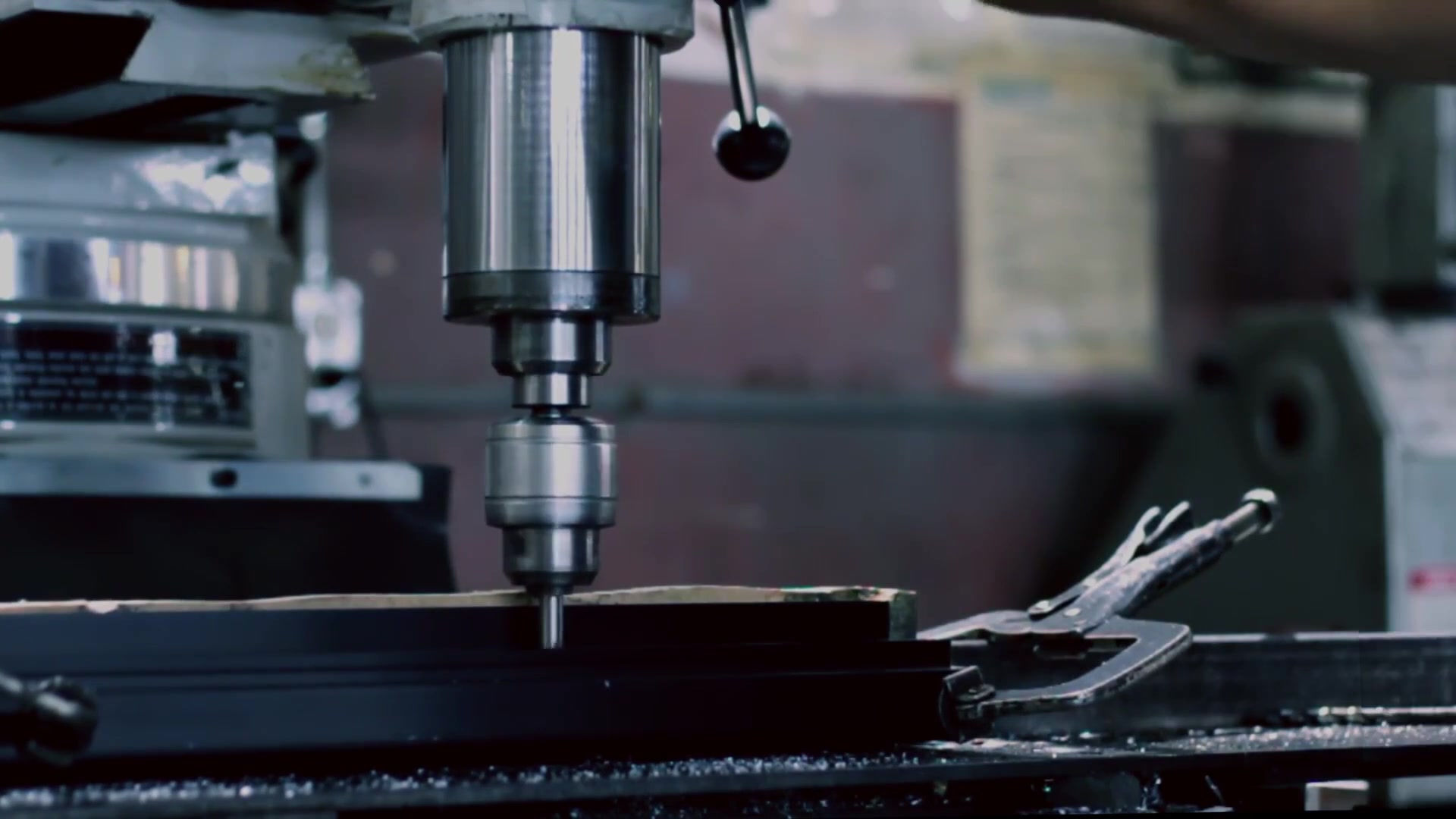


Hilberînerê Xwerû ya Gloverî, Integrator, Hevkar, Hevkarê Derveyî Ji bo Cûreyek Berfireh a Hilber û Karûbaran.
Em ji bo çêkirin, çêkirin, endezyarî, yekbûn, yekbûn, derxistina hilber û karûbarên xwerû yên çêkirî û yên li derveyî refê çavkaniya weya yek-rawest in. Ger hûn bixwazin, em di heman demê de etîketa taybet / spî hilberên we bi navê marqeya we nîşan didin.
Zimanê xwe hilbijêre
Hilberîna Xweser a Parçe, Pêkhatî, Meclîs, Berhemên Qediyayî, Makîne û Amûrên Pîşesaziyê
Hilberîna Peymana Navxweyî û Gerdûnî
Manufacturing Outsourcing
Kirîna Navxweyî, Gerdûnî ya Berhemên Pîşesazî
Etîketkirina taybet / Spî Hilberên xwe bi navê marqeya xwe nîşankirin
Karûbarên Dîtina Hilber & Cihgirtin
Sêwirana gerdûnî û Hevkariya Kanal
Endezyariya Entegrasyonê
Xizmetên Endezyariyê
Hevgirtina Gerdûnî, Warehousing, Logistics


Encamên Lêgerînê
164 results found with an empty search
- Computer Chassis, Racks, Shelves, 19 inch Rack, 23 inch Rack, Case
Computer Chassis - Racks - Shelves - 19 inch Rack - 23 inch Rack - Computer and Instrument Case Manufacturing - AGS-TECH Inc. - New Mexico - USA Şass, Racks, Çiyayên ji bo Komputerên Pîşesazî We offer you the most durable and reliable INDUSTRIAL COMPUTER CHASSIS, RACKS, MOUNTS, RACK MOUNT INSTRUMENTS and RACK MOUNTED SYSTEMS, SUBRACK, SHELF, 19 INCH & 23 INCH RACKS, FULL SİZE and HALF RACKS, OPEN and CLOSED RACK, MOUNTING HARDWARE, STRUCTURAL AND SUPPORT COMPONENTS, RAILS and SLIDES, TWO andFOUR POST RACKS that meet international and industry standards. Besides our off-the-shelf products, we are capable to build you any specially tailored chassis, racks and mounts. Some of the brand names we have in stock are BELKIN, HEWLETT PACKARD, KENDALL HOWARD, GREAT LAKES, APC, RITTAL, LIEBERT, RALOY, SHARK RACK, UPSITE TECHNOLOGIES. Here are brochures and catalogs of some industrial computer chassis, racks. Simply click on the respective blue text to download them: - Catalog for Vandal-Proof IP65/IP67/IP68 Keyboards, Keypads, Pointing Devices, ATM Pinpads, Medical & Military Keyboards and other similar Rugged Computer Peripherals - DFI-ITOX brand Industrial Chassis - 01 Series Instrument Case System-I from AGS-Electronics - 05 Series Instrument Case System-V from AGS-Electronics - 06 Series Plug-in Chassis from AGS-Electronics To choose a suitable Industrial Grade Chassis, Rack or Mount please go to our industrial computer store by CLICKING HERE. Dowload brochure for our DESIGN PARTNERSHIP PROGRAM Here is some key terminology that should be useful for reference purposes: A RACK UNIT or U (less commonly referred to as RU) is a unit of measure used to describe the height of equipment intended for mounting into a 19-inch rack or a 23-inch rack (The 19-inch or 23-inch dimension refers to the width of the equipment mounting frame in the rack i.e. the width of the equipment that can be mounted inside the rack). One rack unit is 1.75 inches (44.45 mm) high. The size of a piece of rack-mounted equipment is frequently described as a number in ''U''. For example, one rack unit is often referred to as ''1U'', 2 rack units as ''2U'' and so on. A typical full size rack is 44U, which means it holds just over 6 feet of equipment. In computing and information technology, however, half-rack typically describes a unit that is 1U high and half the depth of a 4-post rack (such as a network switch, router, KVM switch, or server), such that two units can be mounted in 1U of space (one mounted at the front of the rack and one at the rear). When used to describe the rack enclosure itself, the term half-rack typically means a rack enclosure that is 24U tall. A front panel or filler panel in a rack is not an exact multiple of 1.75 inches (44.45 mm). To allow space between adjacent rack-mounted components, a panel is 1⁄32 inch (0.031 inch or 0.79 mm) less in height than the full number of rack units would imply. Thus, a 1U front panel would be 1.719 inches (43.66 mm) high. A 19-inch rack is a standardized frame or enclosure for mounting multiple equipment modules. Each module has a front panel that is 19 inches (482.6 mm) wide, including edges or ears that protrude on each side which allow the module to be fastened to the rack frame with screws. Equipment designed to be placed in a rack is typically described as rack-mount, rack-mount instrument, a rack mounted system, a rack mount chassis, subrack, rack mountable, or occasionally simply shelf. A 23-inch rack is used for housing telephone (primarily), computer, audio and other equipment though is less common than the 19-inch rack. The size notes the width of the faceplate for the installed equipment. The rack unit is a measure of vertical spacing and is common to both the 19 and 23-inch (580 mm) racks. Hole spacing is either on 1-inch (25 mm) centres (Western Electric standard), or the same as for 19-inch (480 mm) racks (0.625 inches / 15.9 millimetres spacing). CLICK Product Finder-Locator Service RÛPERA BERÊ
- Plastic Rubber Metal Extrusions, Extrusion Dies, Aluminum Extruding
Plastic Rubber Metal Extrusions, Extrusion Dies, Aluminum Extruding, Pipe Tube Forming, Plastic Profiles, Metal Profiles Manufacturing, PVC at AGS-TECH Inc. Extrusions, Products Extruded, Extrudates We use the EXTRUSION process to manufacture products with a fixed cross sectional profile such as tubes, pipes and heat sinks. Even though many materials can be extruded, our most common extrusions are made of metal, polymers / plastic, ceramic obtained by either cold, warm or hot extrusion method. We call the extruded parts extrudate or extrudates if plural. Some specialized versions of the process we also perform are overjacketing, coextrusion and compound extrusion. We recommend that you click here to DOWNLOAD our Schematic Illustrations of Metal Ceramic and Plastic Extrusion Processes by AGS-TECH Inc. This will help you better understand the information we are providing you below. In extrusion material to be extruded is pushed or drawn through a die that has the desired cross-sectional profile. The process can be used to manufacture complex cross-sections with excellent surface finish and to work on brittle material. One can produce any length of parts using this process. To simplify the process steps: 1.) In warm or hot extrusions the material is heated and loaded into a container in the press. The material is pressed and pushed out of the die. 2.) Produced extrudate is is stretched for straightening, heat treated or cold worked for enhancing its properties. On the other hand COLD EXTRUSION takes place at around room temperature and has the advantages of less oxidation, high strength, closer tolerances, good surface finish and fastness. WARM EXTRUSION is performed above room temperature but below recrystallization point. It offers a compromise and balance for required forces, ductility and material properties and is therefore the choice for some applications. HOT EXTRUSION takes place above the material’s recrystallization temperature. This way it is easier to push the material through the die. However the equipment cost is high. The more complex an extruded profile, the more costly is the die (tooling) and the lower is the rate of production. The die cross sections as well as thicknesses have limitations that depend on the material to be extruded. Sharp corners in extrusion dies are always undesirable and to be avoided unless necessary. According to the material that is being extruded, we offer: • METAL EXTRUSIONS : Most common ones we produce are aluminum, brass, zinc, copper, steel, titanium, magnesium • PLASTIC EXTRUSION : Plastic is melted and formed into a continuous profile. Our common materials processed are polyethylene, nylon, polystyrene, polyvinyl chloride, polypropylene, ABS plastic, polycarbonate, acrylic. Typical products we manufacture include pipes and tubing, plastic frames. In the process small plastic beads / resin is gravity fed from hopper into barrel of the extrusion machine. Frequently we also mix colorants or other additives into hopper to give the product the required specifications and properties. The material entering the heated barrel is forced by the rotating screw to leave the barrel at the end and move through the screen pack for removal of contaminants in the molten plastic. After passing the screen pack the plastic enters the extrusion die. The die gives the moving soft plastic its profile shape as it passes through. Now the extrudate goes through a water bath for cooling. Other techniques AGS-TECH Inc. has been using for many years are: • PIPE & TUBING EXTRUSION : Plastic pipes and tubes are formed when plastics is extruded through a round shaping die and cooled in a water bath, then cut to length or coiled / spooled. Clear or colored, striped, single or dual wall, flexible or rigid, PE, PP, polyurethane, PVC, nylon, PC, silicone, vinyl or else, we have it all. We have stocked tubes as well as the capability to produce according to your specifications. AGS-TECH manufactures tubing to FDA, UL, and LE requirements for medical, electric & electronic, industrial and other applications. • OVERJACKETING / OVER JACKETING EXTRUSION : This technique applies an outer layer of plastic onto existing wire or cable. Our insulation wires are manufactured with this method. • COEXTRUSION : Multiple layers of material are simultaneously extruded. The multiple layers are delivered by multiple extruders. The various layer thicknesses can be adjusted to meet customer specifications. This process makes it possible to use multiple polymers each having a different functionality in the product. As a result, one can optimize a range of properties. • COMPOUND EXTRUSION: A single or multiple polymers are mixed with additives to obtain a plastic compound. Our twin-screw extruders produce compounding extrusions. Extrusion dies are generally inexpensive compared to metal moulds. If you are paying much more than a few thousand dollars for a small or medium size extrusion die extruding aluminum, you are probably paying too much. We are experts in determining which technique is the most cost effective, fastest and most suitable for your application. Sometimes extruding and then machining a part can save you a lot of cash. Before making a firm decision, ask us our opinion first. We have helped many customers make the right decisions. For some widely used metal extrusions, you can download our brochures and catalogs by clicking on the colored text below. If it is an off-shelf product meeting your requirements, it will be more economical. Download our medical tube and pipe extrusion capabilities Download our extruded heat sinks • SECONDARY MANUFACTURING & FABRICATION PROCESSES FOR EXTRUSIONS : Among value added processes we offer for extruded products are: -Custom tube & pipe bending, forming and shaping, tube cutoff, tube end forming, tube coiling, machining and finishing, hole drilling & piercing & punching, -Custom pipe and tube assemblies, tubular assembly, welding, brazing and soldering -Custom extrusion bending, forming and shaping -Cleaning, degreasing, pickling, passivation, polishing, anodizing, plating, painting, heat treating, annealing and hardening, marking, engraving and labeling, custom packaging. CLICK Product Finder-Locator Service RÛPERA BERÊ
- Vibration Meter, Tachometer, Accelerometer, Vibrometer, Nondestructive
Vibration Meter - Tachometer - Accelerometer -Vibrometer- Nondestructive Testing - SADT-Mitech- AGS-TECH Inc. - NM - USA Metreyên Vibrasyonê, Tachometer VIBRATION METERS and NON-CONTACT TACHOMETERS are widely used in inspection, manufacturing, production, laboratory and R&D. Please download catalogs from colored links below and let us know the brand name and model number of the product of your choice. We can offer you brand new as well as refurbished / used vibration meters, tachometers at the most competitive prices: FLUKE Test Tools Catalog (includes vibration meters, vibration testers, laser shaft alignment tool) SADT-SINOAGE Brand Metrology and Test Equipment, please CLICK HERE. In this catalog you will find some high quality vibration meters and tachometers. The vibration meter is used to measure vibrations and oscillations in machines, installations, tools or components. Measurements of the vibration meter provides the following parameters: vibration acceleration, vibration velocity and vibration displacement. This way the vibration is recorded with great precision. They are mostly portable devices and the readings can be stored and retrieved for later use. Critical frequencies which can cause damage or disturbing noise level may be detected using a vibration meter. We sell and service a number of vibration meter and non-contact tachometer brands including SINOAGE, SADT. Modern versions of these test instruments are capable of simultaneously measuring and recording a variety of parameters such as temperature, humidity, pressure, 3-axis acceleration and light; their data logger record over millions of measured values, have optional microSD cards making the able to record even over a billion measured values. Many have selectable parameters, housings, external sensors, and USB-interfaces. WIRELESS VIBRATION METERS provide the comfort of transmitting data wirelessly from the tested machine to the receiver for inspection and analysis. VIBRATION TRANSMITTERS are perfect solutions for continuous monitoring. A vibration transmitter can be used for vibration monitoring of equipment in remote or hazardous locations. They are designed in rugged NEMA 4 rated cases. Programmable version are available. Other versions include the POCKET ACCELEROMETER to measure vibration velocity in machines and installations. MULTICHANNEL VIBRATION METERS to perform vibration measurements on multiple places at the same time. The vibration velocity, acceleration and expansion in a wide frequency range can be measured. The cables of the vibration sensors are long, so the vibration measuring device is able to record vibrations at different points of the component to be tested. Many vibration meters are used primarily to determine vibrations in machines and installations revealing vibration acceleration, vibration velocity and vibration displacement. With the help of these vibration meters, the technicians are able to quickly determine the current state of the machine and the causes of the vibrations, and make the necessary adjustments and assess new conditions afterwards. However some vibration meter models can be used in the same way, but they also have functions to analyze the FAST FOURIER TRANSFORM (FFT) and display if any specific frequencies are occurring within the vibrations. These are used preferably for investigation development of machines and installations or to take measurements over a period of time in a test environment. The Fast Fourier Transform (FFT) models can also determine and analyze the 'Harmonics' with ease and precision. Vibration meters are normally used for the control rotational axis of machinery so the technicians are able to determine and evaluate the development of an axis with accuracy. In cases of emergency, the axis may be modified and changed during a scheduled pause of the machine. Many factors can cause excessive vibration in rotating machinery such as worn out bearings and couplings, foundation damage, broken mounting bolts, misalignment and unbalance. A well scheduled vibration measurement procedure helps to detect and eliminate these failures early on before any serious machine problems occur. A TACHOMETER (also called a revolution-counter, RPM gauge) is an instrument that measures the rotation speed of a shaft or disk, as in a motor or machine. These devices display the revolutions per minute (RPM) on a calibrated analogue or digital dial or display. The term tachometer is usually restricted to mechanical or electrical instruments that indicate instantaneous values of speed in revolutions per minute, rather than devices that count the number of revolutions in a measured time interval and indicate only average values for the interval. There are CONTACT TACHOMETERS as well as NON-CONTACT TACHOMETERS (also referred to as a PHOTO TACHOMETER or LASER TACHOMETER or INFRARED TACHOMETER depending on the light source used). Yet some others are referred to as COMBINATION TACHOMETERS combining a contact and photo tachometer in one unit. Modern combination tachometers show reverse direction characters on display depending on contact or photo mode, use visible light to read several inches of distance from target, the memory/readings button holds the last reading and recalls min/max readings. Just as with vibration meters, there are many models of tachometers including multi-channel instruments for measuring speed at multiple locations simultaneously, wireless versions for providing information from remote locations….etc. RPM ranges for modern instruments vary from a few RPMs to hundred or hundreds of thousands of RPM values, they offer automatic range selection, auto-zero adjustment, values such as +/- 0.05% accuracy. Our vibration meters and non-contact tachometers from SADT are: Portable Vibration Meter SADT Model EMT220 : Integrated vibration transducer, annular shear type acceleration transducer (only for integrated type), separate, built-in electric charge amplifier, shear type acceleration transducer (only for separate type), temperature transducer, type K thermoelectric couple transducer (only for EMT220 with temperature measuring function). Device has root mean square detector, vibration measurement scale for displacement is 0.001~1.999 mm (peak to peak), for velocity is 0.01~19.99 cm/s (rms value), for acceleration is 0.1~199.9 m/s2 (peak value), for vibration acceleration is 199.9 m/s2 (peak value). Temperature measurement scale is -20~400°C (only for EMT220 with temperature-measuring function). Accuracy for vibration measurement: ±5% Measurement value ±2 Digits. Temperature measurement: ±1% Measurement value ±1 Digit, Vibration Frequency Range: 10~1 kHz (Normal type) 5~1 kHz (Low frequency type) 1~15 kHz (only at “HI” position for acceleration). Display is liquid crystal display (LCD), Sample period: 1 second, vibration measurement value readout: Displacement: Peak to peak value (r.m.s.×2squareroot2), Velocity: Root mean square (r.m.s.), Acceleration: Peak value (r.m.s.×squareroot 2), Readout-keeping function: Readout of vibration / temperature value can be remembered after releasing the Measure Key (Vibration / Temperature Switch), Output Signal: 2V AC (peak value) (load resistance above 10 k at full measuring scale), Power supply: 6F22 9V laminated cell, battery life about 30 hours for continuous use, Power on / off: Power up when pressing Measure Key (Vibration / Temperature Switch), power automatically shuts off after releasing the Measure Key for one minute, Operating conditions: Temperature: 0~50°C, Humidity: 90% RH , Dimensions:185mm×68mm×30mm, Net weight:200g Portable Optical Tachometer SADT Model EMT260 : Unique ergonomic design provides direct line-of-sight viewing of display and target, easily readable 5 digit LCD display, on-target and low battery indicator, maximum, minimum and last measurement of rotational speed, frequency, cycle, linear speed and counter. Speed Ranges: Rotational speed:1~99999r/min, Frequency: 0.0167~1666.6Hz, Cycle:0.6~60000ms, Counter:1~99999, Linear speed:0.1~3000.0m/min, 0.0017~16.666m/s, Accuracy:±0.005% of reading, Display:5 digit LCD display, Input signal:1-5VP-P Pulse Input, Output signal: TTL compatible Pulse Output, Power:2x1.5V batteries, Dimensions (LxWxH): 128mmx58mmx26mm, Net weight:90g For details and other similar equipment, please visit our equipment website: http://www.sourceindustrialsupply.com CLICK Product Finder-Locator Service RÛPERA BERÊ
- Passive Optical Components, Splitter & Combiner, DWDM, Optical Switch
Passive Optical Components - Splitter - Combiner - DWDM - Optical Switch - MUX / DEMUX - Circulator - Waveguide - EDFA Hilberîn & Civîna Pêkhateyên Optîk ên Pasîf We supply PASSIVE OPTICAL COMPONENTS ASSEMBLY, including: • FIBER OPTICAL COMMUNICATION DEVICES: Fiberoptic taps, splitters-combiners, fixed and variable optical attenuators, optical switch, DWDM, MUX/DEMUX, EDFA, Raman amplifiers and other amplifiers, circulators, gain flatteners, custom fiber optic assemblies for telecommunication systems, optical waveguide devices, splicing enclosure, CATV products. • INDUSTRIAL FIBER OPTICAL ASSEMBLY: Fiber optic assemblies for industrial applications (illumination, light delivery or inspection of pipe interiors, fiberscopes, endoscopes....). • FREE SPACE PASSIVE OPTICAL COMPONENTS and ASSEMBLY: These are optical components made from special grade glasses and crystals with superior transmission and reflection and other outstanding characteristics. Lenses, prisms, beamsplitters, waveplates, polarizers, mirrors, filters......etc. are among this category. You can download our off-shelf passive free space optical components and assemblies from our catalog below or ask us for custom designing and manufacturing them specially for your application. Among the passive optical assemblies our engineers have developed are: - A test and cutting station for polarized attenuators. - Video endoscopes and fiberscopes for medical applications. We use special bonding and attachment techniques and materials for rigid, reliable and long life assemblies. Even under extensive environmental cycling tests such as high temperature/low temperature; high humidity/low humidity our assemblies remain intact and keep working. Passive optical components and assemblies have become commodities in recent years. There really is no need to pay big amounts for these components. Contact us to take advantage of our competitive prices for the highest quality available. All our passive optical components and assemblies are manufactured in ISO9001 and TS16949 certified plants and conform to relevant international standards such as Telcordia for communication optics and UL, CE for industrial optical assemblies. Passive Fiber Optic Components and Assembly Brochure Passive Free Space Optical Components and Assembly Brochure CLICK Product Finder-Locator Service RÛPERA BERÊ
- Computer Networking Equipment, Intermediate Systems, InterWorking Unit
Computer Networking Equipment - Intermediate Systems - InterWorking Unit - IWU - IS - Router - Bridge - Switch - Hub available from AGS-TECH Inc. Amûrên Torê, Amûrên Torê, Pergalên Navîn, Unit Interworking COMPUTER NETWORKING DEVICES are equipment that mediate data in computer networks. Computer networking devices are also called NETWORK EQUIPMENT, INTERMEDIATE SYSTEMS (IS) or INTERWORKING UNIT (IWU). Devices which are the last receiver or that generate data are called HOST or DATA TERMINAL EQUIPMENT. Among the high quality brands we offer are ATOP TECHNOLOGIES, JANZ TEC , ICP DAS and KORENIX. - ATOP TECHNOLOGIES compact product brochure - ATOP Technologies Product List 2021) - Barcode and Fixed Mount Scanners - RFID Products - Mobile Computers - Micro Kiosks OEM Technology (We private label these with your brand name and logo if you wish) - Barcode Scanners (We private label these with your brand name and logo if you wish) - CISCO Start Catalog (Networking Equipment, Switches, Wireless Controllers, Wireless Access Points (WAP), Cloud Managed Access Points, Routers) - Fixed Industrial Scanners (We private label these with your brand name and logo if you wish) - ICP DAS brand industrial communication and networking products brochure - ICP DAS brand industrial Ethernet switch for rugged environments - ICP DAS brand PACs Embedded Controllers & DAQ brochure - ICP DAS brand Industrial Touch Pad brochure - ICP DAS brand Remote IO Modules and IO Expansion Units brochure - ICP DAS brand PCI Boards and IO Cards - J ANZ TEC brand compact product brochure - Kiosk Systems (We private label these with your brand name and logo if you wish) - Kiosk Systems Accessories Guide (We private label these with your brand name and logo if you wish) - KORENIX brand compact product brochure - Mobile Computers for Enterprises (We private label these with your brand name and logo if you wish) - Printers for Barcode Scanners and Mobile Computers (We private label these with your brand name and logo if you wish) - RFID Readers - Scanners - Encoders - Printers (We private label these with your brand name and logo if you wish) To choose a suitable Industrial Grade Networking Device for your project, please go to our industrial computer store by CLICKING HERE. Dowload brochure for our DESIGN PARTNERSHIP PROGRAM Below is some fundamental information about networking devices that you may find useful. List of computer networking devices / Common basic networking devices: ROUTER: This is a specialized network device that determines the next network point where it can forward a data packet towards the destination of the packet. Unlike a gateway, it cannot interface different protocols. Works on OSI layer 3. BRIDGE: This is a device connecting multiple network segments along the data link layer. Works on OSI layer 2. SWITCH: This is a device that allocates traffic from one network segment to certain lines (intended destination(s)) which connect the segment to another network segment. So unlike a hub a switch splits the network traffic and sends it to different destinations rather than to all systems on the network. Works on OSI layer 2. HUB: Connects multiple Ethernet segments together and makes them act as a single segment. In other words, a hub provides bandwidth which is shared among all the objects. A hub is one of the most basic hardware devices that connects two or more Ethernet terminals in a network. Therefore, only one computer connected to the hub is able to transmit at a time, contrary to switches, which provide a dedicated connection between individual nodes. Works on OSI layer 1. REPEATER: This is a device to amplify and/or regenerate digital signals received while sending them from one part of a network to another. Works on OSI layer 1. Some of our HYBRID NETWORK devices: MULTILAYER SWITCH: This is a switch that besides switching on OSI layer 2, provides functionality at higher protocol layers. PROTOCOL CONVERTER: This is a hardware device that converts between two different types of transmissions, such as asynchronous and synchronous transmissions. BRIDGE ROUTER (B ROUTER): This piece of equipment combines router and bridge functionalities and therefore works on OSI layers 2 and 3. Here are some of our hardware and software components that most often are placed on the connection points of different networks, e.g. between internal and external networks: PROXY: This is a computer network service that allows clients to make indirect network connections to other network services FIREWALL: This is a piece of hardware and/or software placed on the network to prevent the type of communications that are forbidden by the network policy. NETWORK ADDRESS TRANSLATOR: Network services provided as hardware and/or software that convert internal to external network addresses and vice versa. Other popular hardware for establishing networks or dial-up connections: MULTIPLEXER: This device combines several electrical signals into a single signal. NETWORK INTERFACE CONTROLLER: A piece of computer hardware which allows the attached computer to communicate by network. WIRELESS NETWORK INTERFACE CONTROLLER: A piece of computer hardware which allows the attached computer to communicate by WLAN. MODEM: This is a device that modulates an analog ''carrier'' signal (such as sound), to encode digital information, and that also demodulates such a carrier signal to decode the transmitted information, as a computer communicating with another computer over the telephone network. ISDN TERMINAL ADAPTER (TA): This is a specialized gateway for Integrated Services Digital Network (ISDN) LINE DRIVER: This is a device that increases transmission distances by amplifying the signal. Base-band networks only. CLICK Product Finder-Locator Service RÛPERA BERÊ
- Electromagnetic Components Manufacturing and Assembly, Selenoid
Electromagnetic Components Manufacturing and Assembly, Selenoid, Electromagnet, Transformer, Electric Motor, Generator, Meters, Indicators, Scales,Electric Fans Solenoids û pêkhateyên elektromagnetîk & Meclîsên Wekî hilberînerek xwerû û entegratorek endezyariyê, AGS-TECH dikare PÊKÊŞ Û MEBILÊN ELEKTROMAGNETÎ yên jêrîn ji we re peyda bike: • Selenoid, elektromagnet, transformer, motora elektrîkê û meclîsên jeneratorê • Metreyên elektromagnetîk, nîşanker, pîvazên ku bi taybetî li gorî cîhaza weya pîvanê hatine çêkirin. • Sensor elektromagnetic û meclîsên aktuator • Ji bo cîhazên elektronîk û sepanên pîşesazî fenerên elektrîkî û sarkerên bi mezinahiyên cihêreng • Civîna pergalên elektromagnetîk ên din ên tevlihev Li vir bikirtînin da ku broşûra Metrên Panelê me - OICASCHINT dakêşin Broşur Ferrites Soft - Cores - Toroids - EMI Suppression Products - RFID Transponders and Accessories Ji bo BERNAMEYA HEVKARÎYA DESIGN a me broşur dakêşin Heke hûn bi piranî li şûna kapasîteyên hilberînê bi kapasîteyên me yên endezyar û lêkolîn û pêşkeftinê re eleqedar in, wê hingê em we vedixwînin ku biçin malpera meya endezyariyê http://www.ags-engineering.com CLICK Product Finder-Locator Service RÛPERA BERÊ
- Automation Robotic Systems Manufacturing | agstech
Motion Control, Positioning, Motorized Stage, Actuator, Gripper, Servo Amplifier, Hardware Software Interface Card, Translation Stages, Rotary Table,Servo Motor Otomasyon & Hilberîn û Civîna Pergalên Robotîk Being an engineering integrator, we can provide you AUTOMATION SYSTEMS including: • Motion control and positioning assemblies, motors, motion controller, servo amplifier, motorized stage, lift stage, goniometers, drives, actuators, grippers, direct drive air bearing spindles, hardware-software interface cards and software, custom built pick and place systems, custom built automated inspection systems assembled from translation/rotary stages and cameras, custom built robots, custom automation systems. We also supply manual positioner, manual tilt, rotary or linear stage for simpler applications. A large selection of linear and rotary tables/slides/stages that utilize brushless linear direct-drive servomotors, as well as ball screw models driven with brush or brushless rotary motors are available. Air bearing systems are also an option in automation. Depending on your automation requirements and application, we choose translation stages with suitable travel distance, speed, accuracy, resolution, repeatability, load capacity, in-position stability, reliability...etc. Again, depending on your automation application we can supply you either a purely linear or linear/rotary combination stage. We can manufacture special fixtures, tools and combine them with your motion control hardware to turn them into a complete turnkey automation solution for you. If you require also assistance with installing drivers, code writing for specially developed software with user friendly interface, we can send our experienced automation engineer to your site on a contract basis. Our engineer can directly communicate with you on a daily basis so that at the end you have a custom tailored automation system free of bugs and meeting your expectations. Goniometers: For high-accuracy angular alignment of optical components. The design utilizes direct-drive noncontact motor technology. When used with the multiplier, it provides a positioning speed of 150 degrees per second. So whether you are thinking of an automation system with a moving camera, taking snapshots of a product and analyzing the images acquired to determine a product defect, or whether you are trying to reduce manufacturing leadtimes by integrating a pick and place robot to your automated manufacturing, call us, contact us and you will be glad with the solutions we can provide you. ROBOTS and COBOTS Here are brochures of some off-shelf robots you can download. If you wish we can build you customized robots and cobots that will better fit your needs and applications. We can either redesign and modify existing robot platforms or make new designs for you. Click on blue colored text below to download catalogs: - Collaborative Robots - Customized Agricultural Robots - Customized Commercial Places Robots - Customized Health Care and Hospital Robots - Customized Warehousing Robots - Customized Robots for a Variety of Applications - Food and Beverage Delivery Robot-A302-A302D - Hospital Delivery Robot A801 - Indoor Delivery Robots A301-A301A - Indoor Delivery Robot A305 - Mobile Robot Platform A001 - Robotic Laser Welding Workstation - Robotics Product Brochure - Robotics Workstations - Robot Palletizing Workstation - Robotic Vending Machine A406 - Security Robot A602 - Selection Guide of Industrial Robot Platforms - Small Objects Transfer Robot A503 - Warehouse Logistics Robots A201-A201A - Welding Robots Brochure OTHER ALTERNATIVE ROBOTS and COBOTS No one design or product meets every customer's needs. Below are downloadable brochures for our other products. - Hikrobot Mobile Robots Catalog - Hikvision Logistic Vision Solutions AUTOMATION COMPONENTS AND SPARE PARTS Click on highlighted text to download brochures and catalogs of products you can use as accessories, spare components in building automation systems, robots and cobots: - Barcode and Fixed Mount Scanners - RFID Products - Mobile Computers - Micro Kiosks OEM Technology (We private label these with your brand name and logo if you wish) - Barcode Scanners (We private label these with your brand name and logo if you wish) - Fixed Industrial Scanners (We private label these with your brand name and logo if you wish) - Hikrobot Machine Vision Products - Hikrobot Smart Machine Vision Products - Hikrobot Machine Vision Standard Products - Kinco automation products, including HMI, stepper system, ED servo, CD servo, PLC, field bus. - Kiosk Systems (We private label these with your brand name and logo if you wish) - Kiosk Systems Accessories Guide (We private label these with your brand name and logo if you wish) - Linear Bearings, Die-Set Flange Mount Bearings, Pillow Blocks, Square Bearings and various Shafts & Slides for motion control - Mobile Computers for Enterprises (We private label these with your brand name and logo if you wish) - Motor Starter with UL and CE Certification NS2100111-1158052 - Printers for Barcode Scanners and Mobile Computers (We private label these with your brand name and logo if you wish) - Process Automation Solutions (We private label these with your brand name and logo if you wish) - RFID Readers - Scanners - Encoders - Printers (We private label these with your brand name and logo if you wish) - Vandal-Proof IP65/IP67/IP68 Keyboards, Keypads, Pointing Devices, ATM Pinpads, Medical & Military Keyboards and other similar Rugged Computer Peripherals Download brochure for our CUSTOM MACHINE AND EQUIPMENT MANUFACTURING Dowload brochure for our DESIGN PARTNERSHIP PROGRAM If you are looking for industrial computers, embedded computers, panel PC for your automation system, we invite you to visit our industrial computers store at http://www.agsindustrialcomputers.com If you would like to obtain more information about our engineering and research & development capabilities besides manufacturing capabilities, then we invite you to visit our engineering site http://www.ags-engineering.com CLICK Product Finder-Locator Service RÛPERA BERÊ
- Product Finder Locator for Partially Known Products
Product Finder Locator for Partially Known Products AGS-TECH, Inc. ya we ye Çêkerê Xweseriya Gloverî, Integrator, Hevkar, Hevkarê Derveyî. Em ji bo çêkirin, çêkirin, endezyarî, hevgirtin, derxistina derve çavkaniya weya yek-rawest in. Heke hûn bi rastî nizanin ka hûn li kîjan hilberê digerin lê tenê agahdariya qismî heye, agahdariya xwe dagirin: Ger dagirtina forma li jêr ne mumkin an jî pir dijwar be, em daxwaza we bi e-nameyê jî qebûl dikin. Tenê ji me re binivîsin sales@agstech.net Get a Price Quote on a partially known brand, model, part number....etc. First name Last name Email Phone Product Name if You Know: Product Make or Brand if You Know: Please Enter Manufacturer Part Number if Known: Please Enter SKU Code if You Know: Your Application for the Product: Quantity Needed: Do you have a price target ? If so, please let us know the price you expect: Give us more details if possible: Condition of Product Needed New Used Does Not Matter Heke we hebe, pelên têkildar ên hilberê bi tikandina li ser lînka jêrîn barkirin. Xem neke, lînka jêrîn dê pencereyek nû ji bo daxistina pelên xwe vebike. Hûn ê ji vê pencereya heyî dûr nekevin. Piştî barkirina pelên xwe, TENÊ Pencera Dropboxê bigire, lê ne vê rûpelê. Bawer bikin ku hemî cîhan tije bikin û bişkojka şandina jêrîn bikirtînin. JI BO BAXKIRINA PÊLEYAN LI VIR bikirtînin Request a Quote Thanks! We’ll send you a price quote shortly. RÛPERA BERÊ Em AGS-TECH Inc., çavkaniya weya yek-stop ji bo çêkirin û çêkirin û endezyarî û jêderxistin û yekbûnek we ne. Em entegratora endezyariya herî cihêreng a Cîhanê ne ku hilberîna xwerû, binecivîn, komkirina hilberan û karûbarên endezyariyê pêşkêşî we dikin.
- Chemical Physical Environmental Analyzers, NDT, Nondestructive Testing
Chemical Physical Environmental Analyzers, NDT, Nondestructive Testing, Analytical Balance, Chromatograph, Mass Spectrometer, Gas Analyzer, Moisture Analyzer Kîmyewî, Fîzîkî, Analyzerên Jîngehê The industrial CHEMICAL ANALYZERS we provide are: CHROMATOGRAPHS, MASS SPECTROMETERS, RESIDUAL GAS ANALYZERS, GAS DETECTORS, MOISTURE ANALYZER, DIGITAL GRAIN AND WOOD MOISTURE METERS, ANALYTICAL BALANCE The industrial PHYSICAL ANALYSIS INSTRUMENTS we offer are: SPECTROPHOTOMETERS, POLARIMETER, REFRACTOMETER, LUX METER, GLOSS METERS, COLOR READERS, COLOR DIFFERENCE METER , DIGITAL LASER DISTANCE METERS, LASER RANGEFINDER, ULTRASONIC CABLE HEIGHT METER, SOUND LEVEL METER, ULTRASONIC DISTANCE METER , DIGITAL ULTRASONIC FLAW DETECTOR , HARDNESS TESTER , METALLURGICAL MICROSCOPES , SURFACE ROUGHNESS TESTER , ULTRASONIC THICKNESS GAUGE , VIBRATION METER , TACHOMETER . and others...... For the highlighted products, please visit our related pages by clicking on the corresponding colored text above. The ENVIRONMENTAL ANALYZERS we provide are: TEMPERATURE & HUMIDITY CYCLING CHAMBERS, ENVIRONMENTAL TESTING CHAMBERS, LIQUID ANALYSIS & TEST SYSTEMS. Click on Colored Text to Download Catalogs below. Choose the brand and model number of your interest and let us know whether you need brand new, or refurbished / used equipment: AMETEK-LLOYD Instruments Materials Testing (Versatile Materials Testing Equipment, Universal Test Machines, Tensile Strength, Compressibility, Hardness, Elasticity, Peeling, Adhesion...etc.) ELCOMETER Inspection Equipment Catalog ( Physical Test Equipment , Gloss & Reflectance , Colour Measurement , Fineness Of Grind/Dispersion , Density & Specific Gravity , Viscosity & Flow Measurement , Film Application & Test Charts , Drying Time & Permeability , Washability & Abrasion , Hardness & Scratch Resistance , Elasticity, Bend & Impact Testers , Flash Point, Concrete Inspection Equipment ) FLUKE Test Tools Catalog (includes Indoor Air Quality Tools, Air Meter, Airflow Meter, Temperature-Humidity Meter, Particle Counter, Carbon Monoxide Meters) HAIDA Anti-Yellowing Aging Test Chamber HAIDA Color Assessment Cabinet HAIDA IPX1&X2 Water Drip Test Chamber HAIDA Rapid-Rate Thermal Cycle Chamber HAIDA Salt Corrosion Spray Test Chamber HAIDA Salt Spray Test Chamber HAIDA Sand Dust Proofing Test Chamber HAIDA Temperature Humidity Test Chamber HAIDA Thermal Shock Test Chamber HAIDA Ultraviolet Weathering Test Chamber HAIDA Walk-In Environmental Test Chamber HAIDA Xenon Aging Test Chamber High HAIDA Xenon Aging Test Chamber Standard Helium Leak Tester (We private label these with your brand name and logo if you wish) METTLER TOLEDO Weighing Solutions for Retail Stores SADT-SINOAGE brand metrology and test equipment, please CLICK HERE . You will find some models of the above listed equipment here. Sensors & Analytical Measurement Systems for Liquid Analysis (Products in this brochure are used for environmental tests and and tests carried out in process industries. Example products are conductivity sensors, dissolved oxygen sensors, chlorine sensors, turbidity/suspended solids sensors, optical sensors, transmitters....etc. We private label these with your brand name and logo if you wish) Sensors & Analytical Measurement Systems for Optical OEM Applications in Liquid Analysis (We private label these with your brand name and logo if you wish) Sensors & Analytical Measurement Systems for pH Testing (We private label these with your brand name and logo if you wish) Some fundamental information on these test systems: CHROMATOGRAPHY is a physical method of separation that distribute s components to separate between two phases, one stationary (stationary phase), the other (the mobile phase) moving in a definite direction. In other words, it refers to laboratory techniques for the separation of mixtures. The mixture is dissolved in a fluid called the mobile phase, which carries it through a structure holding another material called the stationary phase. The various constituents of the mixture travel at different speeds, which causes them to separate. The separation is based on differential partitioning between the mobile and stationary phases. Small differences in partition coefficient of a compound results in differential retention on the stationary phase and thus changing the separation. Chromatography can be used to separate the components of a mixture for more advanced use such as purification) or for measuring the relative proportions of analytes (which is the substance to be separated during chromatography) in a mixture. Several chromatographic methods exist, such as paper chromatography, gas chromatography and high performance liquid chromatography. ANALYTICAL CHROMATOGRAPHY is used to determine the existence and the concentration of analyte(s) in a sample. In a chromatogram different peaks or patterns correspond to different components of the separated mixture. In an optimal system each signal is proportional to the concentration of the corresponding analyte that was separated. An equipment called CHROMATOGRAPH enables a sophisticated separation. There are specialized types according to the physical state of the mobile phase such as GAS CHROMATOGRAPHS and LIQUID CHROMATOGRAPHS. Gas chromatography (GC), also sometimes called gas-liquid chromatography (GLC), is a separation technique in which the mobile phase is a gas. High temperatures used in Gas Chromatographs make it unsuitable for high molecular weight biopolymers or proteins encountered in biochemistry because heat denatures them. The technique is however well suited for use in the petrochemical, environmental monitoring, chemical research and industrial chemical fields. On the other hand, Liquid Chromatography (LC) is a separation technique in which the mobile phase is a liquid. In order to measure the characteristics of individual molecules, a MASS SPECTROMETER converts them to ions so that they can be accelerated, and moved about by external electric and magnetic fields. Mass spectrometers are used in Chromatographs explained above, as well as in other analysis instruments. The associated components of a typical mass spectrometer are: Ion Source: A small sample is ionized, usually to cations by loss of an electron. Mass Analyzer: The ions are sorted and separated according to their mass and charge. Detector: The separated ions are measured and results displayed on a chart. Ions are very reactive and short-lived, therefore their formation and manipulation must be conducted in a vacuum. The pressure under which ions may be handled is roughly 10-5 to 10-8 torr. The three tasks listed above may be accomplished in different ways. In one common procedure, ionization is effected by a high energy beam of electrons, and ion separation is achieved by accelerating and focusing the ions in a beam, which is then bent by an external magnetic field. The ions are then detected electronically and the resulting information is stored and analyzed in a computer. The heart of the spectrometer is the ion source. Here molecules of the sample are bombarded by electrons emanating from a heated filament. This is called an electron source. Gases and volatile liquid samples are allowed to leak into the ion source from a reservoir and non-volatile solids and liquids may be introduced directly. Cations formed by the electron bombardment are pushed away by a charged repeller plate (anions are attracted to it), and accelerated toward other electrodes, having slits through which the ions pass as a beam. Some of these ions fragment into smaller cations and neutral fragments. A perpendicular magnetic field deflects the ion beam in an arc whose radius is inversely proportional to the mass of each ion. Lighter ions are deflected more than heavier ions. By varying the strength of the magnetic field, ions of different mass can be focused progressively on a detector fixed at the end of a curved tube under a high vacuum. A mass spectrum is displayed as a vertical bar graph, each bar representing an ion having a specific mass-to-charge ratio (m/z) and the length of the bar indicates the relative abundance of the ion. The most intense ion is assigned an abundance of 100, and it is referred to as the base peak. Most of the ions formed in a mass spectrometer have a single charge, so the m/z value is equivalent to mass itself. Modern mass spectrometers have very high resolutions and can easily distinguish ions differing by only a single atomic mass unit (amu). A RESIDUAL GAS ANALYZER (RGA) is a small and rugged mass spectrometer. We have explained mass spectrometers above. RGAs are designed for process control and contamination monitoring in vacuum systems such as research chambers, surface science setups, accelerators, scanning microscopes. Utilizing quadrupole technology, there are two implementations, utilizing either an open ion source (OIS) or a closed ion source (CIS). RGAs are used in most cases to monitor the quality of the vacuum and easily detect minute traces of impurities possessing sub-ppm detectability in the absence of background interferences. These impurities can be measured down to (10)Exp -14 Torr levels, Residual Gas Analyzers are also used as sensitive in-situ, helium leak detectors. Vacuum systems require checking of the integrity of the vacuum seals and the quality of the vacuum for air leaks and contaminants at low levels before a process is initiated. Modern residual gas analyzers come complete with a quadrupole probe, electronics control unit , and a real-time Windows software package that is used for data acquisition and analysis, and probe control. Some software supports multiple head operation when more than one RGA is needed. Simple design with a small number of parts will minimize outgassing and reduce the chances of introducing impurities into your vacuum system. Probe designs using self-aligning parts will ensure easy reassembled after cleaning. LED indicators on modern devices provide instant feedback on the status of the electron multiplier, filament, electronics system and the probe. Long-life, easily changeable filaments are used for electron emission. For increased sensitivity and faster scan rates, an optional electron multiplier is sometimes offered that detects partial pressures down to 5 × (10)Exp -14 Torr. Another attractive feature of residual gas analyzers is the built-in degassing feature. Using electron impact desorption, the ion source is thoroughly cleaned, greatly reducing the ionizer's contribution to background noise. With a large dynamic range the user can make measurements of small and large gas concentrations simultaneously. A MOISTURE ANALYZER determines the remaining dry mass after a drying process with infrared energy of the original matter which is previously weighed. Humidity is calculated in relation to the weight of the wet matter. During the drying process, the decrease of moisture in the material is shown on the display. The moisture analyzer determines moisture and the amount of dry mass as well as the consistency of volatile and fixed substances with high accuracy. The weighing system of the moisture analyzer possesses all the properties of modern balances. These metrology tools are used in the industrial sector to analyze pastes, wood, adhesive materials, dust,…etc. There are many applications where trace moisture measurements are necessary for manufacturing and process quality assurance. Trace moisture in solids must be controlled for plastics, pharmaceuticals and heat treatment processes. Trace moisture in gases and liquids need to be measured and controlled as well. Examples include dry air, hydrocarbon processing, pure semiconductor gases, bulk pure gases, natural gas in pipelines….etc. The loss on drying type analyzers incorporate an electronic balance with a sample tray and surrounding heating element. If the volatile content of the solid is primarily water, the LOD technique gives a good measure of moisture content. An accurate method for determining the amount of water is the Karl Fischer titration, developed by the German chemist. This method detects only water, contrary to loss on drying, which detects any volatile substances. Yet for natural gas there are specialized methods for the measurement of moisture, because natural gas poses a unique situation by having very high levels of solid and liquid contaminants as well as corrosives in varying concentrations. MOISTURE METERS are test equipment for measuring the percentage of water in a substance or material. Using this information, workers in various industries determine if the material is ready for use, too wet or too dry. For example, wood and paper products are very sensitive to their moisture content. Physical properties including dimensions and weight are strongly affected by moisture content. If you are purchasing large quantities of wood by weight, it will be a wise thing to measure the moisture content to make sure it is not intentionally watered to increase the price. Generally two basic types of moisture meters are available. One type measures the electrical resistance of the material, which becomes increasingly lower as the moisture content of it rises. With the electrical resistance type of moisture meter, two electrodes are driven into the material and the electrical resistance is translated into moisture content on the device’s electronic output. A second type of moisture meter relies on the dielectric properties of the material, and requires only surface contact with it. The ANALYTICAL BALANCE is a basic tool in quantitative analysis, used for the accurate weighing of samples and precipitates. A typical balance should be able to determine differences in mass of 0.1 milligram. In microanalyses the balance must be about 1,000 times more sensitive. For special work, balances of even higher sensitivity are available. The measuring pan of an analytical balance is inside a transparent enclosure with doors so that dust does not collect and air currents in the room do not affect the balance's operation. There is a smooth turbulence-free airflow and ventilation that prevents balance fluctuation and the measure of mass down to 1 microgram without fluctuations or loss of product. Maintaining consistent response throughout the useful capacity is achieved by maintaining a constant load on the balance beam, thus the fulcrum, by subtracting mass on the same side of the beam to which the sample is added. Electronic analytical balances measure the force needed to counter the mass being measured rather than using actual masses. Therefore they must have calibration adjustments made to compensate for gravitational differences. Analytical balances use an electromagnet to generate a force to counter the sample being measured and outputs the result by measuring the force needed to achieve balance. SPECTROPHOTOMETRY is the quantitative measurement of the reflection or transmission properties of a material as a function of wavelength, and SPECTROPHOTOMETER is the test equipment used for this purpose. The spectral bandwidth (the range of colors it can transmit through the test sample), the percentage of sample-transmission, the logarithmic range of sample-absorption and percentage of reflectance measurement are critical for spectrophotometers. These test instruments are widely used in optical component testing where optical filters, beam splitters, reflectors, mirrors…etc need to be evaluated for their performance. There are many other applications of spectrophotometers including the measurement of transmission and reflection properties of pharmaceutical and medical solutions, chemicals, dyes, colors……etc. These tests ensure consistency from batch to batch in production. A spectrophotometer is able to determine, depending on the control or calibration, what substances are present in a target and their quantities through calculations using observed wavelengths. The range of wavelengths covered is generally between 200 nm - 2500 nm using different controls and calibrations. Within these ranges of light, calibrations are needed on the machine using specific standards for the wavelengths of interest. There are two major types of spectrophotometers, namely single beam and double beam. Double beam spectrophotometers compare the light intensity between two light paths, one path containing a reference sample and the other path containing the test sample. A single-beam spectrophotometer on the other hand measures the relative light intensity of the beam before and after a test sample is inserted. Although comparing measurements from double-beam instruments are easier and more stable, single-beam instruments can have a larger dynamic range and are optically simpler and more compact. Spectrophotometers can be installed also into other instruments and systems which can help users to perform in-situ measurements during production…etc. The typical sequence of events in a modern spectrophotometer can be summarized as: First the light source is imaged upon the sample, a fraction of the light is transmitted or reflected from the sample. Then the light from the sample is imaged upon the entrance slit of the monochromator, which separates the wavelengths of light and focuses each of them onto the photodetector sequentially. The most common spectrophotometers are UV & VISIBLE SPECTROPHOTOMETERS which operate in the ultraviolet and 400–700 nm wavelength range. Some of them cover the near-infrared region too. On the other hand, IR SPECTROPHOTOMETERS are more complicated and expensive because of the technical requirements of measurement in the infrared region. Infrared photosensors are more valuable and Infrared measurement is also challenging because almost everything emits IR light as thermal radiation, especially at wavelengths beyond about 5 m. Many materials used in other types of spectrophotometers such as glass and plastic absorb infrared light, making them unfit as the optical medium. Ideal optical materials are salts such as potassium bromide, which do not absorb strongly. A POLARIMETER measures the angle of rotation caused by passing polarized light through an optically active material. Some chemical materials are optically active, and polarized (unidirectional) light will rotate either to the left (counter-clockwise) or right (clockwise) when passed through them. The amount by which the light is rotated is called the angle of rotation. One popular application, concentration and purity measurements are made to determine product or ingredient quality in the food, beverage and pharmaceutical industries. Some samples that display specific rotations that can be calculated for purity with a polarimeter include the Steroids, Antibiotics, Narcotics, Vitamins, Amino Acids, Polymers, Starches, Sugars. Many chemicals exhibit a unique specific rotation which can be used to distinguish them. A Polarimeter can identify unknown specimens based on this if other variables like concentration and length of sample cell are controlled or at least known. On the other hand, if the specific rotation of a sample is already known, then the concentration and/or purity of a solution containing it can be calculated. Automatic polarimeters calculate these once some input on variables are entered by the user. A REFRACTOMETER is a piece of optical test equipment for the measurement of index of refraction. These instruments measure the extent to which light is bent, i.e. refracted when it moves from air into the sample and are typically used to determine the refractive index of samples. There are five types of refractometers: traditional handheld refractometers, digital handheld refractometers, laboratory or Abbe refractometers, inline process refractometers and finally Rayleigh Refractometers for measuring the refractive indices of gases. Refractometers are widely used in various disciplines such as mineralogy, medicine, veterinary, automotive industry…..etc., to examine products as diverse as gemstones, blood samples, auto coolants, industrial oils. The refractive index is an optical parameter to analyze liquid samples. It serves to identify or confirm the identity of a sample by comparing its refractive index to known values, helps assess the purity of a sample by comparing its refractive index to the value for the pure substance, helps determine the concentration of a solute in a solution by comparing the solution's refractive index to a standard curve. Let us go briefly over the types of refractometers: TRADITIONAL REFRACTOMETERS take advantage of the critical angle principle by which a shadow line is projected onto a small glass thru prisms and lenses. The specimen is placed between a small cover plate and a measuring prism. The point at which the shadow line crosses the scale indicates the reading. There is automatic temperature compensation, because the refractive index varies based on temperature. DIGITAL HANDHELD REFRACTOMETERS are compact, lightweight, water and high temperature resistant testing devices. Measurement times are very short and in the range of two to three seconds only. LABORATORY REFRACTOMETERS are ideal for users planning to measure multiple parameters and get the outputs in various formats, take printouts. Laboratory refractometers offer a wider range and higher accuracy than handheld refractometers. They can be connected to computers and controlled externally. INLINE PROCESS REFRACTOMETERS can be configured to constantly collect specified statistics of the material remotely. The microprocessor control provides computer power that makes these devices very versatile, time-saving and economical. Finally, the RAYLEIGH REFRACTOMETER is used for measuring the refractive indices of gases. Quality of light is very important in the workplace, factory floor, hospitals, clinics, schools, public buildings and many other places. LUX METERS are used to measure luminuous intensity (brightness). Special optic filters match the spectral sensitivity of the human eye. Luminous intensity is measured and reported in foot-candle or lux (lx). One lux is equal to one lumen per square meter and one foot-candle is equal to one lumen per square foot. Modern lux meters are equipped with internal memory or a data logger to record the measurements, cosine correction of the angle of incident light and software to analyze readings. There are lux meters for measuring UVA radiation. High end version lux meters offer Class A status to meet CIE, graphic displays, statistical analysis functions, large measurement range up to 300 klx, manual or automatic range selection, USB and other outputs. A LASER RANGEFINDER is a test instrument which uses a laser beam to determine the distance to an object. Most laser rangefinders operation is based on the time of flight principle. A laser pulse is sent in a narrow beam towards the object and the time taken by the pulse to be reflected off the target and returned to the sender is measured. This equipment is not suitable however for high precision sub-millimeter measurements. Some laser rangefinders use the Doppler effect technique to determine whether the object is moving towards or away from the rangefinder as well as the object’s speed. The precision of a laser rangefinder is determined by the rise or fall time of the laser pulse and the speed of the receiver. Rangefinders that use very sharp laser pulses and very fast detectors are capable to measure the distance of an object to within a few millimeters. Laser beams will eventually spread over long distances due to the divergence of the laser beam. Also distortions caused by air bubbles in the air make it difficult to get an accurate reading of the distance of an object over long distances of more than 1 km in open and unobscured terrain and over even shorter distances in humid and foggy places. High end military rangefinders operate at ranges up to 25 km and are combined with binoculars or monoculars and can be connected to computers wirelessly. Laser rangefinders are used in 3-D object recognition and modelling, and a wide variety of computer vision-related fields such as time-of-flight 3D scanners offering high-precision scanning abilities. The range data retrieved from multiple angles of a single object can be used to produce complete 3-D models with as little error as possible. Laser rangefinders used in computer vision applications offer depth resolutions of tenths of millimeters or less. Many other application areas for laser rangefinders exist, such as sports, construction, industry, warehouse management. Modern laser measurement tools include functions such as capability to make simple calculations, such as the area and volume of a room, switching between imperial and metric units. An ULTRASONIC DISTANCE METER works on a similar principle as a laser distance meter, but instead of light it uses sound with a pitch too high for the human ear to hear. The speed of sound is only about 1/3 of a km per second, so the time measurement is easier. Ultrasound has many of the same advantages of a Laser Distance Meter, namely a single person and one-handed operation. There is no need to access the target personally. However ultrasound distance meters are intrinsically less accurate, because sound is far more difficult to focus than laser light. Accuracy is typically several centimeters or even worse, while it is a few millimeters for laser distance meters. Ultrasound needs a large, smooth, flat surface as the target. This is a severe limitation. You can’t measure to a narrow pipe or similar smaller targets. The ultrasound signal spreads out in a cone from the meter and any objects in the way can interfere with the measurement. Even with laser aiming, one cannot be sure that the surface from which the sound reflection is detected is the same as that where the laser dot is showing. This can lead to errors. Range is limited to tens of meters, whereas laser distance meters can measure hundreds of meters. Despite all these limitations, ultrasonic distance meters cost much less. Handheld ULTRASONIC CABLE HEIGHT METER is a test instrument for measuring cable sag, cable height and overhead clearance to ground. It is the safest method for cable height measurement because it eliminates cable contact and the use of heavy fiberglass poles. Similar to other ultrasonic distance meters, the cable height meter is a one-man simple operation device that sends ultrasound waves to target, measures time to echo, calculates distance based on speed of sound and adjusts itself for air temperature. A SOUND LEVEL METER is a testing instrument that measures sound pressure level. Sound level meters are useful in noise pollution studies for the quantification of different kinds of noise. The measurement of noise pollution is important in construction, aerospace, and many other industries. The American National Standards Institute (ANSI) specifies sound level meters as three different types, namely 0, 1 and 2. The relevant ANSI standards set performance and accuracy tolerances according to three levels of precision: Type 0 is used in laboratories, Type 1 is used for precision measurements in the field, and Type 2 is used for general-purpose measurements. For compliance purposes, readings with an ANSI Type 2 sound level meter and dosimeter are considered to have an accuracy of ±2 dBA, whereas a Type 1 instrument has an accuracy of ±1 dBA. A Type 2 meter is the minimum requirement by OSHA for noise measurements, and is usually sufficient for general purpose noise surveys. The more accurate Type 1 meter is intended for the design of cost-effective noise controls. International industry standards related to frequency weighting, peak sound pressure levels….etc are beyond the scope here due to the details associated with them . Before purchasing a particular sound level meter, we advise that you make sure to know what standards compliance your workplace requires and make the right decision in purchasing a particular model of test instrument. ENVIRONMENTAL ANALYZERS like TEMPERATURE & HUMIDITY CYCLING CHAMBERS, ENVIRONMENTAL TESTING CHAMBERS come in a variety of sizes, configurations and functions depending on the area of application, the specific industrial standards compliance needed and the end users needs. They can be configured and manufactured according to custom requirements. There is a broad range of test specifications such as MIL-STD, SAE, ASTM to help determine the most appropriate temperature humidity profile for your product. Temperature / humidity testing is generally carried out for : Accelerated Aging: Estimates the life of a product when actual lifespan is unknown under normal use. Accelerated aging exposes the product to high levels of controlled temperature, humidity, and pressure within a relatively shorter timeframe than the expected lifespan of the product. Instead of waiting long times and years to see product lifespan, one can determine it using these tests within a much shorter and reasonable time using these chambers. Accelerated Weathering: Simulates exposure from moisture, dew, heat, UV….etc. Weathering and UV exposure causes damage to coatings, plastics, inks, organic materials, devices…etc. Fading, yellowing, cracking, peeling, brittleness, loss of tensile strength, and delamination occur under prolonged UV exposure. Accelerated weathering tests are designed to determine if products will stand the test of time. Heat Soak/Exposure Thermal Shock: Aimed to determine the ability of materials, parts and components to withstand sudden changes in temperature. Thermal shock chambers rapidly cycle products between hot and cold temperature zones to see the effect of multiple thermal expansions and contractions as would be the case in nature or industrial environments throughout the many seasons and years. Pre & Post Conditioning: For conditioning of materials, containers, packages, devices…etc For details and other similar equipment, please visit our equipment website: http://www.sourceindustrialsupply.com CLICK Product Finder-Locator Service RÛPERA BERÊ
- Fasteners including Anchors, Bolts, Nuts, Pin Fasteners, Rivets, Rods
Fasteners including Anchors, Bolts, Nuts, Pin Fasteners, Rivets, Rods, Screws, Sockets, Springs, Struts, Clamps, Washers, Weld Fasteners, Hangers from AGS-TECH Fasteners Manufacturing We manufacture FASTENERS under TS16949, ISO9001 quality management system according to international standards such as ASTM, SAE, ISO, DIN, MIL. All our fasteners are shipped along with material certifications and inspection reports. We supply off-shelf fasteners as well as custom manufacture fasteners according to your technical drawings in case you require something different or special. We do provide engineering services in designing and developing specialty fasteners for your applications. Some major types of fasteners we offer are: • Anchors • Bolts • Hardware • Nails • Nuts • Pin Fasteners • Rivets • Rods • Screws • Security Fasteners • Set Screws • Sockets • Springs • Struts, Clamps, and Hangers • Washers • Weld Fasteners - CLICK HERE to download catalog for rivet nuts, blind rivet, insert nuts, nylon locknuts, welded nuts, flange nuts - CLICK HERE to download additional info-1 on rivet nuts - CLICK HERE to download additional info-2 on rivet nuts - CLICK HERE to download catalog of our titanium bolts and nuts - CLICK HERE to download our catalog containing some popular off-shelf fasteners & hardware suitable for the electronics & computer industry. - Screws and Fasteners (Standard and Specialty) (Click on the blue text above to download the brochure. We can private label these for you. In other words, we can put your name and logo on these products) - Screws for Furniture and Wood (Click on the blue text above to download the brochure. We can private label these for you. In other words, we can put your name and logo on these products) - Screws for Window and Door (Click on the blue text above to download the brochure. We can private label these for you. In other words, we can put your name and logo on these products) - Private Label Hand Tools - Hand Tool Cabinets (Click blue text above to download catalog. We can private label these hand tools if you wish. In other words, we can put your company name, brand and label on them. This way you can promote your brand by reselling these to your customers. These hand tools can complement your product offerings in case you are selling fasteners) Our THREADED FASTENERS can be internally threaded as well as externally and come in various forms including: - ISO Metric Screw Thread - ACME - American National Screw Thread (Inch Sizes) - Unified National Screw Thread (Inch Sizes) - Worm - Square - Knuckle - Buttress Our threaded fasteners are available with Right- and Left-Handed Threads as well as with Single and Multiple Threads. Both Inch Threads as well as Metric Threads are available for fasteners. For Inch threaded fasteners external thread classes 1A, 2A and 3A as well as internal thread classes of 1B, 2B and 3B are available. These inch thread classes differ in the amount of allowances and tolerances. Classes 1A and 1B: These fasteners produce the loosest fit in assembly. They are used where ease of assembly and disassembly is needed such as stove bolts and other rough bolts and nuts. Classes 2A and 2B: These fasteners are fit for ordinary commercial products and interchangeable parts. Typical machine screws and fasteners are examples. Classes 3A and 3B: These fasteners are designed for exceptionally high-grade commercial products where a close fit is required. The cost of fasteners with threads in this class is higher. For metric threaded fasteners we have coarse-thread, fine-thread and a series of constant pitches available. Coarse-Thread Series: This series of fasteners are intended for use in general engineering work and commercial applications. Fine-Thread Series: This series of fasteners are for general use where a finer thread than the coarse-thread is needed. When compared to the coarse-thread screw, the fine-thread screw is stronger in both tensile and torsional strength and less likely to loosen under vibration. For the fasteners pitch and crest diameter, we have a number of tolerance grades as well as tolerance positions available. PIPE THREADS: Besides fasteners, we can machine threads on pipes according to the designation provided by you. Make sure to call out the size of thread on your technical blueprints for custom pipes. THREADED ASSEMBLIES: If you provide us threaded assembly drawings we can use our machines making fasteners for machining your assemblies. If you are unfamiliar with screw thread representations, we can prepare the blueprints for you. SELECTION OF FASTENERS: Product selection should ideally begin at the design stage. Please determine the objectives of your fastening job and consult us. Our fasteners experts will review your objectives and circumstances and recommend the right fasteners at the best in-place cost. To obtain the maximum machine-screw efficiency, a thorough knowledge of the properties of both screw and fastened materials is needed. Our fastener experts have this knowledge available to assist you. We will need from you some input such as the loads that the screws and fasteners must withstand, whether the load on the fasteners and screws is one of tension or shear, and whether the fastened assembly will be subject to impact shock or vibrations. Depending on all these and other factors such as ease of assembly, cost….etc., the recommended size, strength, head shape, thread type of the screws and fasteners will be proposed to you. Among our most common threaded fasteners are SCREWS, BOLTS and STUDS. MACHINE SCREWS: These fasteners have either fine or coarse threads and are available with a variety of heads. Machine screws can be used in tapped holes or with nuts. CAP SCREWS: These are threaded fasteners that join two or more parts by passing through a clearance hole in one part and screwing into a tapped hole in the other. Cap screws are also available with various head types. CAPTIVE SCREWS: These fasteners remain attached to the panel or parent material even when the mating part is disengaged. Captive screws meet military requirements, to prevent screws from being lost, for enabling faster assembly / disassembly and prevent damage from loose screws falling into moving parts and electrical circuits. TAPPING SCREWS: These fasteners cut or form a mating thread when driven into preformed holes. Tapping screws permit rapid installation, because nuts are not used and access is required from only one side of the joint. The mating thread produced by the tapping screw fits the screw threads closely, and no clearance is necessary. The close fit usually keeps the screws tight, even when vibration is present. Self-drilling tapping screws have special points for drilling and then tapping their own holes. No drilling or punching is needed for self-drilling tapping screws. Tapping screws are used in steel, aluminum (cast, extruded, rolled or die-formed) die castings, cast iron, forgings, plastics, reinforced plastics, resin-impregnated plywood and other materials. BOLTS: These are threaded fasteners that pass through clearance holes in assembled parts and thread into nuts. STUDS: These fasteners are shafts threaded at both ends and are used in assemblies. Two major types of studs are double-end stud and continuous stud. As for other fasteners, it is important to determine what kind of grade and finish (plating or coating) is the most suitable. NUTS: Both style-1 and style-2 metric nuts are available. These fasteners are used generally with bolts and studs. Hex nuts, hex-flanged nuts, hex-slotted nuts are popular. There are also variations within these groups. WASHERS: These fasteners perform many varied functions in mechanically fastened assemblies. Washers functions can be to span an oversized clearance hole, give better bearing for nuts and screw faces, distribute loads over larger areas, serve as locking devices for threaded fasteners, maintain spring resistance pressure, guard surfaces against marring, provide sealing function and much more. Many types of these fasteners are available such as flat washers, conical washers, helical spring washers, tooth-lock types, spring washers, special purpose types…etc. SETSCREWS: These are used as semipermanent fasteners to hold a collar, sheave, or gear on a shaft against rotational and translational forces. These fasteners are basically compression devices. Users should find the best combination of setscrew form, size, and point style that provides required holding power. Setscrews are categorized by their head style and point style desired. LOCKNUTS: These fasteners are nuts with special internal means for gripping threaded fasteners to prevent rotation. We can view locknuts basically as standard nuts, but with an added locking feature. Locknuts have many very useful application areas including tubular fastening, use of locknuts on spring clamps, use of locknut where assembly is subjected to vibratory or cyclic motions that could cause loosening, for spring mounted connections where the nut must remain stationary or is subject to adjustment. CAPTIVE OR SELF-RETAINING NUTS: This class of fasteners provide a permanent, strong, multiple-thread fastening on thin materials. Captive or self-retaining nuts are especially good when there are blind locations, and they can be attached without damaging finishes. INSERTS: These fasteners are special form nuts designed to serve the function of a tapped hole in blind or through-hole locations. Different types are available such as molded-in inserts, self-tapping inserts, external-internal threaded inserts, pressed-in inserts, thin material inserts. SEALING FASTENERS: This class of fasteners not only hold two or more parts together, but they can simultaneously offer sealing function for gases and liquids against leakage. We offer many types of sealing fasteners as well as custom designed sealed-joint constructions. Some popular products are sealing screws, sealing rivets, sealing nuts and sealing washers. RIVETS: Riveting is a fast, simple, versatile and economical method of fastening. Rivets are considered permanent fasteners as opposed to removable fasteners such as screws and bolts. Simply described, rivets are ductile metal pins inserted through holes in two or more parts and having the ends formed over to securely hold the parts. Since rivets are permanent fasteners, riveted parts cannot be disassembled for maintenance or replacement without knocking the rivet out and installing a new one in place for reassembly. The type of rivets available are large and small rivets, rivets for aerospace equipment, blind rivets. As with all fasteners we sell, we do help our customers in the design and product selection process. From the type of rivet suitable for your application, to the speed of installation, in-place costs, spacing, length, edge distance and more, we are capable to assist you in your design process. Reference Code: OICASRET-GLOBAL, OICASTICDM CLICK Product Finder-Locator Service RÛPERA BERÊ
- Filters for Pneumatics Hydraulics, Treatment Components, Regulators
Filters for Pneumatics Hydraulics - Treatment Components - Air-Preparation Units - Filtration Systems - Regulators Parzûn & Pêkhateyên Dermankirinê FILTERS remove dirt, water, and other contaminants that can decrease the efficiency and eventually destroy pneumatic and hydraulic equipment. Our filters have high dirt-holding capacity for long life, improved flow paths that lead to better energy efficiency, and some filters can even alert users when they need maintenance. TREATMENT COMPONENTS on the other hand include devices such as regulators, mist separators, dryers, lubricators, adsorber lters eliminating odors. Both off-shelf as well as custom manufactured filters and treatment components can be sourced from us. PNEUMATIC FILTERS and TREATMENT COMPONENTS: Repairable-inline-filters protect small air tools including grinders, impact wrenches, and screwdrivers. The light and compact aluminum units can install directly before an air tool. Repairable inline filters extend tool life and reduce downtime by capturing foreign particles in the air stream. Repairable inline filters can also be used in low-pressure hydraulic applications. Our other Air-Preparation Units have a lightweight polymer construction and smooth surfaces, and are useful in industries like food and packaging. These includes filter choices of activated carbon, as well as regulators, lubricators, and other modular components that permit standard and custom combinations. Air-preparation units can be customized with lockout or soft-start valves, distribution blocks, filter-regulator combinations, and other accessories. Rapid-clamping system lets users of our filter systems remove and replace one element from the group without disassembling the others. Some of our systems include filters that use centrifugal forces to force water and large solid particles against the side of the housing, where they collect and eventually precipitate to the lower part of the bowl. The air filter captures smaller particles. The units also include adjustable regulators and lubricators that control oil dispersal with an adjustable needle valve. Variations include stacking filters and regulators, bowl and drain options. Metal bowls and bowl guards are now available for modular air-preparation products, in addition to standard polycarbonate bowls. The metal bowls have nylon sight tubes and manual or auto drains for filters. Air-preparation units can include a filters, mist separators, regulators, and lubricators in various combinations. Some of our modular units include pressure regulators, on/off and soft-start valves, filters, dryers, and lubricators, as well as integrated sensors for remote adjustability and monitoring. Differential pressure gages warn users when pressure drop exceeds a certain value and the element should be changed. All our modules can be replaced without disassembling the entire system. Some units can be combined with soft-start and quick-exhaust valves for rapid venting during an emergency shutdown in safety-critical areas. Our Stainless Steel Air Preparation Units include filters with all metal SS 316 stainless steel components, including internal components. All particulate filters use dense-pack elements to ensure maximum impaction, minimal pressure drop, and long duty life. The stainless steel units resist chemical degradation and are well suited for food & beverage, pharmaceutical, natural gas, wastewater-treatment and marine applications. Our Stainless Steel Three-Stage Filtration Systemremoves water vapor, particulates, and oil from compressed air and hydrocarbon gases in corrosive environments. It is designed for applications where clean and dry air is critical to protect downstream equipment and sensitive instruments from premature failure. The three-stage filtration system has two general-purpose filters that remove particles and water, and a third filter, a stainless-steel coalescer, removing oil. Some of our filters are for high-flow applications. Our High-Flow Filters are suited for heavy-duty applications that demand minimum pressure drop. Large filter-element surfaces provide low pressure drop and long life, and an internal deflector plate creates swirling of the air stream to ensure efficient water and dirt separation. Our high-flow filters deploy large-capacity bowls that minimize maintenance operations. Our Compact Modular-Style Air Filters combine the element and bowl in one piece, simplifying element replacement. The units are much smaller compared to others and reduce space requirements. Their bowl is covered with a transparent bowl guard, allowing 360 degrees circumferential monitoring. The modular design permits simple connection with other air-preparation and treatment components. The Energy Efficient Filters are designed to minimize pressure losses and reduce the operating costs of pneumatic systems. The housing’s “bell-mouth” inlet provides a smooth, turbulent-free transition that lets air enter the filters without restriction. A smooth 90° elbow directs air into the filter element, reducing turbulence and pressure losses. Some models of our energy efficient filters also include aerospace turning vanes which efficiently channel air throughout the filter; and upper flow distributors and lower conical diffusers which provide turbulent-free flow through the entire media, including the lowest section of the element. This further increases filters performance and reduces energy consumption. Deep-pleated elements and specially treated filtration media have much much greater filtration surface area compared to conventional wrapped filters and typical pleated filter elements. The elements significantly reduce pressure losses and energy consumption in these filters. HYDRAULIC FILTERS and TREATMENT COMPONENTS: Over 90% of all hydraulic system failures are caused by contaminants in the fluids. Even when immediate failures do not occur, high contamination levels can drastically decrease operating efficiency. Contamination, which is foreign materials, particles, substances in a fluid system, can exist as a gas, liquid or solid. High contamination levels accelerate component wear, decrease service life and increase maintenance costs. Contaminants either enter the system from outside (ingestion) or are generated from within (ingression). New systems often have contaminants left behind from manufacturing and assembly operations. If they are not filtered as they enter the circuit, both the original fluid and make-up fluids are likely to contain more contaminants than the system can tolerate. Most systems ingest contaminants through components such as inefficient air breathers and worn cylinder rod seals during operation. Airborne contaminants can gain admittance during routine servicing or maintenance, friction and heat can also produce internally generated contamination. Pick up high-quality hydraulic filters from AGS-TECH to help keep your hydraulic fluid reservoir safe from particle and water vapor damage. Shop with us and you'll find hydraulic spin-on filter heads with a variety of filter ratings. You can trust us to provide you with high-quality hydraulic filters to help you keep your systems running smoothly. AGS-TECH can help you select the correct filters which will provide the optimal cleanliness solution for your hydraulic system. We supply different types of hydraulic filters: • Suction filters • Return line filters • Bypass filter systems • Pressure filters • Fillers and breathers • Filter elements We also supply interchange elements at competitive prices and equivalent or better quality compared to the OEM's originally installed hydraulic filter elements. AGS-TECH Inc. can also supply the indicators that monitor a system's contamination levels. Contamination indicators ensure that our customers can maintain the cleanliness of their hydraulic systems and their filters efficiency and condition. Suction Filters: The suction filters provide protection of the hydraulic pumps from particles larger than 10 microns. Suction filters are useful if there is any likelihood of pump damage due to larger particles or pieces of dirt. This can occur when it is difficult to clean the tank or if several hydraulic systems use the same tank for oil supply. Characteristics of suction filters are their low cost, servicing difficulty, because mounting is below fluid level, grade of filtration which is coarse filtration, 25 to 90 microns using stainless steel filter mesh, 10 microns using paper, 10 to 25 microns using glass fiber, they are equipped with bypass check valves and have very low opening pressures. Pressure Line Filters: They are also referred to as a high pressure filters, and are most commonly used in a hydraulic systems. Pressure line filters are also equipped with bypass check valves. When pressure line filters are installed directly in the back of pumps, they act as the main filters for the complete flow and protect hydraulic components against wear. Characteristics of pressure line filters are their medium cost, high grade of filtration, easy use of clogging indicators, their grade of filtration which is the finest level, 25 to 660 microns using stainless steel filter mesh, 1 to 20 microns using paper / glass fiber and polyester, they are equipped with bypass check valves that open at 7 bar (maximum). Pressure line filters act as safety filters when installed in front of an endangered component such as a servo control valve. To ensure maximum functionality of these critical components, the normal practice is that the pressure line safety filter must be fitted as close as possible to the component it is protecting. Return Line Filters: Almost every hydraulic system uses return line filters which are designed to mount directly onto the tank cover. Therefore, you can easily replace filter element(s) when needed. Users select return line filter based on the maximum flow of the hydraulic system. Characteristics of a return line filter are their low cost, ease of servicing, no downtime because they incorporate duplex filters, their grade of fine filtration, 40 to 90 microns using stainless steel filter mesh, 10 microns using filter paper, 10 to 25 microns using glass fiber, return line filters are equipped with a bypass check valve that opens at 2 bar (maximum). Bypass Filtration: Hydraulic systems use bypass filters as main flow filters, i.e. system filters or working filters. These systems generally consist of bypass units complete with pumps, filters and oil coolers. Bypass filters are also used in mobile hydraulics and are connected to the pressure side of the system. Flow control valves ensure constant flow with low-flow pulsations. Characteristics of bypass filters are their high costs, high returns due to improved component lifetime and slowing down of the ageing process of the hydraulic fluids, very high grade of filtration around 0.5 microns, silt removal from the fluid, flow through bypass filters are completely free of pressure shocks, possibility of offline filtration. With 0.5 micron filtration capability, bypass filters allow very dense hydraulic filtration by removing even the smallest dirt particles. Silt would otherwise degrade the dopes, that are added to the hydraulic oil to form a protecting layer for the moving parts of the system. Fillers and Breathers: Breathers or fillers are used when the air compresses or expands due to increasing/decreasing levels of fluid in the tank. The function of a breather is to filter the air flowing in and out of the tank. Breathers may be designed to work as fillers. Breathers are currently considered to be the most important components for filtration in hydraulic systems. A large amount of ambient contamination enters hydraulic systems through low quality ventilation devices. Other measures, such as the pressurization of oil tanks, are generally speaking uneconomic when compared to the highly effective breathers we have. Contamination Indicators: The grade of filtration determines the level of contamination in filters. Contamination indicators can determine the level of contamination in filters. Contamination indicators consist of a sensor and warning device. Generally, the hydraulic fluid enters the inlet of the filter, passes through the filter element, and leaves the filter through the outlet. As the fluid passes through the filter element, impurities are deposited on the outside of the element. With accumulating deposits, a differential pressure is build up between the inlet and outlet of the filter. The pressure is sensed across the contamination indicator switch, and actuates a warning device such as flashing lights. When warning signal is observed or heard, the hydraulic pump is stopped and the filter serviced, cleaned, or replaced. Filters with a grade of filtration of 1 micron are more vulnerable to clogging than filters with a filtration grade of 10 microns. Please click on highlighted text below to download our product brochures for pneumatic filters: - Pneumatic Filters - Private Label Industrial Filters (We can put your company name and logo on these filters) CLICK Product Finder-Locator Service GAUGE BERÊ
- Pneumatic and Hydraulic Actuators - Accumulators - AGS-TECH Inc. - NM
Pneumatic and Hydraulic Actuators - Accumulators - AGS-TECH Inc. - NM Actuators Accumulators AGS-TECH is a leading manufacturer and supplier of PNEUMATIC and HYDRAULIC ACTUATORS for assembly, packaging, robotics, and industrial automation. Our actuators are known for performance, flexibility, and extremely long life, and welcome the challenge of many different types of operating environments. We also supply HYDRAULIC ACCUMULATORS which are devices in which potential energy is stored in the form of a compressed gas or spring, or by a raised weight to be used to exert a force against a relatively incompressible fluid. Our fast delivery of pneumatic and hydraulic actuators and accumulators will reduce your inventory costs and keep your production schedule on track. ACTUATORS: An actuator is a type of motor responsible for moving or controlling a mechanism or system. Actuators are operated by a source of energy. Hydraulic actuators are operated by hydraulic fluid pressure, and pneumatic actuators are operated by pneumatic pressure, and convert that energy into motion. Actuators are mechanisms by which a control system acts upon an environment. The control system may be a fixed mechanical or electronic system, a software-based system, a person, or any other input. Hydraulic actuators consist of cylinder or fluid motor that uses hydraulic power to facilitate mechanical operation. The mechanical motion may give an output in terms of linear, rotary or oscillatory motion. Since liquids are nearly impossible to compress, hydraulic actuators can exert considerable forces. Hydraulic actuators may have however limited acceleration. The actuator’s hydraulic cylinder consists of a hollow cylindrical tube along which a piston can slide. In single acting hydraulic actuators the fluid pressure is applied to just one side of the piston. The piston can move in only one direction, and a spring is generally used to give the piston a return stroke. Double acting actuators are used when pressure is applied on each side of the piston; any difference in pressure between the two sides of the piston moves the piston to one side or the other. Pneumatic actuators convert energy formed by vacuum or compressed air at high pressure into either linear or rotary motion. Pneumatic actuators enable large forces to be produced from relatively small pressure changes. These forces are often used with valves to move diaphragms to affect the flow of liquid through the valve. Pneumatic energy is desirable because it can respond quickly in starting and stopping as the power source does not need to be stored in reserve for operation. Industrial applications of actuators include automation, logic and sequence control, holding fixtures, and high-power motion control. Automotive applications of actuators on the other hand include power steering, power brakes, hydraulic brakes, and ventilation controls. Aerospace applications of actuators include flight-control systems, steering-control systems, air conditioning, and brake-control systems. COMPARING PNEUMATIC and HYDRAULIC ACTUATORS: Pneumatic linear actuators consist of a piston inside a hollow cylinder. Pressure from an external compressor or manual pump moves the piston inside the cylinder. As pressure is increased, the actuator’s cylinder moves along the axis of the piston, creating a linear force. The piston returns to its original position by either a spring-back force or fluid being supplied to the other side of the piston. Hydraulic linear actuators function similar to pneumatic actuators, but an incompressible liquid from a pump rather than pressurized air moves the cylinder. The benefits of pneumatic actuators come from their simplicity. The majority of pneumatic aluminum actuators have a maximum pressure rating of 150 psi with bore sizes ranging from 1/2 to 8 in., which can be converted into approximately 30 to 7,500 lb. of force. Steel pneumatic actuators on the other hand have a maximum pressure rating of 250 psi with bore sizes ranging from 1/2 to 14 in., and generate forces ranging from 50 to 38,465 lb. Pneumatic actuators generate precise linear motion by providing accuracies such as 0.1 inches and repeatabilities within .001 inches. Typical applications of pneumatic actuators are areas of extreme temperatures such as -40 F to 250 F. Using air, pneumatic actuators avoid using hazardous materials. Pneumatic actuators meet explosion protection and machine safety requirements because they create no magnetic interference due to their lack of motors. The cost of pneumatic actuators is low compared to hydraulic actuators. Pneumatic actuators are also lightweight, require minimal maintenance, and have durable components. On the other hand there are disadvantages of pneumatic actuators: Pressure losses and air’s compressibility make pneumatics less efficient than other linear-motion methods. Operations at lower pressures will have lower forces and slower speeds. A compressor must run continuously and apply pressure even if nothing is moving. To be efficient, pneumatic actuators must be sized for a specific job and cannot be used for other applications. Accurate control and efficiency requires proportional regulators and valves, which is costly and complex. Even though the air is easily available, it can be contaminated by oil or lubrication, leading to downtime and maintenance. Compressed air is a consumable that needs to be purchased. Hydraulic actuators on the other hand are rugged and suited for high-force applications. They can produce forces 25 times greater than pneumatic actuators of equal size and operate with pressures of up to 4,000 psi. Hydraulic motors have high horsepower-to-weight ratios by 1 to 2 hp/lb greater than a pneumatic motor. Hydraulic actuators can hold force and torque constant without the pump supplying more fluid or pressure, because fluids are incompressible. Hydraulic actuators can have their pumps and motors located a considerable distance away with still minimal power losses. However hydraulics will leak fluid and result in less efficiency. Hydraulic fluid leaks lead to cleanliness problems and potential damage to surrounding components and areas. Hydraulic actuators require many companion parts, such as fluid reservoirs, motors, pumps, release valves, and heat exchangers, noise-reduction equipment. As a result hydraulic linear motion systems are large and difficult to accommodate. ACCUMULATORS: These are used in fluid power systems to accumulate energy and to smooth out pulsations. Hydraulic system that utilize accumulators can use smaller fluid pumps because accumulators store energy from the pump during low demand periods. This energy is available for instantaneous use, released upon demand at a rate many times greater than could be supplied by the pump alone. Accumulators can also act as surge or pulsation absorbers by cushioning hydraulic hammers, reducing shocks caused by rapid operation or sudden starting and stopping of power cylinders in a hydraulic circuit. There are four major types of accumulators: 1.) The weight loaded piston type accumulators, 2.) Diaphragm type accumulators, 3.) Spring type accumulators and the 4.) Hydropneumatic piston type accumulators. The weight loaded type is much larger and heavier for its capacity than modern piston and bladder types. Both the weight loaded type, and mechanical spring type are very seldom used today. The hydro-pneumatic type accumulators use a gas as a spring cushion in conjunction with a hydraulic fluid, the gas and fluid being separated by a thin diaphragm or a piston. Accumulators have the following functions: -Energy Storage -Absorbing Pulsations -Cushioning Operating Shocks -Supplementing Pump Delivery -Maintaining Pressure -Acting as Dispensers Hydro-pneumatic accumulators incorporate a gas in conjunction with a hydraulic fluid. The fluid has little dynamic power storage capability. However, the relative incompressibility of a hydraulic fluid makes it ideal for fluid power systems and provides quick response to power demand. The gas, on the other hand, a partner to the hydraulic fluid in the accumulator, can be compressed to high pressures and low volumes. Potential energy is stored in the compressed gas to be released when needed. In the piston type accumulators the energy in the compressed gas exerts pressure against the piston separating the gas and the hydraulic fluid. The piston in turn forces the fluid from the cylinder into the system and to the location where useful work needs to be accomplished. In most fluid power applications, pumps are used to generate the required power to be used or stored in a hydraulic system, and pumps deliver this power in a pulsating flow. The piston pump, as commonly used for higher pressures produces pulsations detrimental to a high pressure system. An accumulator properly located in the system will substantially cushion these pressure variations. In many fluid power applications the driven member of the hydraulic system stops suddenly, creating a pressure wave which is sent back through the system. This shock wave can develop peak pressures several times greater than normal working pressures and can be the source of system failure or disturbing noise. The gas cushioning effect in an accumulator will minimize these shock waves. An example of this application is the absorption of shock caused by suddenly stopping the loading bucket on a hydraulic front end loader. An accumulator, capable of storing power, can supplement the fluid pump in delivering power to the system. The pump stores potential energy in the accumulator during idle periods of the work cycle, and the accumulator transfers this reserve power back to the system when the cycle requires emergency or peak power. This enables a system to utilize smaller pumps, resulting in cost and power savings. Pressure changes are observed in hydraulic systems when the liquid is subjected to rising or falling temperatures. Also, there may be pressure drops due to leakage of hydraulic fluids. Accumulators compensate for such pressure changes by delivering or receiving a small amount of hydraulic liquid. In the event the main power source should fail or be stopped, accumulators would act as auxiliary power sources, maintaining pressure in the system. Lastly, accumulators mcan be used to dispense fluids under pressure, such as lubricating oils. Please click on highlighted text below to download our product brochures for actuators and accumulators: - Pneumatic Cylinders - YC Series Hydraulic Cyclinder - Accumulators from AGS-TECH Inc CLICK Product Finder-Locator Service RÛPERA BERÊ
