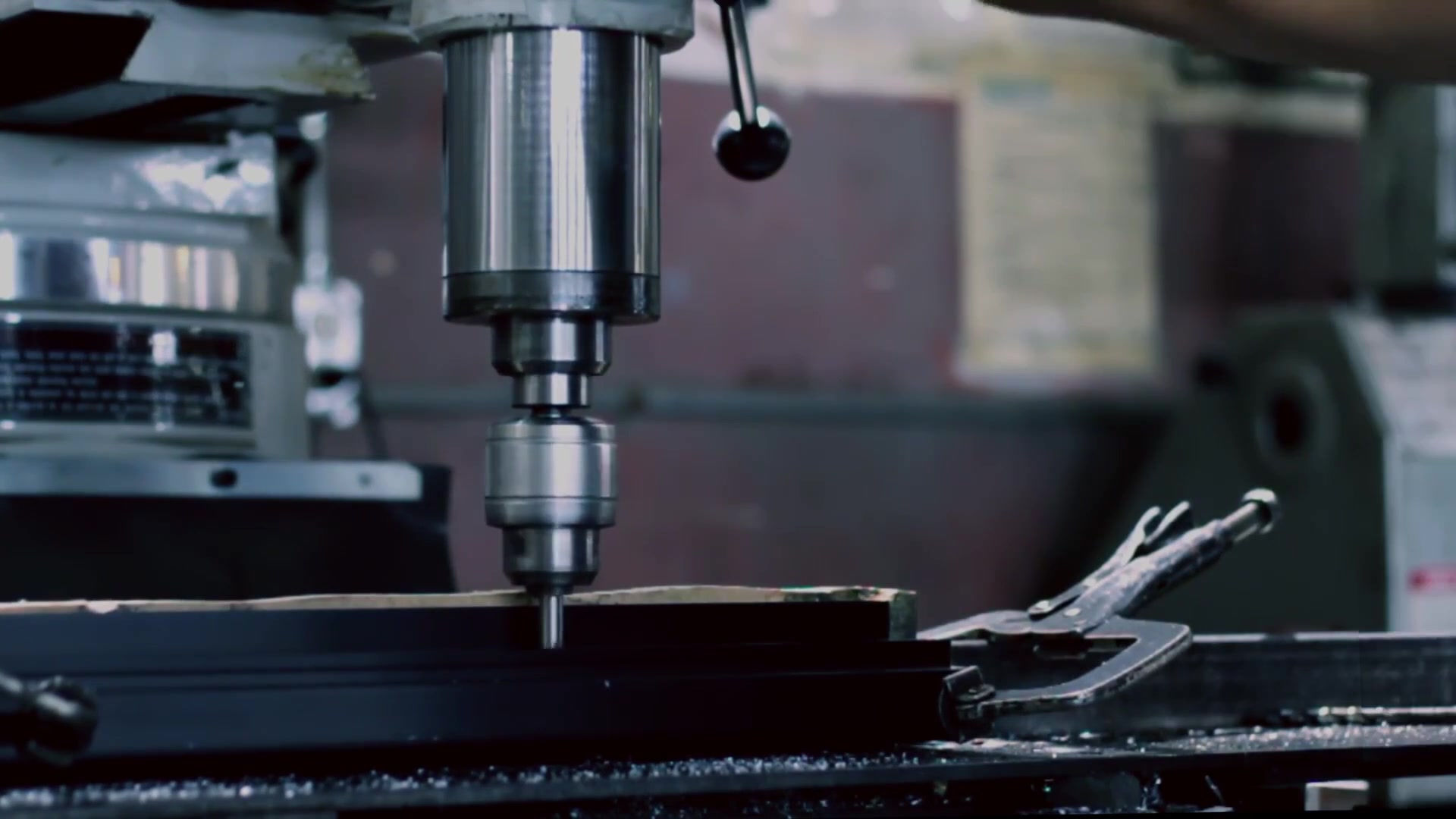


Глобален прилагоден производител, интегратор, консолидатор, партнер за аутсорсинг за широк спектар на производи и услуги.
Ние сме ваш единствен извор за производство, изработка, инженерство, консолидација, интеграција, аутсорсинг на нарачано произведени и производи и услуги кои не се на полица. Ние, исто така, приватна етикета / бела етикета на вашите производи со името на вашиот бренд ако сакате.
Изберете го вашиот јазик
Прилагодено производство на делови, компоненти, склопови, готови производи, машини и индустриска опрема
Домашно и глобално договорно производство
Производство Аутсорсинг
Домашни, глобални набавки на индустриски производи
Приватно означување / Бело означување на вашите производи со вашето име на бренд
Услуги за пронаоѓање и лоцирање производи
Глобален дизајн и партнерство за канали
Инженерска интеграција
Инженерски услуги
Глобална консолидација, складирање, логистика


Search Results
164 results found with an empty search
- Mechanical Assembly, Joining and Fastening, Welded Metal Subassembly
Mechanical Assembly, Joining and Fastening, Welded Metal Subassembly, Subassemblies, Contract Manufacturing, Custom Manufacturing and Assembling Механички склопови Механичко собрание Механички склопови кои се состојат од челични топки, пружини и машински компоненти Заварени метални компоненти направени од AGS-TECH Механички склопови кои користат секакви сврзувачки елементи кои не се наоѓаат на полица и прилагодено Механички склопови со сопствени клучеви, навои и машински елементи Склоп на заварен челик од AGS-TECH Inc. Заварено склопување од нерѓосувачки челик со огледало од AGS-TECH Inc. Механичко склопување на прецизни делови од AGS-TECH Inc. ЦПУ обработени, виткани, навојни и склопени компоненти Делови од месинг обложени со никел, склопени во цевка Прилагодено механичко собрание од AGS-TECH Inc. Машинско склопување бројчаник и опрема - AGS-TECH Inc. Машинска опрема и склоп за манометри за притисок произведени од AGS-TECH Inc. Монтажа на шестоаголна навртка Производство на шестоаголна навртка собрание Склопување на заварени метални делови од AGS-TECH Inc. Склоп на пумпата Механичко собрание - AGS-TECH Inc. Собрание на лежиште за иглички Пински лежишта од AGS-TECH Inc. Собрание на лежиште Склоп на лежишта од AGS-TECH Inc. Прецизни механички склопови за индустриски апликации - AGS-TECH Inc Прецизно обработени и склопени компоненти за апликации за запечатување - AGS-TECH Inc Механичко собрание Јаглеродни влакна Винг-I тип за автомобили Механичко склопување и заварување - AGS-TECH Прецизни склопови од завртки со шарки и други компоненти - AGS-TECH Inc Прилагодено склопување на синџир - AGS-TECH Механички склопови Јаглеродни влакна Винг-Е Тип Прилагодено склопување на синџир Производство и механичко склопување на прилагодени мерачи на притисок од AGS-TECH Inc. Задната страна на прилагодените склопови за манометар ПРЕТХОДНА СТРАНИЦА
- Rapid Electronic Prototyping, Custom Robot Assembly, Optomechanical
Rapid Electronic Prototyping, Custom Robot Assembly, Optomechanical Prototype Manufacturing, AGS-TECH Електронско прототипирање Прототип на електронски робот со блиски инфрацрвени детектори, стадиум на ротација и навалена глава на врвот Брзо електронско прототипирање Четирислојна ПХБ со RO4003C на врвот на слој потопено злато Прототип на ПХБ за соларен проект Дизајн и распоред на прототип со два слоја PCBA Оптоелектронски прототип на робот Услуги за прототипирање на PCBA Повеќеслојна плоча PCBA Прототипирање Прототип на склопување на табла со печатено коло Прототип на собранието на електронски жици Прилагодено прототипирање на засилувач Прототипирање на електронски засилувач ПРЕТХОДНА СТРАНИЦА
- Composites, Composite Materials Manufacturing, Fiber Reinforced
Composites, Composite Materials Manufacturing, Particle and Fiber Reinforced, Cermets, Ceramic & Metal Composite, Glass Fiber Reinforced Polymer, Lay-Up Process Производство на композити и композитни материјали Simply defined, COMPOSITES or COMPOSITE MATERIALS are materials consisting of two or multiple materials with different physical or chemical properties, but when combined they become a material that is different than the constituent materials. We need to point out that the constituent materials remain separate and distinct in the structure. The goal in manufacturing a composite material is to obtain a product that is superior than its constituents and combines each constituent’s desired features. As an example; strength, low weight or lower price may be the motivator behind designing and producing a composite. The type of composites we offer are particle-reinforced composites, fiber-reinforced composites including ceramic-matrix / polymer-matrix / metal-matrix / carbon-carbon / hybrid composites, structural & laminated & sandwich-structured composites and nanocomposites. The fabrication techniques we deploy in composite material manufacturing are: Pultrusion, prepreg production processes, advanced fiber placement, filament winding, tailored fiber placement, fiberglass spray lay-up process, tufting, lanxide process, z-pinning. Many composite materials are made up of two phases, the matrix, which is continuous and surrounds the other phase; and the dispersed phase which is surrounded by the matrix. We recommend that you click here to DOWNLOAD our Schematic Illustrations of Composites and Composite Materials Manufacturing by AGS-TECH Inc. This will help you better understand the information we are providing you below. • PARTICLE-REINFORCED COMPOSITES : This category consists of two types: Large-particle composites and dispersion-strengthened composites. In the former type, particle-matrix interactions cannot be treated on the atomic or molecular level. Instead continuum mechanics is valid. On the other hand, in dispersion-strengthened composites particles are generally much smaller in the tens of nanometer ranges. An example of large particle composite is polymers to which fillers have been added. The fillers improve the properties of the material and may replace some of the polymer volume with a more economical material. The volume fractions of the two phases influences the behaviour of the composite. Large particle composites are used with metals, polymers and ceramics. The CERMETS are examples of ceramic / metal composites. Our most common cermet is cemented carbide. It consists of refractory carbide ceramic such as tungsten carbide particles in a matrix of a metal such as cobalt or nickel. These carbide composites are widely used as cutting tools for hardened steel. The hard carbide particles are responsible for the cutting action and their toughness is enhanced by the ductile metal matrix. Thus we obtain the advantages of both materials in a single composite. Another common example of a large particle composite we use is carbon black particulates mixed with vulcanized rubber to obtain a composite with high tensile strength, toughness, tear and abrasion resistance. An example of a dispersion-strengthened composite is metals and metal alloys strengthened and hardened by the uniform dispersion of fine particles of a very hard and inert material. When very small aluminum oxide flakes are added to aluminum metal matrix we obtain sintered aluminum powder which has an enhanced high-temperature strength. • FIBER-REINFORCED COMPOSITES : This categoy of composites is in fact the most important. The goal to achieve is high strength and stiffness per unit weight. The fiber composition, length, orientation and concentration in these composites is critical in determining the properties and usefulness of these materials. There are three groups of fibers we use: whiskers, fibers and wires. WHISKERS are very thin and long single crystals. They are among the strongest materials. Some example whisker materials are graphite, silicon nitride, aluminum oxide. FIBERS on the other hand are mostly polymers or ceramics and are in polycrystalline or amorphous state. The third group is fine WIRES that have relatively large diameters and consist frequently of steel or tungsten. An example of wire reinforced composite is car tires that incorporates steel wire inside rubber. Depending on the matrix material, we have the following composites: POLYMER-MATRIX COMPOSITES : These are made of a polymer resin and fibers as the reinforcement ingredient. A subgroup of these called Glass Fiber-Reinforced Polymer (GFRP) Composites contain continuous or discontinuous glass fibers within a polymer matrix. Glass offers high strength, it is economical, easy to fabricate into fibers, and is chemically inert. The disadvantages are their limited rigidity and stiffness, service temperatures being only up to 200 – 300 Centigrade. Fiberglass is suitable for automotive bodies and transportation equipment, marine vehicle bodies, storage containers. They are not suitable for aerospace nor bridge making due to limited rigidity. The other subgroup is called Carbon Fiber-Reinforced Polymer (CFRP) Composite. Here, carbon is our fiber material in the polymer matrix. Carbon is known for its high specific modulus and strength and its capability to maintain these at high temperatures. Carbon fibers can offer us standard, intermediate, high and ultrahigh tensile moduli. Furthermore, carbon fibers do offer diverse physical and mechanical characteristics and therefore a suitable for various custom tailored engineering applications. CFRP composites can be considered to manufacture sports and recreational equipment, pressure vessels and aerospace structural components. Yet, another subgroup, the Aramid Fiber-Reinforced Polymer Composites are also high-strength and modulus materials. Their strength to weight ratios are outstandingly high. Aramid fibers are also known by trade names KEVLAR and NOMEX. Under tension they perform better than other polymeric fiber materials, but they are weak in compression. Aramid fibers are tough, impact resistant, creep and fatigue resistant, stable at high temperatures, chemically inert except against strong acids and bases. Aramid fibers are widely used in sporting goods, bulletproof vests, tires, ropes, fiber optic cable sheats. Other fiber reinforcement materials exist but are used to a lesser degree. These are boron, silicon carbide, aluminum oxide mainly. The polymer matrix material on the other hand is also critical. It determines the maximum service temperature of the composite because the polymer has generally a lower melting and degradation temperature. Polyesters and vinyl esters are widely used as the polymer matrix. Resins are also used and they have excellent moisture resistance and mechanical properties. For example polyimide resin can be used up to about 230 Degrees Celcius. METAL-MATRIX COMPOSITES : In these materials we use a ductile metal matrix and the service temperatures are generally higher than their constituent components. When compared to polymer-matrix composites, these can have higher operating temperatures, be nonflammable, and may have better degradation resitance against organic fluids. However they are more expensive. Reinforcement materials such as whiskers, particulates, continuous and discontinuous fibers; and matrix materials such as copper, aluminum, magnesium, titanium, superalloys are being commonly used. Example applications are engine components made of aluminum alloy matrix reinforced with aluminum oxide and carbon fibers. CERAMIC-MATRIX COMPOSITES : Ceramic materials are known for their outstandingly good high temperature reliability. However they are very brittle and have low values for fracture toughness. By embedding particulates, fibers or whiskers of one ceramic into the matrix of another we are able to achieve composites with higher fracture toughnesses. These embedded materials basically inhibit crack propagation inside the matrix by some mechanisms such as deflecting the crack tips or forming bridges across crack faces. As an example, aluminas that are reinforced with SiC whiskers are used as cutting tool inserts for machining hard metal alloys. These can reveal better performances as compared to cemented carbides. CARBON-CARBON COMPOSITES : Both the reinforcement as well as the matrix are carbon. They have high tensile moduli and strengths at high temperatures over 2000 Centigrade, creep resistance, high fracture toughnesses, low thermal expansion coefficients, high thermal conductivities. These properties make them ideal for applications requiring thermal shock resistance. The weakness of carbon-carbon composites is however its vulnerability against oxidation at high temperatures. Typical examples of usage are hot-pressing molds, advanced turbine engine components manufacturing. HYBRID COMPOSITES : Two or more different types of fibers are mixed in a single matrix. One can thus tailor a new material with a combination of properties. An example is when both carbon and glass fibers are incorporated into a polymeric resin. Carbon fibers provide low density stiffness and strength but are expensive. The glass on the other hand is inexpensive but lack the stiffness of carbon fibers. The glass-carbon hybrid composite is stronger and tougher and can be manufactured at a lower cost. PROCESSING OF FIBER-REINFORCED COMPOSITES : For continuous fiber-reinforced plastics with uniformly distributed fibers oriented in the same direction we use the following techniques. PULTRUSION: Rods, beams and tubes of continuous lengths and constant cross-sections are manufactured. Continuous fiber rovings are impregnated with a thermosetting resin and are pulled through a steel die to preform them to a desired shape. Next, they pass through a precision machined curing die to attain its final shape. Since the curing die is heated, it cures the resin matrix. Pullers draw the material through the dies. Using inserted hollow cores, we are able to obtain tubes and hollow geometries. The pultrusion method is automated and offers us high production rates. Any length of product is possible to produce. PREPREG PRODUCTION PROCESS : Prepreg is a continuous-fiber reinforcement preimpregnated with a partially cured polymer resin. It is widely used for structural applications. The material comes in tape form and is shipped as a tape. The manufacturer moulds it directly and fully cures it without the need to add any resin. Since prepregs undergo curing reactions at room temperatures, they are stored at 0 Centigrade or lower temperatures. After use the remaining tapes are stored back at low temperatures. Thermoplastic and thermosetting resins are used and reinforcement fibers of carbon, aramid and glass are common. To use prepregs, the the carrier backing paper is first removed and then the fabrication is carried out by laying of the prepreg tape onto a tooled surface (the lay-up process). Several plies may be laid up to obtain the desired thicknesses. Frequent practice is to alternate the fiber orientation to produce a cross-ply or angle-ply laminate. Finally heat and pressure are applied for curing. Both hand processing as well as automated processes are used for cutting prepregs and lay-up. FILAMENT WINDING : Continuous reinforcing fibers are accurately positioned in a predetermined pattern to follow a hollow and usually cyclindirical shape. The fibers first go through a resin bath and then are wound onto a mandrel by an automated system. After several winding repetitions desired thicknesses are obtained and curing is performed either at room temperature or inside an oven. Now the mandrel is removed and the product is demolded. Filament winding can offer very high strength-to-weight ratios by winding the fibers in circumferential, helical and polar patterns. Pipes, tanks, casings are manufactured using this technique. • STRUCTURAL COMPOSITES : Generally these are made up of both homogeneous and composite materials. Therefore the properties of these are determined by the constituent materials and geometrical design of its elements. Here are the major types: LAMINAR COMPOSITES : These structural materials are made of two dimensional sheets or panels with preferred high-strength directions. Layers are stacked and cemented together. By alternating the high-strength directions in the two perpendicular axes, we obtain a composite that has high-strength in both directions in the two-dimensional plane. By adjusting the angles of the layers one can manufacture a composite with strength in the preferred directions. Modern ski is manufactured this way. SANDWICH PANELS : These structural composites are lightweight but yet have high stiffness and strength. Sandwich panels consist of two outer sheets made of a stiff and strong material like aluminum alloys, fiber reinforced plastics or steel and a core in between the outer sheets. The core needs to be lightweight and most of the time have a low modulus of elasticity. Popular core materials are rigid polymeric foams, wood and honeycombs. Sandwich panels are widely used in the construction industry as roofing material, floor or wall material, and also in the aerospace industries. • NANOCOMPOSITES : These new materials consist of nanosized particles particles embedded in a matrix. Using nanocomposites we can manufacture rubber materials that are very good barriers to air penetration while maintaning their rubber properties unchanged. КЛИКНЕТЕ Услуга за пронаоѓање на производи-локатор ПРЕТХОДНА СТРАНИЦА
- Metal Stamping, Sheet Metal Fabrication, Zinc Plated Metal Stamped
Metal Stamping & Sheet Metal Fabrication, Zinc Plated Metal Stamped Parts, Wire and Spring Forming Метално штанцување и изработка на лим Цинк обложени печат делови Прецизни печати и формирање на жица Цинк обложени прилагодени прецизни метални печати Прецизно печатени делови AGS-TECH Inc. прецизно печат на метал Изработка на лим од AGS-TECH Inc. Брзо прототипирање на лим од AGS-TECH Inc. Печатење на подлошки во голем волумен Развој и изработка на куќиште за филтер за масло од лим Изработка на компоненти од лим за филтер за масло и комплетна монтажа Прилагодено изработка и монтажа на производи од лим Изработка на дихтунзи за глава од AGS-TECH Inc. Изработка на заптивки во AGS-TECH Inc. Изработка на куќишта од лим - AGS-TECH Inc Едноставни единечни и прогресивни печати од AGS-TECH Inc. Печати од метал и метални легури - AGS-TECH Inc Метални делови пред завршувањето на работата Формирање лим - Електрично куќиште - AGS-TECH Inc Производство на сечила за сечење обложени со титаниум за прехранбената индустрија Изработка на ножеви за скијање за индустријата за пакување храна PREVIOUS PAGE
- Electronic Assembly, Cable Harness, PCBA, PCB, Optoelectronic Manufact
Electronic Assembly, Cable Harness, PCBA, PCB, Optoelectronic Manufacturing, Transformer Assembly, Motion Detector Електрични и електронски склопови Електронско собрание - AGS-TECH, Inc. Електронско склопување на медицинска печка Производство и монтажа на електронски производи од AGS-TECH, Inc. Капацитивен кабел за слушалки на допир развиен и произведен од AGS-TECH Inc. Развој и производство на капацитивен кабел за слушалки на допир Оптоелектронски PCBA ПХБ плочи Прилагодени склопови на ПХБ од AGS-TECH Прототип на оптоелектронски робот со ротирачка и навалена етапа за автоматско следење и снимање Прилагодено произведен и склопен трансформатор Прилагодени трансформатори произведени од AGS-TECH Склопување на електрична дупчалка од AGS-TECH Inc. Трансформатори прилагодено произведени од AGS-TECH за производител на скара PCBA склопови - Електрични електронски склопови Футрола за очила со детектори за движење AGS-TECH, Inc. Куќиште за очила со сензори за движење целосно произведено и склопено од AGS-TECH, Inc. AGS-TECH ги пакува вашите производи по ваш избор и потреби Склопување на алтернатор од AGS-TECH Inc. Почетно собрание од AGS-TECH Inc. Електричен стартер од AGS-TECH Inc. ПХБ и СМТ собранија AGS-TECH Inc. Мерачи на деформација со жичени кабли произведени и составени од AGS-TECH Inc. Еднослојни и повеќеслојни ПХБ плочи достапни од AGS-TECH Inc Плоча со печатено коло склопува PCBA Прилагодено производство на PCBA AGS-TECH, Inc. Производство на ПХБ плоча AGS-TECH Ние произведуваме склопови на печатени кола според вашиот дизајн или нашиот дизајн прилагоден на вашите потреби ПРЕТХОДНА СТРАНИЦА
- Machine Elements Manufacturing, Gears, Gear Drives, Bearings, Keys, Splines
Machine Elements Manufacturing, Gears, Gear Drives, Bearings, Keys, Splines, Pins, Shafts, Seals, Fasteners, Clutch, Cams, Followers, Belts, Couplings, Shafts Machine Elements Manufacturing Прочитај повеќе Ремени и синџири и склопување на кабелски погон Прочитај повеќе Gears & Gear Drive Assembly Прочитај повеќе Couplings & Bearings Manufacturing Прочитај повеќе Производство на клучеви и шилести и иглички Прочитај повеќе Производство на камери и следбеници и врски и тркала со стакленца Прочитај повеќе Производство на шахти Прочитај повеќе Производство на механички заптивки Прочитај повеќе Склопување на спојката и сопирачката Прочитај повеќе Производство на сврзувачки елементи Прочитај повеќе Склопување на едноставни машини MACHINE ELEMENTS are elementary components of a machine. These elements consist of three basic types: 1.) Structural components including frame members, bearings, axles, splines, fasteners, seals, and lubricants. 2.) Mechanisms controlling movement in various ways such as gear trains, belt or chain drives, linkages, cam and follower systems, brakes & clutches. 3.) Control components like buttons, switches, indicators, sensors, actuators and computer controllers. Most of the machine elements we offer you are standardized to common sizes, but custom made machine elements are also available for your specialized applications. Customization of machine elements can take place on existing designs that are in our downloadable catalogs or on brand new designs. Prototyping and manufacturing of machine elements can be carried forward once a design is approved by both parties. If new machine elements need to be designed & manufactured, our customers either email us their own blueprints and we review them for approval, or they ask us to design machine elements for their application. In the latter case we use all input from our customers and design the machine elements and send the finalized blueprints to our clients for approval. Once approved, we produce first articles and subsequently manufacture the machine elements according to the final design. At any stage of this work, in case a particular machine element design performs unsatisfactorily in the field (which is rare), we review the entire project and make alterations jointly with our clients as needed. It is our standard practice to sign nondisclosure agreements (NDA) with our customers for the design of machine elements or any other product whenever needed or required. Once machine elements for a particular customer are custom designed and manufactured, we assign a product code to it and only produce and sell them to our customer who owns the product. We reproduce the machine elements using the developed tools, molds and procedures as many times as needed and whenever our customer reorders them. In other words, once a custom machine element is designed and produced for you, the intellectual property as well as all tooling and molds are reserved and stocked indefinitely by us for you and the products reproduced as you wish. We also offer our clients engineering services by creatively combining machine elements into a component or assembly that serves an application and meets or exceeds our customers expectations. Plants fabricating our machine elements are qualified by either ISO9001, QS9000 or TS16949. In addition, most of our products do have CE or UL mark and meet internationally relevant standards such as ISO, SAE, ASME, DIN. Please click on submenus to obtain detailed information about our machine elements including: - Belts, Chains and Cable Drives - Gears and Gear Drives - Couplings & Bearings - Keys & Splines & pins - Cams & Linkages - Shafts - Mechanical Seals - Industrial Clutch & Brake - Fasteners - Simple Machines We have prepared a reference brochure for our customers, designers and developers of new products including machine elements. You can familiar yourself with some commonly used terms in machine components design: Download brochure for Common Mechanical Engineering Terms used by Designers and Engineers Our machine elements find applications in a variety of fields such as industrial machinery, automation systems, test and metrology equipment, transportation equipment, construction machines and practically anywhere you can think of. AGS-TECH develops and manufactures machine elements from various materials depending on application. Materials used for machine elements could range from molded plastics used for toys to case hardened and specially coated steel for industrial machinery. Our designers use state of the art professional software and design tools for developing machine elements, taking into consideration details such as angles in gear teeth, stresses involved, wear rates….etc. Please scroll through our submenus and download our product brochures and catalogs to see if you can locate off-the-shelf machine elements for your application. If you cannot find a good match for your application, please let us know and we will work with you to develop and manufacture machine elements that will fulfill your needs. If you are mostly interested in our engineering and research & development capabilities instead of manufacturing capabilities, then we invite you to visit our website http://www.ags-engineering.com where you can find more detailed information about our design, product development, process development, engineering consulting services and more КЛИКНЕТЕ Услуга за пронаоѓање на производи-локатор ПРЕТХОДНА СТРАНИЦА
- Cams, Followers, Linkages, Ratchet Wheels Manufacturing, AGS-TECH Inc.
Cams, Followers, Linkages, Ratchet Wheels Manufacturing, OD or Plate Cam, Barrel Conjugate Dual Cam, Harmonic Transformer, Positive Motion Cam - AGS-TECH Inc. Производство на камери и следбеници и врски и тркала со стакленца CAMS / FOLLOWERS / LINKAGES / RATCHET WHEELS: A CAM is a machine element designed to generate a desired motion in a follower by means of direct contact. Cams are generally mounted on rotating shafts, even though they can be used so that they remain stationary and the follower moves about them. Cams may also produce oscillating motion or may convert motions from one form to another. The shape of a cam is always determined by the motion of the CAM FOLLOWER. A cam is the end product of a desired follower movement. A MECHANICAL LINKAGE is an assembly of bodies connected to manage forces and movement. Combinations of the crank, link, and sliding elements are commonly termed bar linkages. Linkages are essentially straight members joined together. Only a small number of dimensions need to be held closely. The joints make use of standard bearings, and the links in effect form a solid chain. Systems having cams and linkages convert rotary motion into reciprocating or oscillating motion. RATCHET WHEELS are used to transform reciprocating or oscillatory motion into intermittent motion, to transmit motion in one direction only, or as an indexing device. We offer our customers the following TYPES OF CAMS: - OD or plate cam - Barrel cam (drum or cylinder) - Dual cam - Conjugate cam - Face cam - Combination drum and plate cam - Globoidal cam for automatic tool changer - Positive motion cam - Indexing drive - Multi - station drive - Geneva - type drives We have the following CAM FOLLOWERS: - Flat face follower - Radial follower / Offset radial follower - Swinging follower - Conjugate radial dual roller followers - Closed-cam follower - Spring-loaded conjugate cam roller - Conjugate swing arm dual-roller follower - Index cam follower - Roller followers (round, flat, roller, offset roller) - Yoke - type follower Click here to download our brochure for Cam Followers Some of the MAJOR TYPES OF MOTIONS produced by our cams are: - Uniform motion (constant - velocity motion) - Parabolic motion - Harmonic motion - Cycloidal motion - Modified trapezoidal motion - Modified sine-curve motion - Synthesized, modified sine - harmonic motion Cams have advantages over kinematic four-bar linkages. Cams are easier to design and actions produced by cams can be more accurately forecast. For example, with linkages it is very difficult to cause the follower system to remain stationary during portions of cycles. On the other hand, with cams this is accomplished by a contour surface that runs concentric with the rotation center. We design cams with special computer programs accurately. With standard cam motions we can produce a predetermined motion, velocity and acceleration during a specific portion of a cam cycle, which would be much more difficult using linkages. When designing high quality cams for fast machines, we take into account proper dynamic design considering velocity, acceleration and jerk characteristics of the follower system. This includes vibrational analysis as well as shaft torque analysis. Also of utmost importance are proper material selection for cams taking into account factors such as stresses present, wear, lifetime and cost of the system where the cams will be installed. Our software tools and design experience allows us to optimize cam size for best performance and material & cost savings. To produce master cams, we prepare or obtain from our clients a table of cam radii with corresponding cam angles. Cams are then cut on a milling machine by point settings. As a result, a cam surface with a series of ridges is obtained which is subsequently filed down to a smooth profile. The cam radius, cutting radius and frequency of machine settings determine the extent of filing and accuracy of the cam profile. To produce accurate master cams, settings are in 0.5 degree increments, calculated to seconds. Cam size depends primarily on three factors. These are the pressure angle, curvature of profile, camshaft size. Secondary factors affecting cam size are cam-follower stresses, available cam material and space available for the cam. A cam is of no value and useless without a follower linkage. A linkage is generally a group of levers and links. Linkage mechanisms offer a number of advantages over cams, with the exception that the functions must be continuous. LINKAGES we offer are: - Harmonic transformer - Four-bar linkage - Straight-line mechanism - Cam linkage / Systems having linkages and cams Click on highlighted text to download our catalog for our NTN Model Constant Velocity Joints for Industrial Machines Download Catalog of Rod Ends and Spherical Plain Bearings Ratchet wheels are used to transform reciprocating or oscillating motion to intermittent motion, to transmit motion in one direction only or as indexing devices. Ratchets are generally lower in cost than cams and a ratchet has different capabilities than a cam. When motion needs to be transmitted at intervals instead of continuously and if the loads are light, ratchets can be ideal. RATCHET WHEELS we offer are: - External ratchet - U-shaped pawl - Double-acting rotary ratchet - Internal ratchet - Friction ratchet - Sheet metal ratchet and pawl - Ratchet with two pawls - Ratchet assemblies (wrench, jack) КЛИКНЕТЕ Услуга за пронаоѓање на производи-локатор ПРЕТХОДНА СТРАНИЦА
- AGS-TECH Difference-World's Most Diverse Global Engineering Integrator
AGS-TECH Difference: World's Most Diverse Global Engineering Integrator, Custom Manufacturer, Contract Manufacturing Partner, Consolidator, Subcontractor AGS-TECH Разлика: најразновидните сопствени производители во светот, консолидатор, инженерски интегратор и партнер за надворешни извори AGS-TECH Inc. is recognized globally as the World's Most Diverse Custom Manufacturer, Consolidator, Engineering Integrator and Outsourcing Partner. Our spectrum of custom manufacturing, engineering and integration capabilities is wider than any other company. When you contact us, you don’t have to worry about searching other suppliers for outsourcing your machined, molded, stamped, forged components, or suppliers who can assemble your electronic or optical products or else. When you contact AGS-TECH Inc., you have come to the right place to outsource all your custom manufactured components, subassemblies, assemblies and finished products. We can custom manufacture them from scratch all the way to a finished, packaged and labeled product. Neither do you have to worry about shipping and customs clearance, as we do it all for you, unless you prefer to do it yourself. Being the World's Most Diverse Custom Manufacturer, Consolidator, Engineering Integrator and Outsourcing Partner, AGS-TECH keeps working on many projects of different nature and projects of extraordinary complexity. Most outsourcing partners in the market have limited technological and logistical capability. They have an understanding of only a few areas of technology. A typical outsourcing partner may be capable of providing you custom castings and machined parts only, or they may be able to offer you custom casting, machining, forging and stamping. Other outsourcing partners may specialize in only custom manufactured electronics and offer you PCB, PCBA and cable assemblies. Working with such a typical custom manufacturer or outsourcing partner that supplies only PCBA and cable assembly, you would need to outsource the custom designed plastic housings of your products from a mold maker. This would inevitably make logistics more expensive and increase the risks in integration and consolidation. Components manufactured and supplied by a number of different sources have a high potential of mismatching and incompatibility. If any problem arises during the assembly of these custom manufactured components, each of the different manufacturers will be inclined to blame the other components manufacturers. You will be caught in the middle of a fire with no way out and finally your invested tooling and molding fees plus product payments would be lost and your project either delayed or cancelled due to economic losses and late delivery. You could even lose other repeat-orders that were previously well manufactured and shipped to your customers, because your overall quality rating with your customer’s QC Department will drop. On the other hand, when you work with AGS-TECH as a custom manufacturer, consolidator, engineering integrator and outsourcing partner, we take responsibility for the entire project. We make sure that all the custom designed interior electronics, optoelectronics, optics, mechanics of your product works in harmony and integrates well. Furthermore, we assure that the custom interior components fit well with the outer components and can sustain mechanical, thermal…etc. shocks and offer environmental reliability as a whole. As a manufacturing integrator and consolidator we can ship all the product parts unassembled, partially assembled or fully assembled. Besides compatibility, this offers a logistical advantage, because product components can be consolidated and shipped together as a single consignment. Being the World’s most diverse global custom manufacturer, consolidator, engineering , integrator and outsourcing partner with the widest spectrum of manufacturing capabilities, we are shareholders and partners of production facilities around the globe. To keep our top spot as a reliable outsourcing partner and custom manufacturer we constantly are on the outlook to buy manufacturing facilities globally or partner with them. Here is a link to download some basic Information on Global Custom Manufacturing, Integration, Consolidation and Outsourcing by AGS-TECH Inc. Even more important than being the most diverse global custom manufacturer and outsourcing partner is the outstanding quality of our team and their leadership skills. All our management team members have at least a B.S. or B.Eng. degree from globally recognized institutions and most have an. M.S., M.Eng or PhD degree in a technical field and MBA or ,instead of the MBA, many years of industrial experience with top technology companies. In other words, we are different that the standard typical entrepreneurs, business people or academicians with either limited technical or business background. We have the intellectual capacity to manage even the most sophisticated projects and guide the smartest clients. Working with us, you will definitely expand your knowledge and understanding of custom manufacturing and engineering integration processes. It would be completely correct to state AGS-TECH’s difference in words as: World's Most Diverse Custom Manufacturer, Consolidator, Engineering Integrator and Outsourcing Partner with some of the brightest and best people you can ever find. It is a privilege to work with us. Whether you choose to work with us or not, that is a decision you will make. Either case, we would be happy to share with you our Youtube video presentation on "How to Identify, Verify, Choose the Best Suppliers & Manufacturers for your Custom Tailored Products" . To watch it please click on the colored text. A Powerpoint presentation of the above video can be downloaded by clicking: "How to Identify, Verify, Choose the Best Suppliers & Manufacturers for your Custom Tailored Products" A nother video we would like to share with you is on "How You Can Receive Best Quotes from Custom Manufacturers" A Powerpoint presentation of the above video can be downloaded by clicking: "How You Can Receive Best Quotes from Custom Manufacturers" ПРЕТХОДНА СТРАНИЦА
- Microelectronics Manufacturing, Semiconductor Fabrication, Foundry, IC
Microelectronics Manufacturing, Semiconductor Fabrication - Foundry - FPGA - IC Assembly Packaging - AGS-TECH Inc. Микроелектроника и производство и производство на полупроводници Many of our nanomanufacturing, micromanufacturing and mesomanufacturing techniques and processes explained under the other menus can be used for MICROELECTRONICS MANUFACTURING too. However due to the importance of microelectronics in our products, we will concentrate on the subject specific applications of these processes here. Microelectronics related processes are also widely referred to as SEMICONDUCTOR FABRICATION processes. Our semiconductor engineering design and fabrication services include: - FPGA board design, development and programming - Microelectronics foundry services: Design, prototyping and manufacturing, third-party services - Semiconductor wafer preparation: Dicing, backgrinding, thinning, reticle placement, die sorting, pick and place, inspection - Microelectronic package design and fabrication: Both off-shelf and custom design and fabrication - Semiconductor IC assembly & packaging & test: Die, wire and chip bonding, encapsulation, assembly, marking and branding - Lead frames for semiconductor devices: Both off-shelf and custom design and fabrication - Design and fabrication of heat sinks for microelectronics: Both off-shelf and custom design and fabrication - Sensor & actuator design and fabrication: Both off-shelf and custom design and fabrication - Optoelectronic & photonic circuits design and fabrication Let us examine the microelectronics and semiconductor fabrication and test technologies in more detail so you can better understand the services and products we are offering. FPGA Board Design & Development and Programming: Field-programmable gate arrays (FPGAs) are reprogrammable silicon chips. Contrary to processors that you find in personal computers, programming an FPGA rewires the chip itself to implement user’s functionality rather than running a software application. Using prebuilt logic blocks and programmable routing resources, FPGA chips can be configured to implement custom hardware functionality without using a breadboard and soldering iron. Digital computing tasks are carried out in software and compiled down to a configuration file or bitstream that contains information on how the components should be wired together. FPGAs can be used to implement any logical function that an ASIC could perform and are completely reconfigurable and can be given a completely different “personality” by recompiling a different circuit configuration. FPGAs combine the best parts of application-specific integrated circuits (ASICs) and processor-based systems. These benefits include the following: • Faster I/O response times and specialized functionality • Exceeding the computing power of digital signal processors (DSPs) • Rapid prototyping and verification without the fabrication process of custom ASIC • Implementation of custom functionality with the reliability of dedicated deterministic hardware • Field-upgradable eliminating the expense of custom ASIC re-design and maintenance FPGAs provide speed and reliability, without requiring high volumes to justify the large upfront expense of custom ASIC design. Reprogrammable silicon also has the same flexibility of software running on processor-based systems, and it is not limited by the number of processing cores available. Unlike processors, FPGAs are truly parallel in nature, so different processing operations do not have to compete for the same resources. Each independent processing task is assigned to a dedicated section of the chip, and can function autonomously without any influence from other logic blocks. As a result, the performance of one part of the application is not affected when more processing is added on. Some FPGAs have analog features in addition to digital functions. Some common analog features are programmable slew rate and drive strength on each output pin, allowing the engineer to set slow rates on lightly loaded pins that would otherwise ring or couple unacceptably, and to set stronger, faster rates on heavily loaded pins on high-speed channels that would otherwise run too slowly. Another relatively common analog feature is differential comparators on input pins designed to be connected to differential signaling channels. Some mixed signal FPGAs have integrated peripheral analog-to-digital converters (ADCs) and digital-to-analog converters (DACs) with analog signal conditioning blocks that allow them to operate as a system-on-a-chip. Briefly, the top 5 benefits of FPGA chips are: 1. Good Performance 2. Short Time to Market 3. Low Cost 4. High Reliability 5. Long-Term Maintenance Capability Good Performance – With their capability of accommodating parallel processing, FPGAs have better computing power than digital signal processors (DSPs) and do not require sequential execution as DSPs and can accomplish more per clock cycles. Controlling inputs and outputs (I/O) at the hardware level provides faster response times and specialized functionality to closely match application requirements. Short Time to market - FPGAs offer flexibility and rapid prototyping capabilities and thus shorter time-to-market. Our customers can test an idea or concept and verify it in hardware without going through the long and expensive fabrication process of custom ASIC design. We can implement incremental changes and iterate on an FPGA design within hours instead of weeks. Commercial off-the-shelf hardware is also available with different types of I/O already connected to a user-programmable FPGA chip. The growing availability of high-level software tools offer valuable IP cores (prebuilt functions) for advanced control and signal processing. Low Cost—The nonrecurring engineering (NRE) expenses of custom ASIC designs exceed that of FPGA-based hardware solutions. The large initial investment in ASICs can be justified for OEMs producing many chips per year, however many end users need custom hardware functionality for the many systems in development. Our programmable silicon FPGA offers you something with no fabrication costs or long lead times for assembly. System requirements frequently change over time, and the cost of making incremental changes to FPGA designs is negligible when compared to the large expense of respinning an ASIC. High Reliability - Software tools provide the programming environment and FPGA circuitry is a true implementation of program execution. Processor-based systems generally involve multiple layers of abstraction to help task scheduling and share resources among multiple processes. The driver layer controls hardware resources and the OS manages memory and processor bandwidth. For any given processor core, only one instruction can execute at a time, and processor-based systems are continually at risk of time-critical tasks preempting one another. FPGAs, do not use OSs, pose minimum reliability concerns with their true parallel execution and deterministic hardware dedicated to every task. Long-term Maintenance Capability - FPGA chips are field-upgradable and do not require the time and cost involved with redesigning ASIC. Digital communication protocols, for example, have specifications that can change over time, and ASIC-based interfaces may cause maintenance and forward-compatibility challenges. To the contrary, reconfigurable FPGA chips can keep up with potentially necessary future modifications. As products and systems mature, our customers can make functional enhancements without spending time redesigning hardware and modifying the board layouts. Microelectronics Foundry Services: Our microelectronics foundry services include design, prototyping and manufacturing, third-party services. We provide our customers with assistance throughout the entire product development cycle - from design support to prototyping and manufacturing support of semiconductor chips. Our objective in design support services is to enable a first-time right approach for digital, analog, and mixed-signal designs of semiconductor devices. For example, MEMS specific simulation tools are available. Fabs that can handle 6 and 8 inch wafers for integrated CMOS and MEMS are at your service. We offer our clients design support for all major electronic design automation (EDA) platforms, supplying correct models, process design kits (PDK), analog and digital libraries, and design for manufacturing (DFM) support. We offer two prototyping options for all technologies: the Multi Product Wafer (MPW) service, where several devices are processed in parallel on one wafer, and the Multi Level Mask (MLM) service with four mask levels drawn on the same reticle. These are more economical than the full mask set. The MLM service is highly flexible compared to the fixed dates of the MPW service. Companies may prefer outsourcing semiconductor products to a microelectronics foundry for a number of reasons including the need for a second source, using internal resources for other products and services, willingness to go fabless and decrease risk and burden of running a semiconductor fab…etc. AGS-TECH offers open-platform microelectronics fabrication processes that can be scaled down for small wafer runs as well as mass manufacturing. Under certain circumstances, your existing microelectronics or MEMS fabrication tools or complete tool sets can be transferred as consigned tools or sold tools from your fab into our fab site, or your existing microelectronics and MEMS products can be redesigned using open platform process technologies and ported to a process available at our fab. This is faster and more economical than a custom technology transfer. If desired however customer’s existing microelectronics / MEMS fabrication processes may be transferred. Semiconductor Wafer Preparation: If desired by customers after wafers are microfabricated, we carry out dicing, backgrinding, thinning, reticle placement, die sorting, pick and place, inspection operations on semiconductor wafers. Semiconductor wafer processing involves metrology in between the various processing steps. For example, thin film test methods based on ellipsometry or reflectometry, are used to tightly control the thickness of gate oxide, as well as the thickness, refractive index and extinction coefficient of photoresist and other coatings. We use semiconductor wafer test equipment to verify that the wafers haven't been damaged by previous processing steps up until testing. Once the front-end processes have been completed, the semiconductor microelectronic devices are subjected to a variety of electrical tests to determine if they function properly. We refer to the proportion of microelectronics devices on the wafer found to perform properly as the “yield”. Testing of microelectronics chips on the wafer are carried out with an electronic tester that presses tiny probes against the semiconductor chip. The automated machine marks each bad microelectronics chip with a drop of dye. Wafer test data is logged into a central computer database and semiconductor chips are sorted into virtual bins according to predetermined test limits. The resulting binning data can be graphed, or logged, on a wafer map to trace manufacturing defects and mark bad chips. This map can also be used during wafer assembly and packaging. In final testing, microelectronics chips are tested again after packaging, because bond wires may be missing, or analog performance may be altered by the package. After a semiconductor wafer is tested, it is typically reduced in thickness before the wafer is scored and then broken into individual dies. This process is called semiconductor wafer dicing. We use automated pick-and-place machines specially manufactured for microelectronics industry to sort out the good and bad semiconductor dies. Only the good, unmarked semiconductor chips are packaged. Next, in the microelectronics plastic or ceramic packaging process we mount the semiconductor die, connect the die pads to the pins on the package, and seal the die. Tiny gold wires are used to connect the pads to the pins using automated machines. Chip scale package (CSP) is another microelectronics packaging technology. A plastic dual in-line package (DIP), like most packages, is multiple times larger than the actual semiconductor die placed inside, whereas CSP chips are nearly the size of the microelectronics die; and a CSP can be constructed for each die before the semiconductor wafer is diced. The packaged microelectronics chips are re-tested to make sure that they are not damaged during packaging and that the die-to-pin interconnect process was completed correctly. Using lasers we then etch the chip names and numbers on the package. Microelectronic Package Design and Fabrication: We offer both off-shelf and custom design and fabrication of microelectronic packages. As part of this service, modeling and simulation of microelectronic packages is also carried out. Modeling and simulation ensures virtual Design of Experiments (DoE) to achieve the optimal solution, rather than testing packages on the field. This reduces the cost and production time, especially for new product development in microelectronics. This work also gives us the opportunity to explain our customers how the assembly, reliability and testing will impact their microelectronic products. The primary objective of microelectronic packaging is to design an electronic system that will satisfy the requirements for a particular application at a reasonable cost. Because of the many options available to interconnect and house a microelectronics system, the choice of a packaging technology for a given application needs expert evaluation. Selection criteria for microelectronics packages may include some of the following technology drivers: -Wireability -Yield -Cost -Heat dissipation properties -Electromagnetic shielding performance -Mechanical toughness -Reliability These design considerations for microelectronics packages affect speed, functionality, junction temperatures, volume, weight and more. The primary goal is to select the most cost-effective yet reliable interconnection technology. We use sophisticated analysis methods and software to design microelectronics packages. Microelectronics packaging deals with the design of methods for the fabrication of interconnected miniature electronic systems and the reliability of those systems. Specifically, microelectronics packaging involves routing of signals while maintaining signal integrity, distributing ground and power to semiconductor integrated circuits, dispersing dissipated heat while maintaining structural and material integrity, and protecting the circuit from environmental hazards. Generally, methods for packaging microelectronics ICs involve the use of a PWB with connectors that provide the real-world I/Os to an electronic circuit. Traditional microelectronics packaging approaches involve the use of single packages. The main advantage of a single-chip package is the ability to fully test the microelectronics IC before interconnecting it to the underlying substrate. Such packaged semiconductor devices are either through-hole mounted or surface mounted to the PWB. Surface-mounted microelectronics packages do not require via holes to go through the entire board. Instead, surface-mounted microelectronics components can be soldered to both sides of the PWB, enabling higher circuit density. This approach is called surface-mount technology (SMT). The addition of area-array–style packages such as ball-grid arrays (BGAs) and chip-scale packages (CSPs) is making SMT competitive with the highest-density semiconductor microelectronics packaging technologies. A newer packaging technology involves the attachment of more than one semiconductor device onto a high-density interconnection substrate, which is then mounted in a large package, providing both I/O pins and environmental protection. This multichip module (MCM) technology is further characterized by the substrate technologies used to interconnect the attached ICs. MCM-D represents deposited thin film metal and dielectric multilayers. MCM-D substrates have the highest wiring densities of all MCM technologies thanks to the sophisticated semiconductor processing technologies. MCM-C refers to multilayered “ceramic” substrates, fired from stacked alternating layers of screened metal inks and unfired ceramic sheets. Using MCM-C we obtain a moderately dense wiring capacity. MCM-L refers to multilayer substrates made from stacked, metallized PWB “laminates,” that are individually patterned and then laminated. It used to be a low-density interconnect technology, however now MCM-L is quickly approaching the density of MCM-C and MCM-D microelectronics packaging technologies. Direct chip attach (DCA) or chip-on-board (COB) microelectronics packaging technology involves mounting the microelectronics ICs directly to the PWB. A plastic encapsulant, which is “globbed” over the bare IC and then cured, provides environmental protection. Microelectronics ICs can be interconnected to the substrate using either flip-chip, or wire bonding methods. DCA technology is particularly economical for systems that are limited to 10 or fewer semiconductor ICs, since larger numbers of chips can affect system yield and DCA assemblies can be difficult to rework. An advantage common to both the DCA and MCM packaging options is the elimination of the semiconductor IC package interconnection level, which allows closer proximity (shorter signal transmission delays) and reduced lead inductance. The primary disadvantage with both methods is the difficulty in purchasing fully tested microelectronics ICs. Other disadvantages of DCA and MCM-L technologies include poor thermal management thanks to the low thermal conductivity of PWB laminates and a poor coefficient of thermal expansion match between the semiconductor die and the substrate. Solving the thermal expansion mismatch problem requires an interposer substrate such as molybdenum for wire bonded die and an underfill epoxy for flip-chip die. The multichip carrier module (MCCM) combines all the positive aspects of DCA with MCM technology. The MCCM is simply a small MCM on a thin metal carrier that can be bonded or mechanically attached to a PWB. The metal bottom acts as both a heat dissipater and a stress interposer for the MCM substrate. The MCCM has peripheral leads for wire bonding, soldering, or tab bonding to a PWB. Bare semiconductor ICs are protected using a glob-top material. When you contact us, we will discuss your application and requirements to choose the best microelectronics packaging option for you. Semiconductor IC Assembly & Packaging & Test: As part of our microelectronics fabrication services we offer die, wire and chip bonding, encapsulation, assembly, marking and branding, testing. For a semiconductor chip or integrated microelectronics circuit to function, it needs to be connected to the system that it will control or provide instructions to. Microelectronics IC assembly does provide the connections for power and information transfer between the chip and the system. This is accomplished by connecting the microelectronics chip to a package or directly connecting it to the PCB for these functions. Connections between the chip and the package or printed circuit board (PCB) are via wire bonding, thru-hole or flip chip assembly. We are an industry leader in finding microelectronics IC packaging solutions to meet the complex requirements of the wireless and internet markets. We offer thousands of different package formats and sizes, ranging from traditional leadframe microelectronics IC packages for thru-hole and surface mount, to the latest chip scale (CSP) and ball grid array (BGA) solutions required in high pin count and high density applications. A wide variety of packages are available from stock including CABGA (Chip Array BGA), CQFP, CTBGA (Chip Array Thin Core BGA), CVBGA (Very Thin Chip Array BGA), Flip Chip, LCC, LGA, MQFP, PBGA, PDIP, PLCC, PoP - Package on Package, PoP TMV - Through Mold Via, SOIC / SOJ, SSOP, TQFP, TSOP, WLP (Wafer Level Package)…..etc. Wire bonding using copper, silver or gold are among the popular in microelectronics. Copper (Cu) wire has been a method of connecting silicon semiconductor dies to the microelectronics package terminals. With recent increase in gold (Au) wire cost, copper (Cu) wire is an attractive way to manage overall package cost in microelectronics. It also resembles gold (Au) wire due to its similar electrical properties. Self inductance and self capacitance are almost the same for gold (Au) and copper (Cu) wire with copper (Cu) wire having lower resistivity. In microelectronics applications where resistance due to bond wire can negatively impact circuit performance, using copper (Cu) wire can offer improvement. Copper, Palladium Coated Copper (PCC) and Silver (Ag) alloy wires have emerged as alternatives to gold bond wires due to cost. Copper-based wires are inexpensive and have low electrical resistivity. However, the hardness of copper makes it difficult to use in many applications such as those with fragile bond pad structures. For these applications, Ag-Alloy offers properties similar to those of gold while its cost is similar to that of PCC. Ag-Alloy wire is softer than PCC resulting in lower Al-Splash and lower risk of bond pad damage. Ag-Alloy wire is the best low cost replacement for applications that need die-to-die bonding, waterfall bonding, ultra-fine bond pad pitch and small bond pad openings, ultra low loop height. We provide a complete range of semiconductor testing services including wafer testing, various types of final testing, system level testing, strip testing and complete end-of-line services. We test a variety of semiconductor device types across all of our package families including radio frequency, analog and mixed signal, digital, power management, memory and various combinations such as ASIC, multi chip modules, System-in-Package (SiP), and stacked 3D packaging, sensors and MEMS devices such as accelerometers and pressure sensors. Our test hardware and contacting equipment are suitable for custom package size SiP, dual-sided contacting solutions for Package on Package (PoP), TMV PoP, FusionQuad sockets, multiple-row MicroLeadFrame, Fine-Pitch Copper Pillar. Test equipment and test floors are integrated with CIM / CAM tools, yield analysis and performance monitoring to deliver very high efficiency yield the first time. We offer numerous adaptive microelectronics test processes for our customers and offer distributed test flows for SiP and other complex assembly flows. AGS-TECH provides a full range of test consultation, development and engineering services across your entire semiconductor and microelectronics product lifecycle. We understand the unique markets and testing requirements for SiP, automotive, networking, gaming, graphics, computing, RF / wireless. Semiconductor manufacturing processes require fast and precisely controlled marking solutions. Marking speeds over 1000 characters/second and material penetration depths less than 25 microns are common in semiconductor microelectronics industry using advanced lasers. We are capable of marking mold compounds, wafers, ceramics and more with minimal heat input and perfect repeatability. We use lasers with high accuracy to mark even the smallest parts without damage. Lead frames for Semiconductor Devices: Both off-shelf and custom design and fabrication are possible. Lead frames are utilized in the semiconductor device assembly processes, and are essentially thin layers of metal that connect the wiring from tiny electrical terminals on the semiconductor microelectronics surface to the large-scale circuitry on electrical devices and PCBs. Lead frames are used in almost all semiconductor microelectronics packages. Most microelectronics IC packages are made by placing the semiconductor silicon chip on a lead frame, then wire bonding the chip to the metal leads of that lead frame, and subsequently covering the microelectronics chip with plastic cover. This simple and relatively low cost microelectronics packaging is still the best solution for many applications. Lead frames are produced in long strips, which allows them to be quickly processed on automated assembly machines, and generally two manufacturing processes are used: photo etching of some sort and stamping. In microelectronics lead frame design often demand is for customized specifications and features, designs that enhance electrical and thermal properties, and specific cycle time requirements. We have in-depth experience of microelectronics lead frame manufacturing for an array of different customers using laser assisted photo etching and stamping. Design and fabrication of heat sinks for microelectronics: Both off-shelf and custom design and fabrication. With the increase in heat dissipation from microelectronics devices and the reduction in overall form factors, thermal management becomes a more a more important element of electronic product design. The consistency in performance and life expectancy of electronic equipment are inversely related to the component temperature of the equipment. The relationship between the reliability and the operating temperature of a typical silicon semiconductor device shows that a reduction in the temperature corresponds to an exponential increase in the reliability and life expectancy of the device. Therefore, long life and reliable performance of a semiconductor microelectronics component may be achieved by effectively controlling the device operating temperature within the limits set by the designers. Heat sinks are devices that enhance heat dissipation from a hot surface, usually the outer case of a heat generating component, to a cooler ambient such as air. For the following discussions, air is assumed to be the cooling fluid. In most situations, heat transfer across the interface between the solid surface and the coolant air is the least efficient within the system, and the solid-air interface represents the greatest barrier for heat dissipation. A heat sink lowers this barrier mainly by increasing the surface area that is in direct contact with the coolant. This allows more heat to be dissipated and/or lowers the semiconductor device operating temperature. The primary purpose of a heat sink is to maintain the microelectronics device temperature below the maximum allowable temperature specified by the semiconductor device manufacturer. We can classify heat sinks in terms of manufacturing methods and their shapes. The most common types of air-cooled heat sinks include: - Stampings: Copper or aluminum sheet metals are stamped into desired shapes. they are used in traditional air cooling of electronic components and offer an economical solution to low density thermal problems. They are suitable for high volume production. - Extrusion: These heat sinks allow the formation of elaborate two-dimensional shapes capable of dissipating large heat loads. They may be cut, machined, and options added. A cross-cutting will produce omnidirectional, rectangular pin fin heat sinks, and incorporating serrated fins improves the performance by approximately 10 to 20%, but with a slower extrusion rate. Extrusion limits, such as the fin height-to-gap fin thickness, usually dictate the flexibility in design options. Typical fin height-to-gap aspect ratio of up to 6 and a minimum fin thickness of 1.3mm, are attainable with standard extrusion techniques. A 10 to 1 aspect ratio and a fin thickness of 0.8″can be obtained with special die design features. However, as the aspect ratio increases, the extrusion tolerance is compromised. - Bonded/Fabricated Fins: Most air cooled heat sinks are convection limited, and the overall thermal performance of an air cooled heat sink can often be improved significantly if more surface area can be exposed to the air stream. These high performance heat sinks utilize thermally conductive aluminum-filled epoxy to bond planar fins onto a grooved extrusion base plate. This process allows for a much greater fin height-to-gap aspect ratio of 20 to 40, significantly increasing the cooling capacity without increasing the need for volume. - Castings: Sand, lost wax and die casting processes for aluminum or copper / bronze are available with or without vacuum assistance. We use this technology for fabrication of high density pin fin heat sinks which provide maximum performance when using impingement cooling. - Folded Fins: Corrugated sheet metal from aluminum or copper increases surface area and the volumetric performance. The heat sink is then attached to either a base plate or directly to the heating surface via epoxy or brazing. It is not suitable for high profile heat sinks on account of the availability and fin efficiency. Hence, it allows high performance heat sinks to be fabricated. In selecting an appropriate heat sink meeting the required thermal criteria for your microelectronics applications, we need to examine various parameters that affect not only the heat sink performance itself, but also the overall performance of the system. The choice of a particular type of heat sink in microelectronics depends largely to the thermal budget allowed for the heat sink and external conditions surrounding the heat sink. There is never a single value of thermal resistance assigned to a given heat sink, since the thermal resistance varies with external cooling conditions. Sensor & Actuator Design and Fabrication: Both off-shelf and custom design and fabrication are available. We offer solutions with ready-to-use processes for inertial sensors, pressure and relative pressure sensors and IR temperature sensor devices. By using our IP blocks for accelerometers, IR and pressure sensors or applying your design according to available specifications and design rules, we can have MEMS based sensor devices delivered to you within weeks. Besides MEMS, other types of sensor and actuator structures can be fabricated. Optoelectronic & photonic circuits design and fabrication: A photonic or optical integrated circuit (PIC) is a device that integrates multiple photonic functions. It can be resembled to electronic integrated circuits in microelectronics. The major difference between the two is that a photonic integrated circuit provides functionality for information signals imposed on optical wavelengths in the visible spectrum or near infrared 850 nm-1650 nm. Fabrication techniques are similar to those used in microelectronics integrated circuits where photolithography is used to pattern wafers for etching and material deposition. Unlike semiconductor microelectronics where the primary device is the transistor, there is no single dominant device in optoelectronics. Photonic chips include low loss interconnect waveguides, power splitters, optical amplifiers, optical modulators, filters, lasers and detectors. These devices require a variety of different materials and fabrication techniques and therefore it is difficult to realize all of them on a single chip. Our applications of photonic integrated circuits are mainly in the areas of fiber-optic communication, biomedical and photonic computing. Some example optoelectronic products we can design and fabricate for you are LEDs (Light Emitting Diodes), diode lasers, optoelectronic receivers, photodiodes, laser distance modules, customized laser modules and more. КЛИКНЕТЕ Услуга за пронаоѓање на производи-локатор ПРЕТХОДНА СТРАНИЦА
- Industrial Servers, Database Server, File Server, Mail Server, Print
Industrial Servers - Database Server - File Server - Mail Server - Print Server - Web Server - AGS-TECH Inc. - NM - USA Индустриски сервери When referring to client-server architecture, a SERVER is a computer program that runs to serve the requests of other programs, also considered as the ''clients''. In other words the ''server'' performs computational tasks on behalf of its ''clients''. The clients may either run on the same computer or be connected through the network. In popular use however, a server is a physical computer dedicated to running as a host one or more of these services and to serve the needs of users of the other computers on the network. A server could be a DATABASE SERVER, FILE SERVER, MAIL SERVER, PRINT SERVER, WEB SERVER, or else depending on the computing service it offers. We offer the best quality industrial server brands available such as ATOP TECHNOLOGIES, KORENIX and JANZ TEC . Click on blue highlighted text below to download respective catalogs and brochures: - ATOP TECHNOLOGIES compact product brochure - ATOP Technologies Product List 2021) - ICP DAS brand industrial communication and networking products brochure - ICP DAS brand Tiny Device Server and Modbus Gateway brochure - JANZ TEC brand compact product brochure - KORENIX brand compact product brochure To choose a suitable Industrial Grade Server, please go to our industrial computer store by CLICKING HERE. Dowload brochure for our DESIGN PARTNERSHIP PROGRAM DATABASE SERVER : This term is used to refer to the back-end system of a database application using client/server architecture. The back-end database server performs tasks such as data analysis, data storage, data manipulation, data archiving, and other non-user specific tasks. FILE SERVER : In the client/server model, this is a computer responsible for the central storage and management of data files so that other computers on the same network can access them. File servers allow users to share information over a network without physically transferring files by floppy disk or other external storage devices. In sophisticated and professional networks, a file server might be a dedicated network-attached storage (NAS) device that also serves as a remote hard disk drive for other computers. Thus anyone on the network can store files on it like to their own hard drive. MAIL SERVER : A mail server, also called an e-mail server is a computer within your network that works as your virtual post office. It consists of a storage area where e-mail is stored for local users, a set of user defined rules determining how the mail server should react to the destination of a specific message, a database of user accounts that the mail server will recognize and deal with locally, and communications modules which handle the transfer of messages to and from other email servers and clients. Mail servers are generally designed to operate with no manual intervention during normal operation. PRINT SERVER : Sometimes called a printer server, this is a device that connects printers to client computers over a network. Print servers accept print jobs from the computers and send the jobs to the appropriate printers. Print server queues jobs locally because work may arrive more quickly than the printer can actually handle it. WEB SERVER : These are computers that deliver and serve Web pages. All Web servers have IP addresses and generally domain names. When we enter the URL of a website in our browser, this sends a request to the Web server whose domain name is the website entered. The server then fetches the page named index.html and sends it to our browser. Any computer can be turned into a Web server by installing server software and connecting the machine to the Internet. There are many Web server software applications such as packages from Microsoft and Netscape. КЛИКНЕТЕ Услуга за пронаоѓање на производи-локатор ПРЕТХОДНА СТРАНИЦА
- Couplings and Bearings Manufacturing, Permanent Coupling, Clutch
Couplings, Bearings Manufacturing, Permanent Coupling, Clutch, Solid Flexible Universal Beamed Coupling, Bushing, Rubber Ball Type Couplings - AGS-TECH Inc.-USA Производство на спојки и лежишта COUPLINGS are used to couple or join shafts. There are two types of couplings: Permanent Couplings and Clutches. Permanent couplings are normally not disconnected except for assembly or disassembly purposes, whereas clutches permit shafts to be connected or disconnected at will. BEARINGS on the other hand, permit smooth, low friction movement between two surfaces. The movement of bearings can be either rotary (i.e. a shaft rotating within a mount) or linear (i.e. one surface moving along another). Bearings can employ either a sliding or a rolling action. Bearings based on rolling action are called rolling-element bearings. Those based on sliding action are called plain bearings. PERMANENT COUPLINGS: - Solid Couplings, Flexible Couplings, Universal Couplings - Beamed Couplings - Rubber Ball Type Couplings - Steel - Spring Type Couplings - Sleeve and Flanged Type Coupling - Hook's Type Universal Joints (Single, Double) - Constant Velocity Universal Joint Our stocked couplings include famous brands including Timken, AGS-TECH as well as other quality brands. Below you can click and download catalogues of some of the most popular couplings. Please tell us the catalogue number/model number and the quantity you would like to order and we will offer you the best prices and lead times along with offers for alternative brands similar in quality. We can supply original brand name as well as generic brand name couplings. Please click on highlighted text below to download relevant brochure or catalog: - Flexible Couplings - FCL Model and FL Jaw Models - Timken Quick Flex Couplings Catalog Click on highlighted text to download our catalog for our NTN Model Constant Velocity Joints for Industrial Machines CLUTCHES: Even though these are considered nonpermanent couplings, we have a devoted page on clutches and you can be transfered there by clicking here . BEARINGS: The type of bearings we carry in stock are: - Plain Bearings / Sleeve Bearings / Journal Bearings / Thrust Bearings - Antifriction Bearings: Ball, Roller and Needle Bearings - Radial Load, Thrust Load, Combination Radial and Thrust Load Bearings - Hydrodynamic, Fluid-Film, Hydrostatic, Boundary Lubricated, Self Lubricated Bearings, Powdered-Metal Bearings, Sintered-Metal Bearings, Oil-Impregnated Bearings - Metal, Metal Alloy, Plastic and Ceramic Bearings - Ball Bearings: Radial, Thrust, Angular - Contact Type, Deep-Groove, Self - Aligning, Single - Row, Double - Row, Flat - Race, One - Directional and Two - Directional Grooved - Race Bearings - Roller Bearings: Cylindirical, Tapered, Spherical, Needle (loose and caged) Bearings - Premounted bearing units CLICK HERE to download our engineering guide for selection of bearings. Our stocked bearings include famous brands including Timken, NTN, NSK, Kaydon, KBC, KML, SKF, AGS-TECH as well as other quality brands. Below you can click and download catalogues of some of the most popular bearings. Please tell us the catalogue number/model number and the quantity you would like to order and we will offer you the best prices and lead times along with offers for alternative brands similar in quality. We can supply original brand name as well as generic brand name bearings. Click on highlighted text to download relevant product brochures: - Full Complement Cylindrical Roller Bearings - Rolling Mill Bearings - Spherical Plain Bearings and Rod Ends - Bearings for Material Handling Systems - Supporting Rollers - Needle Roller Bearings - Automobile Bearings (go to page 116) - Non-Standard Bearings (go to page 121) - Slewing Drive Bearings - Slewing Rings and Bearings - Linear Bearings, Plain and Ball, Thin Wall, Sleeve, Flange Mount, Die-Set Flange Mount Bearings, Pillow Blocks, Square Bearings and various Shafts & Slides - Timken Cylindirical Roller Bearing Catalog - Timken Spherical Roller Bearing Catalog - Timken Tapered Roller Bearing Catalog - Timken Ball Bearings Catalog - Timken Thrust and Plain Bearings Catalog - Timken All-Purpose Bearing Catalog - Timken Engineering Manual NTN BEARINGS NSK BEARINGS KAYDON BEARINGS KBC BEARINGS KML BEARINGS SKF BEARINGS We also manufacture our customers complicated shaft, bearing and housing assemblies, premounted bearings, bearings with seals for grease and oil lubrication. - Premounted Bearings: These consist of a bearing element and housing. Premounted bearings are generally assembled to permit convenient adaptation to a machinery frame. All components of premounted bearings are incorporated within a single unit to ensure proper protection, lubrication and operation. Premounted bearings are available for a wide range of shaft sizes and a variety of housing designs. Rigid as well as self-aligning premounted bearings are offered. The self-aligning bearings compensate for minor misalignment in mounting structures. Expansion and nonexpansion bearings are available. Expansion bearings permit axial shaft movement and have applications for expansion units in equipment in which shafts become heated and increase in length at a greater rate than the structure on which the bearings are mounted. Nonexpansion bearings on the other hand, restrict shaft movement relative to the mounting structure. - Grease and Oil Lubricated Sealed Bearings: For bearings to operate properly, they need to be protected against loss of lubricant and also entrance of dirt and dust on bearing surfaces. Housing seals for grease and oil lubrication include felt ring, grease grooves, leather or synthetic rubber cuff seals, labyrinth seals, oil grooves and flingers. More specific information on the various types of seals used in the broader spectrum of applications can be found on our page on mechanical seals by clicking here. - Shaft, Bearing and Housing Assemblies: For ball or roller bearings to function properly, both the fit between the inner ring and the shaft and the fit between the outer ring and the housing must be suitable for the application. We assure that desired fits are obtained by selecting the proper tolerances for the shaft diameter and the housing bore. Bearings are generally mounted on the shaft or on tapered adapter sleeves. To hold the bearing inner ring axially on the shaft, we sometimes use a lock-nut and lock-washer. Depending on axial forces and their potential to displace bearings on the shaft we decide what method to use. Sometimes this is achieved by incorporating a shoulder in the design against which the bearing taking the load is pressed. It is impractical to mount bearings on long standard shafts with an interference fit. Therefore, we usually apply them with tapered adapter sleeves. The sleeves outer surfaces are tapered and match the tapered bores of the bearings inner rings. This assures a tight fit between the bearing’s inner ring and the shaft. Contact us and we will help you choose the right match of bearings, shafts and housing assemblies. КЛИКНЕТЕ Услуга за пронаоѓање на производи-локатор ПРЕТХОДНА СТРАНИЦА
- Quality Management at AGS-TECH Inc Manufacturing Operations
Quality Management at AGS-TECH Inc. All our manufacturing operations are conducted under strict QMS guidelines, Total Quality Management TQM guidelines, SPC... Управување со квалитет во AGS-TECH Inc All plants manufacturing parts and products for AGS-TECH Inc are certified to one or several of the following QUALITY MANAGEMENT SYSTEM (QMS) standards: - ISO 9001 - TS 16949 - QS 9000 - AS 9100 - ISO 13485 - ISO 14000 Besides the above listed quality management systems, we assure our customers highest quality products and services by manufacturing according to well recognized international standards and certifications such as: - UL, CE, EMC, FCC and CSA Certification Marks, FDA Listing, DIN / MIL / ASME / NEMA / SAE / JIS /BSI / EIA / IEC / ASTM / IEEE Standards, IP, Telcordia, ANSI, NIST The specific standards that apply to a certain product depend on the nature of the product, its application field, usage and customer’s request. We see quality as an area that needs continuous improvement and therefore we never restrict ourselves with these standards only. We continuously strive to increase our quality levels at all plants and all areas, departments and product lines by focusing on: - Six Sigma - Total Quality Management (TQM) - Statistical Process Control (SPC) - Life Cycle Engineering / Sustainable Manufacturing - Robustness in Design, Manufacturing Processes and Machinery - Agile Manufacturing - Value Added Manufacturing - Computer Integrated Manufacturing - Concurrent Engineering - Lean Manufacturing - Flexible Manufacturing For those who are interested in expanding their understanding on quality, let us briefly discuss these. THE ISO 9001 STANDARD: Model for quality assurance in design/development, production, installation, and servicing. The ISO 9001 quality standard is used worldwide and is one of the most common. For initial certification as well as for timely renewals, our plants are visited and audited by accredited independent third-party teams to certify that the quality management standard’s 20 key elements are in place and functioning correctly. The ISO 9001 quality standard is not a product certification, rather a quality process certification. Our plants are periodically audited to maintain this quality standard accreditation. Registration symbolizes our commitment to conform to consistent practices, as specified by our quality system (quality in design, development, production, installation and servicing), including proper documentation of such practices. Our plants are also assured of such good quality practices by demanding our suppliers to be registered too. THE ISO/TS 16949 STANDARD: This is an ISO technical specification aimed at the development of a quality management system that provides for continual improvement, emphasizing defect prevention and the reduction of variation and waste in the supply chain. It is based on the ISO 9001 quality standard. TS16949 quality standard applies to the design/development, production and, when relevant, installation and servicing of automotive-related products. The requirements are intended to be applied throughout the supply chain. Many of AGS-TECH Inc. plants maintain this quality standard instead of or in addition to the ISO 9001. THE QS 9000 STANDARD: Developed by the automotive giants, this quality standard has extras in addition to the ISO 9000 quality standard. All of the ISO 9000 quality standard’s clauses serve as the foundation of the QS 9000 quality standard. AGS-TECH Inc. plants serving especially the automotive industry are certified to QS 9000 quality standard. THE AS 9100 STANDARD: This is a widely adopted and standardized quality management system for the aerospace industry. AS9100 replaces the earlier AS9000 and fully incorporates the entirety of the current version of ISO 9000, while adding requirements relating to quality and safety. The aerospace industry is a high risk sector, and regulatory control is needed to assure that the safety and quality of services offered in the sector are world class. Plants manufacturing our aerospace components are certified to the AS 9100 quality standard. THE ISO 13485:2003 STANDARD: This standard specifies requirements for a quality management system where an organization needs to demonstrate its ability to provide medical devices and related services that consistently meet customer and regulatory requirements applicable to medical devices and related services. The main objective of ISO 13485:2003 quality standard is to facilitate harmonized medical device regulatory requirements for quality management systems. Therefore, it includes some particular requirements for medical devices and excludes some of the requirements of ISO 9001 quality system that are not appropriate as regulatory requirements. If regulatory requirements permit exclusions of design and development controls, this can be used as a justification for their exclusion from the quality management system. AGS-TECH Inc’s medical products such as endoscopes, fiberscopes, implants are manufactured at plants that are certified to this quality management system standard. THE ISO 14000 STANDARD: This family of standards pertains to the international Environmental Management Systems. It concerns the way an organization’s activities affect the environment throughout the life of its products. These activities can range from production to disposal of the product after its useful life, and include effects on the environment including pollution, waste generation & disposal, noise, depletion of natural resources and energy. The ISO 14000 standard is related more to the environment rather than quality, but still it is one that many of AGS-TECH Inc.’s global production facilities are certified to. Indirectly though, this standard definitely can increase quality at a facility. WHAT ARE THE UL, CE, EMC, FCC and CSA CERTIFICATION LISTING MARKS ? WHO NEEDS THEM ? THE UL MARK: If a product carries the UL Mark, Underwriters Laboratories found that samples of this product met UL's safety requirements. These requirements are primarily based on UL's own published Standards for Safety. This type of Mark is seen on most appliances and computer equipment, furnaces and heaters, fuses, electrical panel boards, smoke and carbon monoxide detectors, fire extinguishers, flotation devices such as life jackets, and many other products throughout the World and especially in the USA. AGS-TECH Inc. relevant products for the US market are affixed with UL mark. In addition to manufacturing their products, as a service we can guide our customers throughout the UL qualification and marking process.Product testing can be verified through UL directories online at http://www.ul.com THE CE MARK: The European Commission allows manufacturers to circulate industrial products with CE mark freely within the internal market of the EU. AGS-TECH Inc. relevant products for the EU market are affixed with CE mark. In addition to manufacturing their products, as a service we can guide our customers throughout the CE qualification and marking process.The CE mark certifies that the products have met EU health, safety and environmental requirements that ensure consumer and workplace safety. All manufacturers in the EU as well as outside the EU must affix the CE mark to those products covered by the ''New Approach'' directives in order to market their products within the EU territory. When a product receives the CE mark, it can be marketed throughout the EU without undergoing further product modification. Most products covered by New Approach Directives can be self-certified by the manufacturer and do not require the intervention of an EU-authorized independent testing/certifying company. To self-certify, the manufacturer must assess the conformity of the products to the applicable directives and standards. While the use of EU harmonized standards is voluntary in theory, in practice the use of European standards is the best way to meet the requirements of the CE mark directives, because the standards offer specific guidelines and tests to meet safety requirements, while the directives, general in nature, do not. The manufacturer may affix the CE mark to their product after preparing a declaration of conformity, the certificate which shows the product conforms to the applicable requirements. The declaration must include the manufacturer's name and address, the product, the CE mark directives that apply to the product, e.g. the machine directive 93/37/EC or the low voltage directive 73/23/EEC, the European standards used, e.g. EN 50081-2:1993 for the EMC directive or EN 60950:1991 for the low voltage requirement for information technology. The declaration must show the signature of a company official for purposes of the company assuming liability for the safety of its product in the European market. This European standards organization has set up the Electromagnetic Compatibility Directive. According to CE, The Directive basically states that products must not emit unwanted electromagnetic pollution (interference). Because there is a certain amount of electromagnetic pollution in the environment, the Directive also states that products must be immune to a reasonable amount of interference. The Directive itself gives no guidelines on the required level of emissions or immunity that is left to the standards that are used to demonstrate compliance with the Directive. The EMC-directive (89/336/EEC) Electromagnetic Compatibility Like all other directives, this is a new-approach directive, which means that only the main requirements (essential requirements) are required. The EMC-directive mentions two ways of showing compliance to the main requirements: •Manufacturers declaration (route acc. art. 10.1) •Type testing using the TCF (route acc. to art. 10.2) The LVD-directive (73/26/EEC) Safety Like all CE-related directives, this is a new-approach directive, which means that only the main requirements (essential requirements) are required. The LVD-directive describes how to show compliance to the main requirements. THE FCC MARK: The Federal Communications Commission (FCC) is an independent United States government agency. The FCC was established by the Communications Act of 1934 and is charged with regulating interstate and international communications by radio, television, wire, satellite and cable. The FCC's jurisdiction covers the 50 states, the District of Columbia, and U.S. possessions. All devices that operate at a clock rate of 9 kHz are required to be tested to the appropriate FCC Code. AGS-TECH Inc. relevant products for the US market are affixed with FCC mark. In addition to manufacturing their electronic products, as a service we can guide our customers throughout the FCC qualification and marking process. THE CSA MARK: The Canadian Standards Association (CSA) is a nonprofit association serving business, industry, government and consumers in Canada and the global marketplace. Among many other activities, CSA develops standards that enhance public safety. As a nationally recognized testing laboratory, CSA is familiar with U.S. requirements. According to OSHA regulations, the CSA-US Mark qualifies as an alternative to the UL Mark. WHAT IS FDA LISTING ? WHICH PRODUCTS NEED FDA LISTING ? A medical device is FDA-listed if the firm that manufactures or distributes the medical device has successfully completed an online listing for the device through the FDA Unified Registration and Listing System. Medical devices that do not require FDA review before the devices are marketed are considered ''510(k) exempt.'' These medical devices are mostly low-risk, Class I devices and some Class II devices that have been determined not to require a 510(k) to provide a reasonable assurance of safety and effectiveness. Most establishments that are required to register with the FDA are also required to list the devices that are made at their facilities and the activities that are performed on those devices. If a device requires premarket approval or notification before being marketed in the U.S., then the owner/operator should also provide the FDA premarket submission number (510(k), PMA, PDP, HDE). AGS-TECH Inc. does market and sell some products such as implants that are FDA listed. In addition to manufacturing their medical products, as a service we can guide our customers throughout the FDA listing process. More information as well as most current FDA listings can be found on http://www.fda.gov WHAT ARE THE POPULAR STANDARDS AGS-TECH Inc. MANUFACTURING PLANTS COMPLY WITH ? Different customers demand from AGS-TECH Inc. compliance to different norms. Sometimes it is a matter of choice but many times the request depends on customer’s geographic location, or industry they serve, or product’s application…etc. Here are some of the most common ones: DIN STANDARDS: DIN, the German Institute for Standardization develops norms for rationalization, quality assurance, environmental protection, safety and communication in industry, technology, science, government, and the public domain. DIN norms provide companies a basis for quality, safety and minimum functionality expectations and enable you to minimize risk, improve marketability, promote interoperability. MIL STANDARDS: This is a United States defense or military norm, ''MIL-STD'', ''MIL-SPEC'', and is used to help achieve standardization objectives by the U.S. Department of Defense. Standardization is beneficial in achieving interoperability, ensuring products meet certain requirements, commonality, reliability, total cost of ownership, compatibility with logistics systems, and other defense-related objectives. It is important to note that defense norms are also used by other non-defense government organizations, technical organizations, and industry. ASME STANDARDS: American Society of Mechanical Engineers (ASME) is an engineering society, a standards organization, a research and development organization, a lobbying organization, a provider of training and education, and a nonprofit organization. Founded as an engineering society focused on mechanical engineering in North America, ASME is multidisciplinary and global. ASME is one of the oldest standards-developing organizations in the US. It produces approximately 600 codes and standards covering many technical areas, such as fasteners, plumbing fixtures, elevators, pipelines, and power plant systems and components. Many ASME standards are referred to by government agencies as tools to meet their regulatory objectives. ASME norms are therefore voluntary, unless they have been incorporated into a legally binding business contract or incorporated into regulations enforced by an authority having jurisdiction, such as a federal, state, or local government agency. ASME are used in more than 100 countries and have been translated into many languages. NEMA STANDARDS: The National Electrical Manufacturers Association (NEMA) is the association of electrical equipment and medical imaging manufacturers in the US. Its member companies manufacture products used in the generation, transmission, distribution, control, and end use of electricity. These products are used in utility, industrial, commercial, institutional, and residential applications. NEMA’s Medical Imaging & Technology Alliance division represents manufacturers of cutting-edge medical diagnostic imaging equipment including MRI, CT, X-ray, and ultrasound products. In addition to lobbying activities, NEMA publishes more than 600 standards, application guides, white and technical papers. SAE STANDARDS: SAE International, initially established as the Society of Automotive Engineers, is a U.S.-based, globally active professional association and standards organization for engineering professionals in various industries. Principal emphasis is placed on transport industries including automotive, aerospace, and commercial vehicles. SAE International coordinates the development of technical standards based on best practices. Task forces are brought together from engineering professionals of relevant fields. SAE International provides a forum for companies, government agencies, research institutions…etc. to devise technical standards and recommended practices for the design, construction, and characteristics of motor vehicle components. SAE documents do not carry any legal force, but are in some cases referenced by the U.S. National Highway Traffic Safety Administration (NHTSA) and Transport Canada in those agencies' vehicle regulations for the United States and Canada. However, outside North America, SAE documents are generally not a primary source of technical provisions in vehicle regulations. SAE publishes more than 1,600 technical standards and recommended practices for passenger cars and other road travelling vehicles and over 6,400 technical documents for the aerospace industry. JIS STANDARDS: Japanese Industrial Standards (JIS) specify the norms used for industrial activities in Japan. The standardization process is coordinated by the Japanese Industrial Standards Committee and published through the Japanese Standards Association. The Industrial Standardization Law was revised in 2004 and the ''JIS mark'' (product certification) was changed. Starting October 1, 2005, the new JIS mark has been applied upon re-certification. The use of the old mark was allowed during the three-year transition period until September 30, 2008; and every manufacturer obtaining new or renewing their certification under the authority's approval has been able to use the new JIS mark. Therefore all JIS-certified Japanese products have had the new JIS mark since October 1, 2008. BSI STANDARDS: British Standards are produced by BSI Group which is incorporated and formally designated as the National Standards Body (NSB) for the UK. The BSI Group produces British norms under the authority of the Charter, which lays down as one of the BSI's objectives to set up norms of quality for goods and services, and prepare and promote the general adoption of British Standards and schedules in connection therewith and from time to time to revise, alter and amend such standards and schedules as experience and circumstances require. The BSI Group currently has over 27,000 active standards. Products are commonly specified as meeting a particular British Standard, and generally this can be done without any certification or independent testing. The standard simply provides a shorthand way of claiming that certain specifications are met, while encouraging manufacturers to adhere to a common method for such a specification. The Kitemark can be used to indicate certification by BSI, but only where a Kitemark scheme has been set up around a particular standard. Products and services which BSI certifies as having met the requirements of specific standards within designated schemes are awarded the Kitemark. It is mainly applicable to safety and quality management. There is a common misunderstanding that Kitemarks are necessary to prove compliance with any BS standard, but in general it is neither desirable nor possible that every standard be 'policed' in this way. Because of the move on harmonization of standards in Europe, some British Standards have been gradually superseded or replaced by the relevant European norms (EN). EIA STANDARDS: The Electronic Industries Alliance was a standards and trade organization composed as an alliance of trade associations for electronics manufacturers in the United States, which developed standards to ensure the equipment of different manufacturers was compatible and interchangeable. The EIA ceased operations on February 11, 2011, but the former sectors continue to serve the constituencies of EIA. EIA designated ECA to continue to develop standards for interconnect, passive and electro-mechanical electronic components under the ANSI-designation of EIA standards. All other electronic components norms are managed by their respective sectors. ECA is expected to merge with the National Electronic Distributors Association (NEDA) to form the Electronic Components Industry Association (ECIA). However, the EIA standards brand will continue for interconnect, passive and electro-mechanical (IP&E) electronic components within ECIA. The EIA divided its activities into the following sectors: •ECA – Electronic Components, Assemblies, Equipment & Supplies Association •JEDEC – JEDEC Solid State Technology Association (formerly the Joint Electron Devices Engineering Councils) •GEIA – Now part of TechAmerica, it is the Government Electronics and Information Technology Association •TIA – Telecommunications Industry Association •CEA – Consumer Electronics Association IEC STANDARDS: The International Electrotechnical Commission (IEC) is a World organization that prepares and publishes International Standards for all electrical, electronic and related technologies. More than 10 000 experts from industry, commerce, governments, test and research labs, academia and consumer groups participate in IEC’s Standardization work. The IEC is one of three global sister organizations (they are IEC, ISO, ITU) that develop International Standards for the World. Whenever needed, the IEC cooperates with ISO (International Organization for Standardization) and ITU (International Telecommunication Union) to ensure that International Standards fit together well and complement each other. Joint committees ensure that International Standards combine all relevant knowledge of experts working in related areas. Many devices around the World that contain electronics, and use or produce electricity, rely on IEC International Standards and Conformity Assessment Systems to perform, fit and work safely together. ASTM STANDARDS: ASTM International, (formerly known as the American Society for Testing and Materials), is an international organization that develops and publishes voluntary consensus technical standards for a wide range of materials, products, systems, and services. Over 12,000 ASTM voluntary consensus standards operate globally. ASTM was established earlier than the other standards organizations. ASTM International has no role in requiring nor enforcing compliance with its standards. They may however be considered mandatory when referenced by a contract, corporation, or government entity. In the United States, ASTM standards have been widely adopted by incorporation or by reference, in many federal, state, and municipal government regulations. Other governments also have referenced ASTM in their work. Corporations doing international business frequently reference an ASTM standard. As an example, all toys sold in the United States must meet the safety requirements of ASTM F963. IEEE STANDARDS: The Institute of Electrical and Electronics Engineers Standards Association (IEEE-SA) is an organization within IEEE that develops global standards for a wide range of industries: power and energy, biomedical and health care, information technology, telecommunication and home automation, transportation, nanotechnology, information security, and others. The IEEE-SA has developed them for over a century. Experts from all over the world contribute to the development of IEEE standards. IEEE-SA is a community and not a government body. ANSI ACCREDITATION: The American National Standards Institute is a private non-profit organization that oversees the development of voluntary consensus standards for products, services, processes, systems, and personnel in the United States. The organization also coordinates U.S. standards with international standards in an effort that American products can be used worldwide. ANSI accredits standards that are developed by representatives of other standards organizations, government agencies, consumer groups, companies, …etc. These standards ensure that the characteristics and performance of products are consistent, that people use the same definitions and terms, and that products are tested the same way. ANSI also accredits organizations that carry out product or personnel certification in accordance with requirements defined in international standards. The ANSI itself does not develop standards, but oversees the development and use of standards by accrediting the procedures of standards developing organizations. ANSI accreditation signifies that the procedures used by standards developing organizations meet the Institute's requirements for openness, balance, consensus, and due process. ANSI also designates specific standards as American National Standards (ANS), when the Institute determines that the standards were developed in an environment that is equitable, accessible and responsive to the requirements of various stakeholders. Voluntary consensus standards quicken the market acceptance of products while making clear how to improve the safety of those products for the protection of consumers. There are approximately 9,500 American National Standards that carry the ANSI designation. In addition to facilitating the formation of these in the United States, ANSI promotes the use of U.S. standards internationally, advocates U.S. policy and technical positions in international and regional organizations, and encourages the adoption of international and national standards where appropriate. NIST REFERENCE: The National Institute of Standards and Technology (NIST), is a measurement standards laboratory, which is a non-regulatory agency of the United States Department of Commerce. The institute's official mission is to promote U.S. innovation and industrial competitiveness by advancing measurement science, standards, and technology in ways that enhance economic security and improve our quality of life. As part of its mission, NIST supplies industry, academia, government, and other users with over 1,300 Standard Reference Materials. These artifacts are certified as having specific characteristics or component content, used as calibration standards for measuring equipment and procedures, quality control benchmarks for industrial processes, and experimental control samples. NIST publishes the Handbook 44 that provides the specifications, tolerances, and other technical requirements for weighing and measuring devices. WHAT ARE THE OTHER TOOLS AND METHODS AGS-TECH Inc. PLANTS DEPLOY TO PROVIDE HIGHEST QUALITY ? SIX SIGMA: This is a set of statistical tools based on well known total quality management principles, to continually measure the quality of products and services in selected projects. This total quality management philosophy includes considerations such as ensuring customer satisfaction, delivering defect-free products, and understanding process capabilities. The six sigma quality management approach consists of a clear focus on defining the problem, measuring relevant quantities, analyzing, improving, and controlling processes and activities. Six Sigma quality management at many organizations simply means a measure of quality that aims for near perfection. Six Sigma is a disciplined, data-driven approach and methodology for eliminating defects and driving toward six standard deviations between the mean and the nearest specification limit in any process ranging from manufacturing to transactional and from product to service. To achieve Six Sigma quality level, a process must not produce more than 3.4 defects per million opportunities. A Six Sigma defect is defined as anything outside of customer specifications. The fundamental objective of the Six Sigma quality methodology is the implementation of a measurement-based strategy that focuses on process improvement and variation reduction. TOTAL QUALITY MANAGEMENT (TQM): This is a comprehensive and structured approach to organizational management that aims for the improvement of quality in products and services through ongoing refinements in response to continuous feedback. In a total quality management effort, all members of an organization participate in improving processes, products, services, and the culture in which they work. Total Quality Management requirements may be defined separately for a particular organization or may be defined through established standards, such as the International Organization for Standardization's ISO 9000 series. Total Quality Management can be applied to any type of organization, including production plants, schools, highway maintenance, hotel management, government institutes…etc. STATISTICAL PROCESS CONTROL (SPC): This is a powerful statistical technique used in quality control for on-line monitoring of part production and rapid identification of of the sources of quality problems. The goal of SPC is to prevent defects from occurring rather than to detect defects in production. SPC enables us to produce a million parts with only a few defective ones that fail quality inspection. LIFE CYCLE ENGINEERING / SUSTAINABLE MANUFACTURING: Life cycle engineering is concerned with environmental factors as they relate to design, optimization and technical considerations regarding each component of a product or process life cycle. It is not so much a quality concept. The goal of life cycle engineering is to consider the reuse and recycling of products from their earliest stage of design process. A related term, sustainable manufacturing emphasizes the need to conserving natural resources such as materials and energy through maintenance and reuse. As such, neither is this a quality related concept, but an environmental. ROBUSTNESS IN DESIGN, MANUFACTURING PROCESSES AND MACHINERY: Robustness is a design, a process, or a system that continues to function within acceptable parameters despite variations in its environment. Such variations are considered noise, they are difficult or impossible to control, such as variations in ambient temperature and humidity, vibrations on shop floor…etc. Robustness is related to quality, the more robust a design, process or system, the higher will be the quality of products and service. AGILE MANUFACTURING: This is a term indicating the use of the principles of lean production on a broader scale. It is ensuring flexibility (agility) in the manufacturing enterprise so that it can quickly respond to changes in product variety, demand and customer needs. It can be considered as a quality concept since it aims for customer satisfaction. Agility is achieved with machines and equipment that has built-in flexibility and reconfigurable modular structure. Other contributors to agility are advanced computer hardware & software, reduced changeover time, implementation of advanced communications systems. VALUE ADDED MANUFACTURING: Even though this is not directly related to quality management, it does have indirect effects on quality. We strive to add additional value in our production processes and services. Instead of having your products produced at many locations and suppliers, it is much more economical and better from a quality point of view to have them produced by one or only a few good suppliers. Receiving and then shipping your parts to another plant for nickel plating or anodizing will only result in increasing the chances of quality problems and add to cost. Therefore we strive to perform all the additional processes for your products, so you get a better value for your money and of course better quality due to lower risk of mistakes or damages during packaging, shipping….etc. from plant to plant. AGS-TECH Inc. offers all the quality parts, components, assemblies and finished products you need from a single source. To minimize quality risks we also do the final packaging and labeling of your products if you want it. COMPUTER INTEGRATED MANUFACTURING: You can find out more on this key concept for better quality on our dedicated page by clicking here. CONCURRENT ENGINEERING: This is a systematic approach integrating the design and manufacture of products with the view toward optimizing all elements involved in the life cycle of the products. The main goals of concurrent engineering are to minimize product design and engineering changes, and the time and costs involved in taking the product from design concept to production and introduction of the product into the marketplace. Concurrent engineering does however need top management’s support, have multifunctional and interacting work teams, need to utilize state-of-the-art technologies. Even though this approach is not directly related to quality management, it does indirectly contribute to the quality in a workplace. LEAN MANUFACTURING: You can find out more on this key concept for better quality on our dedicated page by clicking here. FLEXIBLE MANUFACTURING: You can find out more on this key concept for better quality on our dedicated page by clicking here. AGS-TECH, Inc. has become a value added reseller of QualityLine production Technologies, Ltd., a high-tech company that has developed an Artificial Intelligence based software solution that automatically integrates with your worldwide manufacturing data and creates an advanced diagnostics analytics for you. This tool is really different than any others in the market, because it can be implemented very quickly and easily, and will work with any type of equipment and data, data in any format coming from your sensors, saved manufacturing data sources, test stations, manual entry .....etc. No need to change any of your existing equipment to implement this software tool. Besides real time monitoring of key performance parameters, this AI software provides you root cause analytics, provides early warnings and alerts. There is no solution like this in the market. This tool has saved manufacturers plenty of cash reducing rejects, returns, reworks, downtime and gaining customers goodwill. Easy and quick ! To schedule a Discovery Call with us and to find out more about this powerful artıficial intelligence based manufacturing analytics tool: - Please fill out the downloadable QL Questionnaire from the blue link on the left and return to us by email to sales@agstech.net . - Have a look at the blue colored downloadable brochure links to get an idea about this powerful tool. QualityLine One Page Summary and QualityLine Summary Brochure - Also here is a short video that gets to the point: VIDEO of QUALITYLINE MANUFACTURING AN ALYTICS TOOL ПРЕТХОДНА СТРАНИЦА
